FeaturingBeecher Village Board Adopts FY26/27 Budget Police Expansion and Drone Program
Village of Beecher Meeting | April 27, 2026
Article Summary: The Beecher Village Board unanimously adopted its new fiscal year budget, which includes a roughly $300,000 increase driven by rising insurance costs and new capital investments for the police department.
Beecher Budget Key Points:
-
The FY26/27 budget represents a 6.8% increase, adding approximately $300,000 over the previous year’s budget.
-
The police department will add a new full-time officer to reduce overtime, and the budget funds a new police drone program and K-9 unit.
-
Health insurance premiums saw significant hikes, though the Village mitigated some costs by utilizing a new prescription card program.
-
Resolution #2026-03 and Appropriation Ordinance #1452 were both passed to formalize the financial plan.
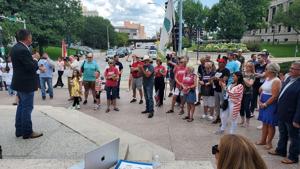
The Beecher Village Board of Trustees on Monday, April 27, 2026, voted unanimously to adopt the Village’s budget for the 2026-2027 fiscal year, charting a course that includes strategic police expansions and navigating steep increases in insurance costs.
The Board approved Resolution #2026-03 to adopt the budget and Ordinance #1452 for the corresponding appropriations following a brief public hearing. Overall, the budget reflects a 6.8% increase—amounting to roughly $300,000—over the previous fiscal year.
Village officials detailed that the increase is primarily driven by capital purchases, police department upgrades, and rising employee health insurance costs. Initial health insurance renewals came in aggressively high, with a 20.8% increase for PPO plans and a 17% increase for HMO plans. To combat this, the Village worked with its insurance cooperative, the IPBC, to utilize a GLP-1 prescription card program. This shift successfully reduced the premium hikes to 18.4% for the PPO and 14.4% for the HMO. The Village’s Illinois Municipal Retirement Fund (IMRF) rate also jumped from 3.44% to 4.53%.
To support public safety, the budget allocates funds for an additional full-time police officer, a move strategically designed to cut into the department’s ballooning overtime costs, which were reduced by $100,000 in this budget cycle. Part-time policing costs were also slightly decreased.
The budget features higher cash reserves for the coming year to accommodate several one-time capital purchases. These include launching a new police drone program, adding a K-9 unit, updating camera systems throughout the Village, and making a mandatory one-time reserve payment required by the IPBC.
On the revenue side, the Village is projecting positive trends to help cover these expenses. Sales tax revenue is expected to increase by approximately $150,000, state income tax by $60,000, and video gaming revenue by $58,000. Additionally, park impact fees, which have not been a factor in recent years, were added back into the budget due to new local building developments. However, state use tax revenue experienced a significant decline, dropping by roughly $150,000.
In other operational costs, dispatch services increased by $42,000, and fuel costs rose by an average of 50 cents per gallon, marking one of the larger operational increases in the budget. Finally, capital infrastructure projects will be supported by carrying over funds from the sale of the former police department building last year.




Showers And Thunderstorms Likely
Latest News Stories

Green Beret pleads not guilty to betting on his own mission
Cook County Judge Lyke’s decisions allowed accused cop killer to be free
Congress urged to defund abortion in wake of Planned Parenthood $90M COVID loan revelation

Madigan’s next option the U.S. Supreme Court

VA performance improves as concerns over cuts fade, survey finds

Arizona sues DHS over plans for ICE detention facility

Trump commemorates America’s British heritage during rare royal visit

Congressional progressives introduce $25 federal minimum wage plan

Illinois Quick Hits: Gas prices rise again
UAE quits OPEC as gas prices hit $4.19 a gallon nationwide

Feds raid more than 20 sites in Minneapolis in fraud probe

State legislative investigation: Camp Mystic created ‘complacent flood culture’