No ruling; Florida judge hears arguments in redistricting litigation
A Florida judge on Friday heard arguments on a lawsuit to block a new congressional redistricting plan in Florida that could give Republicans a four-seat gain in the upcoming midterm elections.
Opponents are seeking a temporary injunction barring the state from using the new districts. They say the plan violates a state constitutional amendment approved by voters that prohibits using redistricting for partisan purposes.
Florida 2nd Judicial Circuit Judge Joshua Hawkes did not issue an immediate ruling.
Second-term Republican Gov. Ron DeSantis last month called a special session of the Legislature to approve his redrawn congressional districts, citing an upcoming U.S. Supreme Court decision. That ruling in a Louisiana case, was issued as the Legislature was debating the new maps. It limits the use of race in redistricting.
DeSantis said the ruling “compelled” Florida to draw new districts, in part to correct “racial gerrymandering” in a South Florida district.
Opponents of the plan say it violates a state constitutional amendment approved by voters in 2010. The Fair District Amendment that makes it illegal to use redistricting for partisan purposes.
“This case is unusual because the map drawer admitted on the public record that the districts were drawn with partisan data and without the need to comply with the Fair District Amendment,” Christina Ford, attorney for Equal Ground Education Fund, a nonprofit group and one of the group’s challenging Florida the new maps, told the judge Friday.
There is “staggering” evidence of partisan intent in the new lines, she said.
“Defendants do not meaningfully even attempt to rebut that evidence,” Ford said. “They do not defend how a single line was drawn.”
The case is also unusual because state leaders are not defending the Fair District Amendment of the Florida constitution.
Mohammed Jazil, an attorney for the secretary of state, said that the Fair District Amendment was modeled after Section 2 and Section 5 of the federal Voting Rights Act.
The groups challenging the recent Florida redistricting plan have suggested reverting back to the previous maps approved in 2022. The challengers have the burden of showing that the 2022 maps were constitutional in the way it used race as a factor, Jazil said.
“They are going to show that by saying that race either was or not a factor or that race was appropriately considered,” Jazil said.
He added that “there is no need to rush,” a decision in this case.
“There should be a trial, there should be a proper assessment of the facts, a testing of the evidence, a testing of the expert witnesses before another plan is imposed other than the one the Florida Legislature enacted,” the attorney told the judge.


Chance Showers And Thunderstorms
Latest News Stories
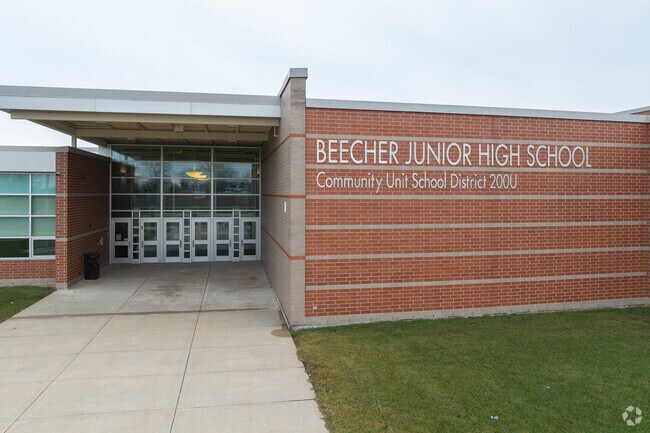
Beecher Junior High Considers New Electronic Sign Following Foundation Donation Pledge

Executive Committee Advances Sweeping Overhaul of Will County Business Regulations
Will County Closes Out $16.2 Million Federal Rental Assistance Program, Transitions to Local Funding

Meeting Summary and Briefs: Will County Planning and Zoning Commission for March 3, 2026

Will County Leaders Debate New Construction to Escape $1.2 Million in Leases
Opioid Settlement Grants Funnel Nearly $600,000 to Local Police and Community Programs
Meeting Summary and Briefs: Will County Finance Committee for March 3, 2026

Comptroller, state lawmaker call for federal tax credit scholarships

Beecher Pitching Trio Combines for One-Hitter, 15 Strikeouts in 5-1 Win Over Lisle

Norkus Tosses Three-Inning Perfect Game as Beecher Offense Explodes in 18-0 Win Over Joliet West

Imhof’s Hitless Relief and Lane’s Home Run Lift Beecher Baseball Past Chicago Christian 4-2
Beecher Varsity Softball Overcomes Early Deficit to Defeat Homewood-Flossmoor 7-5

Meeting Summary and Briefs: Beecher Board of Education for March 11, 2026

Meeting Summary and Briefs: Will County Board Ad-Hoc Ordinance Review Committee for March 10, 2026