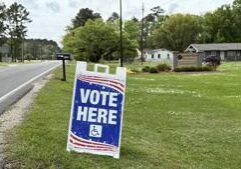
Minnesota mobile voting push stalls as session ends
As the 2026 Minnesota legislative session came to a close over the weekend, several special interest efforts ultimately failed to advance.
One of those was an effort to legalize “mobile voting technology” in state elections. While it failed in Minnesota, it is not the only state considering a policy like this, which is also sometimes referred to as internet voting.
Proponents of the legislation say it could expand voting access and modernize elections, but critics argue the technology introduces security risks.
“At a moment when trust in our elections and institutions is vulnerable, especially among young voters, Minnesota is trying to solve a trust problem with a tool that cybersecurity experts say cannot be trusted,” C. Jay Coles, deputy director of legislative affairs at Verified Voting, exclusively told The Center Square.
He pointed to ongoing warnings from federal agencies, including CISA, the FBI, the U.S. Election Assistance Commission and the National Institute of Standards and Technology, which have described electronic ballot return as carrying “significant security risks” that could affect election outcomes “at scale.”
“Mobile voting promises convenience, but it eliminates meaningful verifiability and creates risks that election officials may never be able to fully detect or disprove,” Coles said. “The danger isn’t just a successful hack, but the possibility that no one could ever know for certain whether an election result was altered.”
He added that lingering uncertainty itself could undermine public confidence in election results.
“If a hacking group claimed months after an election that electronically returned ballots had been changed, could Minnesota definitively prove otherwise? In many cases, the answer may be no,” Coles said.
The Mobile Voting Project is a nonprofit organization working to pass legislation not just in Minnesota, but also in Colorado, Maryland, New Jersey and Vermont.
“Mobile voting is often framed as a way to modernize elections and engage younger voters,” Cory Epstein, a spokesman for The Mobile Voting Project, exclusively told The Center Square. “There are barriers to the ballot box impacting Minnesotans from all walks of life, and we believe mobile voting is the solution for ensuring everyone is able to securely vote from anywhere, no matter their circumstance.”
The mobile voting system proposed by the project is an open-source mobile voting platform that uses multi-factor authentication, end-to-end encryption, and provides voters with a tracking code to verify that their ballot was received and counted.
Epstein pointed to rural voters, military service members deployed overseas, and voters with disabilities as groups that could benefit from these expanded services. He called it a bipartisan issue, pointing out that the Minnesota legislature had bipartisan support.
“We believe that ensuring everyone has access to democracy is vitally important no matter where you are across the aisle,” Epstein said.
In an event before the end of a legislative session, state Sen. Jeff Howe, R-Rockville, explained why he supported the legislation.
“Over the years, I’ve seen that voting can be difficult for military members serving overseas,” Howe said. “That reflects a real challenge with timing and access that still concerns many of us today.”
Neither the House nor Senate bill in the Minnesota legislature made it out of committee before the session ended Sunday night.



Isolated Showers And Thunderstorms then Showers And Thunderstorms
Latest News Stories
Health Department Opens Second Breast Milk Depot in Bolingbrook
Lockport Township Solar Farm Gains Committee Approval
Health Department Plans Back-to-School Fair July 12

Meeting Briefs: Will County Land Use & Development Committee for July 3, 2025
Meeting Summary and Briefs: Prairie State College Board of Trustees for March 25, 2025
Will County Public Health & Safety Committee July 3 Meeting Briefs
Prairie State College Board Accepts Positive FY2024 Financial Audit
Will County Seeks Asian Carp Provision in Federal Legislative Agenda
Will County’s Major Capital Projects Hit Key Milestones, VAC Buildout on “Aggressive Schedule”
State Legislative Session Update: Transit, Energy Bills Stall Despite Democratic Control
County Board Approves 2026-2031 Transportation Plan Despite Project Opposition
Contentious I-3 Rezoning for DuPage Township Storage Yard Narrowly Advances