
Supreme Court rules for U.S.-Cuban land claims
The U.S. Supreme Court, in a 8-1 decision on Thursday, allowed U.S. companies to seek damages from property seizures by the Cuban government.
Justices decided Havana Docks Corporation v. Royal Caribbean Cruises, a case that focused on property seizures following the Cuba’s communist revolution. The Cuban government took over Havana Docks, a U.S. company, in 1960.
However, between 2016 and 2019, three cruise lines were allowed to use the docks to transport passengers. Havana Docks sued the cruise lines for “trafficking” goods.
Justices on the high court allowed a $440 million settlement against the cruise lines to continue.
Justices on the high court focused on the Cuban Liberty and Democratic Solidarity Act, a 1996 law that sought to deter trafficking property that the Cuban government seized after it’s communist takeover. Justice Clarence Thomas said U.S. ownership of Havana Docks meant it could sue for improper use.
“The Act generally makes those who use property tainted by a past confiscation liable to any United States national who owns a claim to that property,” Justice Clarence Thomas wrote in the court’s majority opinion.
Lawyers for the cruise lines argued that Havana Docks license of the port was set to expire in 2004, regardless of the communist takeover. The majority opinion sharply disagreed with this understanding.
“We conclude that the cruise lines used confiscated property to which Havana Docks owns the claim,” Thomas wrote.
Justice Elena Kagan, the lone dissenter, said the high court misunderstood the purpose of the law. She said the Cuban government, not Havana Docks, owned the property fully after 2004.
Kagan said Havana Docks could not be entitled to compensation from the cruise lines because its ownership ended in 2004, years before the cruise lines used the dock in 2016. She said the entity could only be eligible to receive interest in the property, not compensation.
“Where the ‘property’ confiscated from the plaintiff is a physical thing, liability can attach for trafficking in that thing,” Kagan wrote. “It does not mean that where the ‘property’ confiscated from the plaintiff is an intangible interest, liability can attach for trafficking in something other than that interest—that is, in the underlying physical thing.”
The high court also heard arguments in a separate case about Cuban land claims, Exxon Mobil v. Corporacion Cimex. The court has yet to decide that case, involving Exxon’s ownership of land in Cuba before the communist takeover.
This case will likely draw several more lawsuits over U.S. ownership in Cuban lands confiscated by the government.






Chance Showers And Thunderstorms
Latest News Stories
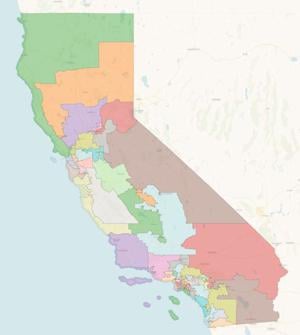
Redistricting opponents immediately appeal to CA voters
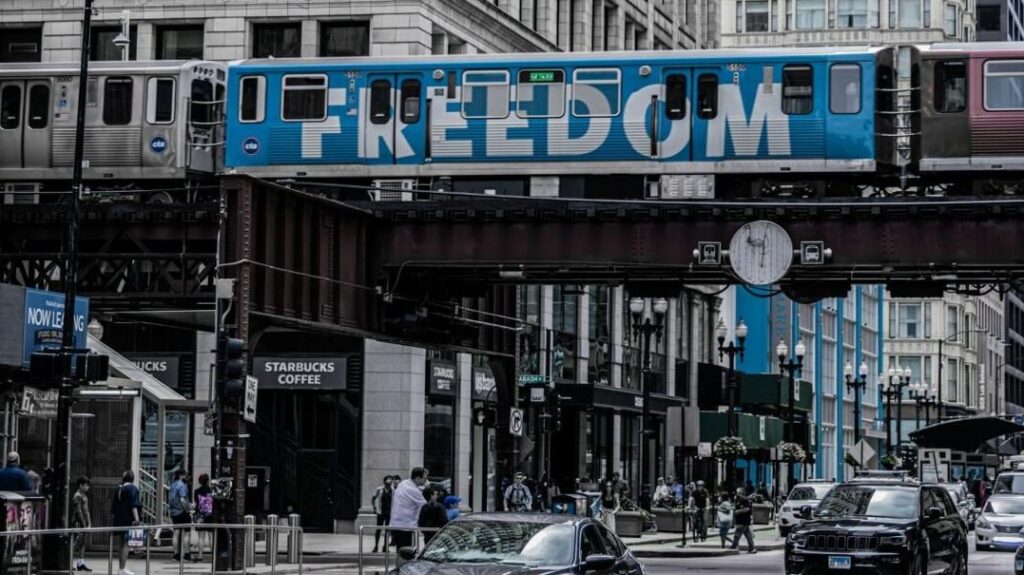
Former Transportation Secretary urges state taxpayer funding for Chicago transit

Illinois quick hits: Education tax benefits available; Giannoulias orders license plate reader to shut off access to CBP
WATCH: Trump order withholds funds over no-cash bail policies like Illinois’

Trump eyes First Amendment showdown with order to prosecute flag burning
Trump strikes positive tone with South Korean president

House Oversight Committee to investigate D.C. police over crime data
Twenty years later, Katrina still among Atlantic’s most deadly, costly
CBO says tariffs could raise $4 trillion over next decade, raise prices

IL Treasurer to work with lawmakers after Pritzker’s veto of nonprofit bill

WATCH: Chicago reacts to Trump’s public safety push; AI in schools; rural health care
Illinois expands campus abortion access, shields doctors from legal risk