
Supreme Court rules for U.S.-Cuban land claims
The U.S. Supreme Court, in a 8-1 decision on Thursday, allowed U.S. companies to seek damages from property seizures by the Cuban government.
Justices decided Havana Docks Corporation v. Royal Caribbean Cruises, a case that focused on property seizures following the Cuba’s communist revolution. The Cuban government took over Havana Docks, a U.S. company, in 1960.
However, between 2016 and 2019, three cruise lines were allowed to use the docks to transport passengers. Havana Docks sued the cruise lines for “trafficking” goods.
Justices on the high court allowed a $440 million settlement against the cruise lines to continue.
Justices on the high court focused on the Cuban Liberty and Democratic Solidarity Act, a 1996 law that sought to deter trafficking property that the Cuban government seized after it’s communist takeover. Justice Clarence Thomas said U.S. ownership of Havana Docks meant it could sue for improper use.
“The Act generally makes those who use property tainted by a past confiscation liable to any United States national who owns a claim to that property,” Justice Clarence Thomas wrote in the court’s majority opinion.
Lawyers for the cruise lines argued that Havana Docks license of the port was set to expire in 2004, regardless of the communist takeover. The majority opinion sharply disagreed with this understanding.
“We conclude that the cruise lines used confiscated property to which Havana Docks owns the claim,” Thomas wrote.
Justice Elena Kagan, the lone dissenter, said the high court misunderstood the purpose of the law. She said the Cuban government, not Havana Docks, owned the property fully after 2004.
Kagan said Havana Docks could not be entitled to compensation from the cruise lines because its ownership ended in 2004, years before the cruise lines used the dock in 2016. She said the entity could only be eligible to receive interest in the property, not compensation.
“Where the ‘property’ confiscated from the plaintiff is a physical thing, liability can attach for trafficking in that thing,” Kagan wrote. “It does not mean that where the ‘property’ confiscated from the plaintiff is an intangible interest, liability can attach for trafficking in something other than that interest—that is, in the underlying physical thing.”
The high court also heard arguments in a separate case about Cuban land claims, Exxon Mobil v. Corporacion Cimex. The court has yet to decide that case, involving Exxon’s ownership of land in Cuba before the communist takeover.
This case will likely draw several more lawsuits over U.S. ownership in Cuban lands confiscated by the government.






Chance Showers And Thunderstorms
Latest News Stories

Meeting Summary and Briefs: Will County Board for March 19, 2026

AARP Urges Will County to Ban Cryptocurrency Kiosks Amid Exploding Senior Fraud Rates

Will County Approves $2.9 Million Engineering Contract for Bluff Road Reconstruction in Channahon

Sunny Hill Nursing Home Implements Enhanced Infection Control and Safety Measures

Consultant Updates Finance Committee on Homer Glen Police Cost Study

Beecher Varsity Softball Powers Past Sterling 12-1 Behind Johnson’s Two-Hitter
Norkus Shines as Beecher Varsity Softball Blanks Harvard 9-0

Dwight Sweeps Team Titles at St. Anne Invitational

Massive Eight-Run Second Inning Propels Seneca Past Beecher

Fish fight: action-packed eagle pic wins March photo contest

Illinois State Police Investigating Fatal Officer-Involved Shooting in Bradley

Fire Department Responds to Monee Car Fire

New Lenox Firefighters Extinguish Garage Fire, Rescue Pets on Somerset Court
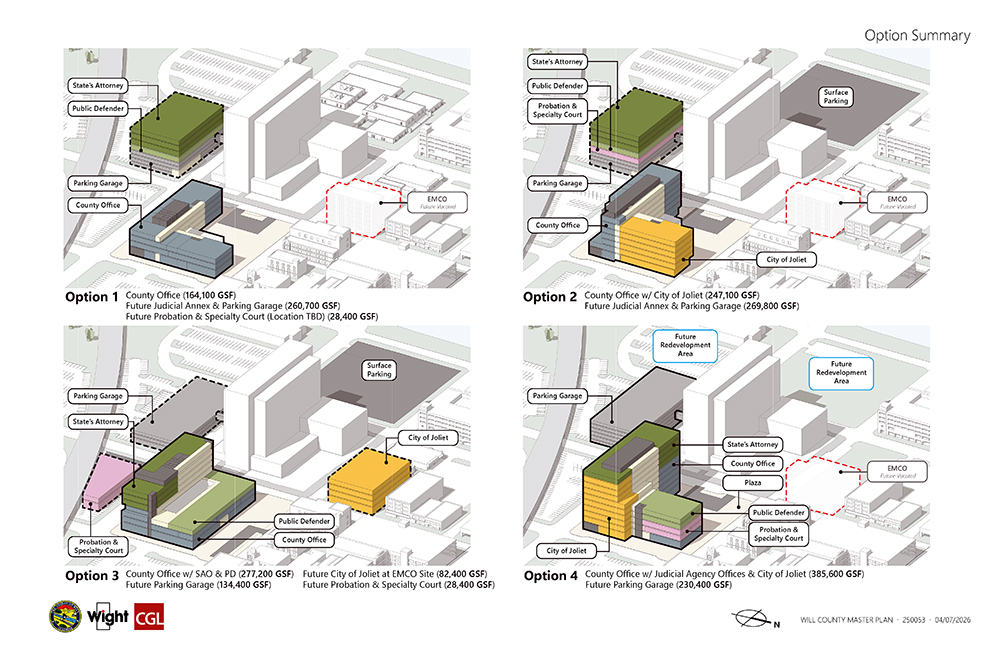
Will County Explores Multi-Million Dollar Downtown Joliet Consolidation and City Partnership