Ceasefire being tested as U.S., Iran continue to exchange fire
For the third time in a little over a week, the U.S. and Iran exchanged fire, adding more strain to the nearly two-month-long ceasefire.
U.S. Central Command announced early Monday morning that it “conducted self-defense strikes” on Iranian “radar and command and control sites for drones.” The U.S. targeted strikes in Goruk and Qeshm Island.
CENTCOM underscored that the strikes were in “response” to “aggressive Iranian actions,” including the downing of an American drone “operating over international waters.”
“U.S. fighter aircraft swiftly responded by eliminating Iranian air defenses, a ground control station, and two one-way attack drones that posed clear threats to ships transiting regional waters,” according to a statement from CENTCOM.
The Kuwaiti Armed Forces issued a warning Monday, indicating the Gulf country was being targeted, saying that “air defense systems” were “intercepting hostile targets.”
Kuwait, specifically American bases, have come under attack from Iranian forces. Secretary of War Pete Hegseth has refused to confirm reports that some American military personnel were injured in recent attacks in Kuwait.
Despite the exchange of fire between the U.S. and Iran, President Donald Trump maintains his commitment to settling the stalled conflict through diplomatic means, saying Iran “wants to make a deal.”
The president argues that time is on the U.S.’s side, and he won’t be rushed into making a deal that isn’t in the country’s best interest. He continues to demand that Iran cease its nuclear program and hand over its “nuclear dust.”
On Friday, Trump posted on Truth Social that a final determination was being made on whether the U.S. and Iran would agree to a memorandum of understanding to extend the ceasefire for 60 days and reopen the Strait of Hormuz.
The president said that he would lift the naval blockade, but demanded Iran remove “all water mines” in the strait and not impose tolls on the vital waterway.
“Iran will complete the immediate removal and/or detonation of any mines that are left, which will not be many!). Ships caught in the Strait due to our amazing and unprecedented Naval Blockade, which will now be lifted, may start the process of ‘heading home!’” Trump wrote.
Despite the president saying the blockade would be lifted, CENTCOM indicated the blockade remains in effect, saying the U.S. military has “redirected 118 commercial vessels and disabled 5 as of May 31.”
The president has assured American taxpayers that there will be no money exchanged in pursuit of securing a deal, saying that “no money will be exchanged, until further notice.”
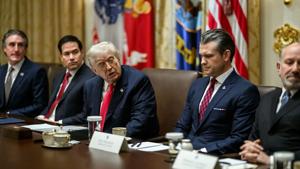
During a cabinet meeting Wednesday, Trump told reporters the U.S. was “not talking about any easing of sanctions or giving money.”
He added that Iran was “negotiating on fumes,” as their economy is in peril and “their money has no value.”
The blockade on Iranian ports has been costing the Islamic Republic an estimated $500 million a day in economic damage, the Trump administration argues.
The 60-day ceasefire extension would allow the two countries to enter into negotiations on dismantling Iran’s nuclear program. The ceasefire was initially implemented April 8 and originally set for two weeks.



Mostly Sunny
Latest News Stories

Illinois Quick Hits: Gas prices fall, remain higher than a year ago

White teacher gets new life for race discrimination suit

Beecher Resident Reports Repeated Basement Flooding Along Woodward Street

Poll: About half of Americans confident in democracy’s future

Pennsylvania will be at the ‘Great American State Fair’ after all

Everyday Economics: The consumer is still spending, but not out of the woods

Illinois lawmaker promotes welfare water aid bill as critics raise concerns over federal expansion

America 250: Founding fathers, presidents point to the Bible as the anchor of liberty

Poll: Majority of Americans believe country not adhering to founding ideals

Meeting Summary and Briefs: Beecher Village Board for June 8, 2026
Beecher 200-U Board Buys Red Rover Substitute Software for $7,800

Trump-backed Letlow wins Louisiana Republican Senate runoff