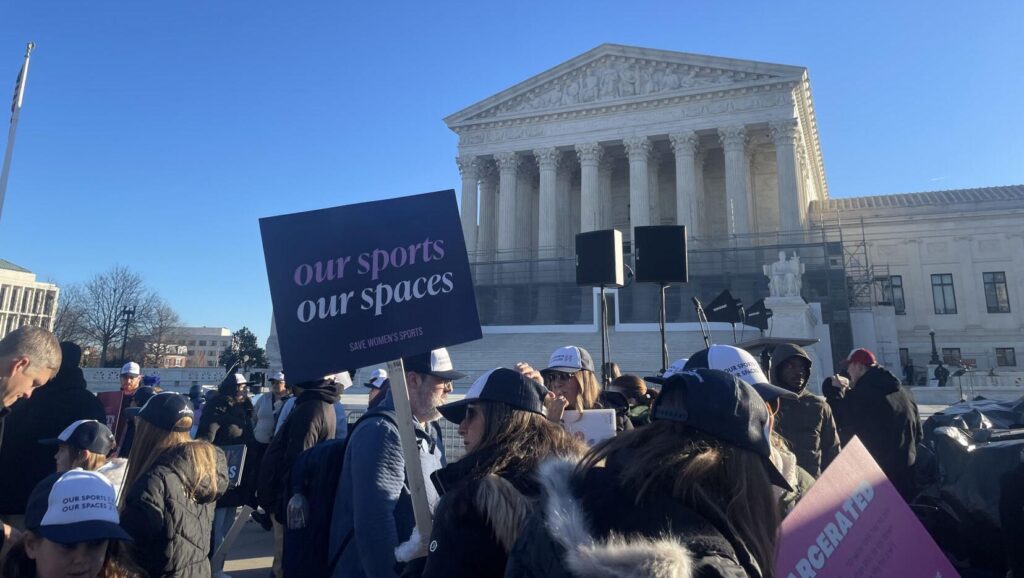
Supreme Court agrees to hear prisoner release case
The U.S. Supreme Court agreed on Monday to hear a case over whether a federal prisoner can petition to expedite a prison sentence under federal law.
The case, Maxwell v. Thomas, focuses on William Maxwell, a man who sought release from prison and the ability to transfer to a halfway house or home confinement. Maxwell is serving a 20-year sentence in a Texas prison for racketeering.
Maxwell petitioned the high court based on the First Step Act of 2018, a law that made several significant reforms to prison sentences. The law allowed prisoners to earn credits toward an early release by enrolling in behavioral programs.
Maxwell alleged he was denied credits toward his release that would have reduced his overall sentence. The prison denied Maxwell’s request, and he filed a habeas corpus petition to appeal the denial.
The lower court denied Maxwell’s petition, saying he did not exhaust all administrative remedies to shorten his sentence. Lawyers for the government argued that Maxwell did not proceed with the petition properly.
“The magistrate judge reviewed the record and determined that petitioner had not exhausted any claim under the First Step Act, including for time credits,” Solicitor General John Sauer wrote to the high court.
Maxwell’s lawyers said the government’s claim that he did not exhaust administrative remedies is unsubstantiated. The lawyers argued Maxwell interacted with prison staff during his appeal, which is considered an exhaustive means.
“His interactions with prison staff exhausted his administrative remedies as to his First Step Act claim,” lawyers for Maxwell wrote.
The court’s decision to hear this case follows several First Step Act challenges it has decided recently. Last week, the high court ruled against two prisoners who sought compassionate release under the First Step Act due to sentence stacking.
“When Congress declines to make a sentencing amendment retroactive, the fact that a preamendment sentence is longer than it would have been postamendment is not an ‘extraordinary and compelling reaso[n]’ that ‘warrant[s]’ a sentence reduction,” Justice Amy Coney Barrett wrote in the court’s majority opinion.
Justices on the high court will likely hear Maxwell’s challenge to the time credits provision in the First Step Act in the fall.






Chance Showers And Thunderstorms
Latest News Stories

Beecher Village Board Appoints New Clerk, Approves Environmental Justice Committee Role

Vance’s tie-breaking vote tanks resolution restricting Venezuela military actions

Federal court upholds California congressional redistricting

Trump orders new mediation for New York rail contract dispute

U.S. House passes two more govt funding bills, sending to Senate

Governors seek delay on sharing cost of food stamp errors

Supreme Court ruling allows Bost to challenge Illinois election law

Illinois quick hits: Illinois auto insurance rates dropping

SCOTUS rules on warrantless searches, double convictions and election suits

WATCH: WA Democrats criticize reporter probes into potential daycare fraud
Title IX central to transgender sports cases, advocates say
WATCH: Legislator raises red flag over Illinois tax funds for group encouraging ICE protests