Military advocates concerned about active-duty voters
The U.S. Supreme Court could eliminate grace periods for mail-in ballots for overseas voters, officials from voting rights advocacy organizations said on Thursday.
In a virtual press conference held on Thursday, representatives from three groups that advocate for military and overseas voters said they are expecting a decision from the court at any time.
The lawsuit that seeks to end these grace periods, Watson v. Republican National Committee, saw the Republican National Committee challenge Mississippi law that requires election officials to count absentee ballots as long as they are postmarked by Election Day and received five business days after Election Day. The argument against current Mississippi law is that it runs afoul of federal statutes that define Election Day as one specific day, advocates said.
“The case remains pending before the court right now, which will release its decision before the end of its term, probably before the end of the month,” Daniel Griffith, senior policy director at the Secure Democracy Foundation, said during a virtual press conference held on Thursday. “We were on the lookout for an opinion from the court just a few hours ago, when they released some opinions, but Watson was not among them.”
Various states, including California, have laws that allow for overseas mail-in ballots to be counted after Election Day is over, according to the officials from the Secure Democracy Initiative, an organization that advocates for election policy and rule of law. Millions of these ballots were counted in 2024, and active-duty members of the military stationed overseas depend on those laws to be able to vote in elections back home, officials from the Secure Democracy Initiative said on Thursday.
According to the National Conference of State Legislatures, California is one of 15 states that allow postmarked ballots to be counted after Election Day. Thirty states have a grace period law that allows military and overseas ballots postmarked by Election Day to be counted.
The district court that first heard the lawsuit ruled in favor of upholding the Mississippi grace period law, but the U.S. Court of Appeals for the 5th Circuit reversed that decision and ruled that the federal statutes preempt state law, rendering Mississippi state statute invalid, Griffith said.
The state appealed that decision to the U.S. Supreme Court, where the case is pending. The highest court in the country heard arguments from both sides on March 23, in which Mississippi’s arguments maintained the validity of state law. Mississippi argued that state and federal statutes are not in conflict because the state’s grace period law still requires voters to send their ballots to state officials by Election Day, according to Griffith.
Arguments from the other side said, however, that putting a ballot in the mail doesn’t adequately complete the act of voting in a way that aligns with federal law. The process of voting is not complete until the ballot is in the hands of election officials, challengers to state law said in the U.S. Supreme Court arguments, according to Griffith. U.S. Solicitor General D. John Sauer argued with the Mississippi state law’s challengers.
“Under the challengers’ theory, the federal statutes preempt Mississippi state law, and by extension, other state laws like it, and the court should declare that law unenforceable,” Griffith said during the press conference.
Griffith said the court will likely decide the case in one of three ways: upholding state law that allows a grace period to stand for postmarked absentee ballots, declaring any state laws invalid that maintains any type of grace period, and a middle ground that might allow state grace period laws to apply to overseas and military ballots.
“The timing of this decision means that impacted states may have to move very quickly to bring their absentee ballot laws and procedures into compliance with the court’s decision ahead of November’s midterm election,” Griffith said. “Some impacted states may still be in legislative session and thus able to change existing law shortly before the election. Other states may not have time to change their statutes before November.”
Active-duty military voters stationed overseas – or, at times, under the surface of the ocean itself – depend on the grace periods of states like Mississippi to have the time to get their ballots from their military base or submarine to elections officials back home. Voting in uniform is treated like a military mission, said Alberto Ramos, CEO of Veterans for All Voters.
“We’d surface the boat, toss over the rope ladder, bring the ballots aboard, fill them out, and then get them back off before we dove again,” Ramos said of his own time coordinating voting aboard a submarine. “We know what that ballot means. It’s how a sailor serving underwater could still help choose the leaders who might one day send them off to war.”
According to the Federal Voting Assistance Program, fewer active-duty members of the military were registered to vote in 2024 than in 2020. Approximately 70% were registered to vote in 2020, which sank to 63% in 2022 before seeing a slight bump to 67% in 2024.
Voter participation was even lower during those years. Approximately 49% of active-duty service members voted in elections in 2020, which sank to 26% in 2022 before going up to 45% in 2024, the Federal Voting Assistance Program data shows.
The top reason why military and overseas voters don’t ultimately have their ballot counted is because it arrives after the deadline, Sarah Streyder, executive director of the Secure Families Initiative, said during the press conference.
“We have Secure Families Initiative members stationed in Japan and Korea who report six to eight week delays under normal conditions,” Streyder said.
Attorneys arguing for the Republican National Committee in the lawsuit did not respond to The Center Square on Thursday. Officials with voting rights organizations in California, like the League of Women Voters California, the American Civil Liberties Union of Northern California and the California Voter Foundation, did not immediately respond to The Center Square on Thursday.



Mostly Sunny then Showers And Thunderstorms Likely
Latest News Stories

Committee Summary and Briefs: Peotone Board of Education Committee of the Whole

Soaring utility bills, solar federal tax credit cuts dominate Illinois energy debate

Illinois quick hits: Pritzker signs crypto regulations

Trucking industry leader: New law may drive business out of Illinois
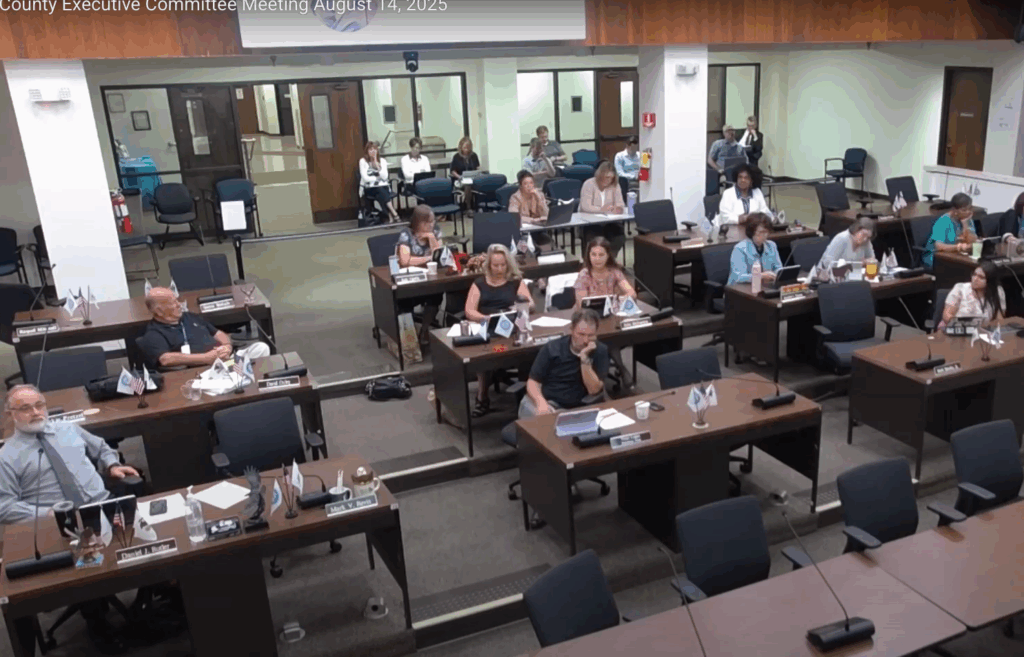
Executive Committee Considers $12,000 Strategic Planning Initiative with University of St. Francis
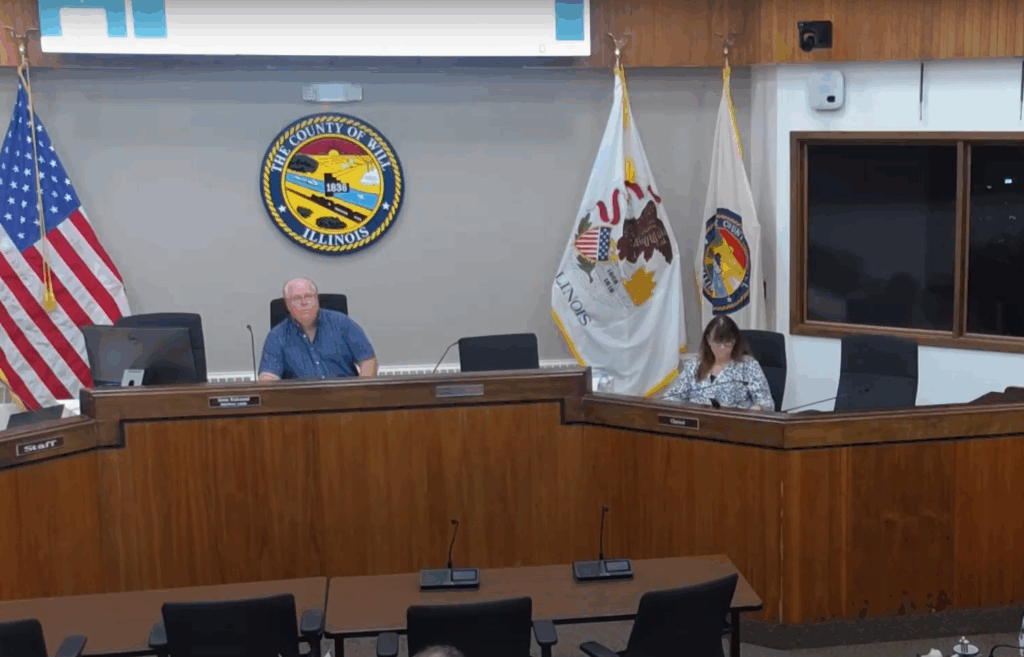
Executive Committee Members Decry Roadside Litter, Call for Action Against Garbage Haulers
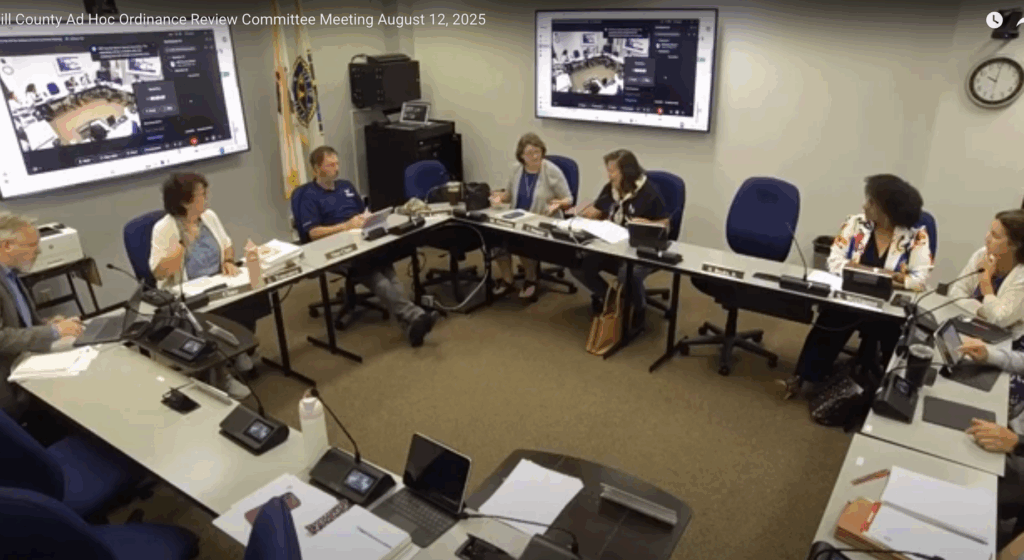
Will County Updates Solid Waste Ordinance, Increases Fines and Reporting to Landfill Committee
Citing Liability Concerns, Will County Committee Postpones Vote on Septic System Ordinance
Will County Moves to Repeal Obsolete 1972 Fire Hydrant Ordinance
Will County Board Gets Back to Basics with Robert’s Rules of Order Training
Executive Committee Approves Amended Houbolt Bridge Agreement to Settle Litigation

Meeting Summary and Briefs: Will County Board Committee of the Whole for August 12, 2025