Supporters, critics clash over future of taxpayer funding for Rx Kids
Michigan lawmakers remain divided over the future of the state’s Rx Kids program as House Republicans continue scrutinizing the initiative.
The first-in-the-nation cash assistance program, which describes itself as “universal and unconditional,” has received more than $300 million in state and federal taxpayer funding since launching in Flint in 2024 and expanding to more than 60 Michigan communities.
Republicans argue the program lacks adequate safeguards and is a misuse of taxpayer dollars, while supporters say it is producing measurable improvements in maternal and infant health.
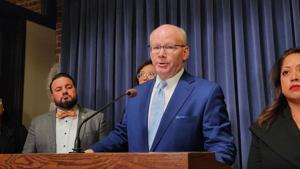
House Oversight Committee Chairman Rep. Jay DeBoyer, R-Clay Township, told The Center Square in an exclusive interview that the committee is currently trying to determine if the program is a good use of taxpayer funds.
“I can’t tell you that we’ve seen tangible fraud, waste and abuse, but that’s actually a premature statement because we’ve just started looking at it,” DeBoyer said. “What we’re really trying to get at is what parameters did they have in place to make a determination if the individuals that were receiving this nearly $300 million of taxpayer money were actually in need of public assistance. And the answer is, there are none.”
Launched under Democratic leadership with bipartisan support, Rx Kids provides unrestricted, direct cash payments during pregnancy and after childbirth via private-public partnership.
Though initially receiving Republican support, DeBoyer argued that the program’s current structure is not what they thought they were signing off on.
“I think there was a belief that there was this small pilot program that was going to be done right,” he said. “When I realized that there was a $250 million allocation to Rx Kids … and you find out that it’s really not a prescription drug program for kids, it’s a cash giveaway, then you realize that maybe we need to look at this a little harder.”
What is Rx Kids?
According to Rx Kids’ website, through the program, pregnant women can receive $1,500 during pregnancy, while babies receive $500 a month for a varying length of time of between six and 12 months. Thousands of families have enrolled in the program since 2024.
The application, which is meant to take “about 30 minutes to complete,” can be viewed in English, Spanish, or Arabic. Eligibility only requires applicants live in a participating community, be an adult, and at least 16 weeks pregnant.
DeBoyer argued those standards raise questions about how taxpayer dollars are being distributed.
“You gotta beg the question, what is it that we’re doing, taking $300 million and putting it in a bowl on the porch and telling people they can just stop by and grab a handful?” DeBoyer said.
DeBoyer also criticized the program’s lack of restrictions on spending.
“When we pressed on that issue and asked the question, ‘How do we know they’re not buying alcohol and marijuana and other things?’ the answer was, ‘We just trust them,’” DeBoyer explained. “That’s a noble thing to say, but the problem is we’re giving them other people’s money.”
Program officials dispute those concerns and point to research showing positive outcomes for participating families.
In a statement to The Center Square, Rx Kids said the initiative is improving maternal and infant health while helping families achieve greater financial stability.
“Recent evidence from a peer-reviewed study in The Lancet Public Health shows the program is linked to fewer preterm births, fewer babies born at low birthweight and reduced NICU admissions, leading to healthier moms and babies,” it said, also pointing to economic benefits.
“Rx Kids helps families achieve greater stability, with improvements in financial security, maternal mental health and reduced involvement with the child welfare system,” the statement said. “At the same time, it strengthens communities by directing millions of dollars into local economies.”
While Republicans have been flagging concerns with the program since February, the debate intensified this week with a House Oversight Committee hearing featuring testimony from Rx Kids founder and director Dr. Mona Hanna, a professor at Michigan State University’s College of Human Medicine.
During that hearing, Hanna defended the program.
“Why are families so grateful? It’s because the period of childbirth is the most economically vulnerable in the life course,” Hanna told lawmakers. “This is a program built on trust, trusting women, trusting mothers, trusting families to best fit their needs.”
The Rx Kids statement also addressed the committee hearing.
“We are thankful for the opportunity to share more information about this proven, effective bipartisan-supported program with the House Oversight Committee and remain committed to its delivery, in line with their vision in the FY24, 25, and 26 bipartisan budgets,” it said.
Conflicting narratives
DeBoyer remains skeptical of the evidence being used to justify the program’s effectiveness.
He said much of the research supporting Rx Kids has been conducted by Hanna and her associates rather than independent researchers.
“All of the data is provided by Dr. Mona, and most of the research that was done to compile the data was done by Dr. Mona,” DeBoyer said. “Well, that’s not independent research. That’s the people that are getting the money and doling the money out doing the research.”
DeBoyer also raised particular concerns about whether the program is serving as a stepping stone toward broader guaranteed-income initiatives funded by taxpayers.
“This is a test balloon for a much larger program that will first be guaranteed basic income for children up to the ages of 18,” he said. “Then if we can convince the general public to buy into this, then we’ll expand it to just guaranteed basic income.”
Program officials reject those characterizations, arguing it is fulfilling a critical need in the participating communities. The Rx Kids statement said communities were selected through a competitive application process guided by a statewide advisory committee that includes representatives from health and human service organizations.
“Communities applied through a comprehensive, open application process,” it said. “Community selection was guided by a multi-sector Advisory Committee of statewide health and human service leaders … Communities were selected based on demonstrated need, including indicators such as Medicaid birth rates, child poverty levels, and maternal and infant health outcomes.”
The statement also noted that participating communities were required to secure local matching support through philanthropic, business, health system or individual contributions.
According to testimony from Hanna, the program has secured more than 150 grants and raised more than $86 million in private funding. It has also received funding through the federal Temporary Assistance for Needy Families program and the Healthy Michigan Fund. In total, Rx Kids has received more than $300 million in taxpayer funding through those programs.
Another concern brought forward during the committee hearing was the amount of taxpayer funding going to pay for overhead for the program.
Hanna testified that about 85% of state funding goes directly to participating families, while roughly 15% supports administration, staffing, customer service, marketing and other operational expenses.
DeBoyer noted that administrative costs have exceeded $40 million since the program’s launch and cited reports that public funds have been used for outside organizations and promotional efforts. He told The Center Square that lawmakers intend to examine those expenditures more closely.
“For darn near $40 million of that money has gone to Michigan State and GiveDirectly in administrative fees,” he said. “We’re going to look into how that money is being spent at Michigan State. We’re going to look into how that money is being used at GiveDirectly because $250 million is a lot of Michigan taxpayer money.”
Questions about immigration and voter data have also surfaced during the debate over the program.
House Republicans previously characterized the initiative as a “cash for votes” scheme and criticized eligibility rules that do not require proof of citizenship.
Hanna testified during the oversight hearing that taxpayer dollars are not being used to support undocumented immigrants.
“No state funds go to undocumented immigrants – none,” Hanna said.
DeBoyer also questioned research involving voter-participation data among program recipients, telling The Center Square he remains unsatisfied with Hanna’s explanations provided during the hearing. He said those concerns contribute to his skepticism about the program’s broader goals.
“Why is a nonprofit, baby-oriented organization who just wants to make sure babies are healthy tracking voter data of individuals who receive benefits,” he asked. “This creates skepticism … that this is a cash for votes program.”
Continued taxpayer support
The Rx Kids statement said continued state support will be critical to maintaining the program.
“State of Michigan funding is essential to ensure the program can continue to operate in the more than 60 communities where public and private dollars have been committed to more than 23,000 Michigan babies annually over the next three years,” it said.
It also addressed if the program has plans to continue expanding across the state, stating “Future application cycles and expansions will depend on sustained state investment, continued annual TANF support, and strong enrollment across communities.”
When asked about what guardrails the program has in place to address concerns about fraud, the statement cited the program’s “rigorous application and verification process.”
“Rx Kids systems and processes are built to handle sensitive information with the highest standards of security, anti-fraud prevention, and program integrity,” the Rx Kids’s statement said. “Rx Kids has a rigorous application and verification process that enables us to combine automated and manual or human fraud checks to ensure that only eligible individuals make it into the program.”
Following the committee’s hearing, House Democrats accused Republicans of targeting a program designed to help struggling families.
“Democrats trust moms,” House Democrats said in a statement. “Republicans want to gaslight you into thinking the affordability crisis is a hoax. They also want folks to believe the life-saving program Rx Kids is harmful. But no one’s falling for their lies. Rx Kids helps families get the breathing room they need.”
Michigan House Speaker Matt Hall, R-Richland Township, has previously criticized the initiative, calling Rx Kids “a scam.”
For now, lawmakers are continuing their review of Rx Kids. DeBoyer said the program has cooperated with the committee’s requests so far, though he indicated he expects it will face an uphill battle in future budget negotiations.
“If Rx Kids is what I think Rx Kids is … I certainly will not be an advocate to continue to give money to Rx Kids,” DeBoyer said. “I do not think a cash giveaway with no guardrails has any place in the state’s budget.”




Chance Showers And Thunderstorms
Latest News Stories

Illinois Quick Hits: Gas prices rise again

Massive drug busts in California, Texas, enough to kill more than 32.7 million people

Union Pacific, Norfolk Southern submit new merger application
Mills drops out of Maine U.S. Senate race
Beecher Board Tables $16,000 Junior High Digital Sign; Approves Sealcoating and New Elementary Desks

Board Establishes New Regulations and Fees for Wireless Telecommunication Facilities
House passes funding for ICE, CBP, tees up DHS reopening
Florida poised to flip 4 U.S. House seats with new map

Energy industry insiders advise lawmakers on supporting AI growth, protecting ratepayers

WATCH: Students see tuition as a good investment despite loan debt, survey says
California congressman slams nation’s ‘gerrymandering war’
Illinois pauses redistricting effort after Supreme Court ruling