Proposal to regulate AI development at federal level gets chilly reception
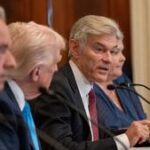
Despite mounting pressure on Congress to establish clear federal standards governing the rapid development of artificial intelligence, a bipartisan proposal to do just that is meeting pushback from congressional Democrats and stakeholder groups.
Unveiled last week, the discussion draft of the Great American AI Act attempts to address nationwide concerns over AI, ranging from corporate transparency to cybersecurity risks to impacts on the American workforce.
It also puts forth policies boosting funding for AI research, training and development, as well as implements a three-year moratorium on state laws regulating AI model development. The moratorium expressly allows state laws of general applicability, common law remedies, or laws regulating AI use or deployment.
Rep. Jay Obernolte, R-Calif., one of the six lawmakers introducing the framework, said it provides a “thoughtful and bipartisan approach” to regulating AI and “is an important step toward building a clear federal framework that promotes innovation, protects Americans from emerging risks, and ensures the United States continues to lead the world in AI.”
“We are releasing this draft to hear from stakeholders, experts, and the public so we can strengthen the legislation before it is formally introduced,” he added.
But House Democratic Caucus Chair Ted Lieu, D-Calif., reiterated his opposition to the draft at a Tuesday press conference, saying that while he thinks it’s “terrific” that members are engaged, the proposed framework is “not something that would work, because there’s a lot of issues it does not cover.”
Lieu said the Democratic House Commission on AI and the Innovation Economy will propose its own framework “by the end of the year” after building consensus with stakeholders and lawmakers.
The Great American AI Act has received “intense” pushback from the civil rights, labor, and AI safety communities, Lieu added. That includes the American Civil Liberties Union and federal labor unions representing teachers and flight attendants, and consumer advocacy group Public Citizen.
“This is a disastrous proposal that Big Tech is celebrating. This bill strips states of their authority to respond to real harms consumers are experiencing,” J.B. Branch from Public Citizen said in a recent statement.
“Congress has been unable to pass meaningful protections for children online, consumer data privacy, or many of the other harms posed by AI,” he added. “Yet the authors of this draft bill want the American people to believe Congress will somehow get its act together to create federal safeguards for AI.”
Public Citizen and other stakeholders specifically object to the preemption of states regulations on AI development, even though laws that “apply generally” – such as those covering civil rights, labor and workplace protections, consumer privacy, copyright, and child sexual abuse material – are exempted.
The moratorium instead targets state laws like California AB 2013, which requires AI model developers to publicly post high-level summaries of their training data.
Republican congressional leaders have remained either silent or noncommittal on the framework. House Speaker Mike Johnson, R-La., told reporters he had not reviewed the proposal, adding that the House would take up some form of AI legislation “as soon as we are able to build consensus around a package.”
Obernolte still intends to move forward with the proposal, he told Politico. Because the draft contains policies that cross multiple House committee jurisdictions, the upcoming legislation to implement the framework will arrive in the form of multiple separate bills.



Partly Sunny then Slight Chance Showers And Thunderstorms
Latest News Stories

Americans prepare to spend $1 trillion this holiday shopping season

Gas prices ahead of Thanksgiving holding steady

Illinois quick hits: Migrant youth allegedly murdered homeless Chicago man

Will County Board Compromises on Mental Health Levy, Approves $10 Million After Debate

Green Garden’s Wildflower Farm Granted Second Extension for Rural Events Permit
Will County Board Rejects Proposed Tax Hike, Approves 0% Levy Increase in Contentious Vote
Will County Awards $10.4 Million Contract for Bell Road Widening Project
Regional Office of Education Highlights School Safety, New Learning Programs in Update
New Lenox Solar Farm Proposal Advances with Conditions, Following Village and Forest Preserve Input

Meeting Summary and Briefs: Will County Board for October 16, 2025
Will County Board Approves New 30 MPH Speed Limit for Frankfort Township Road
Will County Committee Grapples with $8.9 Million Budget Gap After Contentious 0% Tax Levy Vote