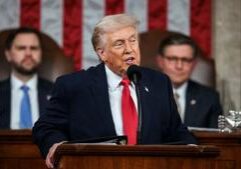
Budget allows Arizona to fully implement Trump’s tax cuts
The Arizona Legislature has agreed to a new $18.29 billion bipartisan budget, making the state the first in America to fully implement President Donald Trump’s tax cuts.
The budget will deliver approximately $1.45 billion in tax relief for Arizonans over the next four years and limit spending growth to 3.05%.
State senators and state representatives are expected to vote on Thursday to give final approval to the Fiscal Year 2027 budget.
“Republicans came into this session focused on affordability, responsible spending, public safety, school choice and protecting taxpayers from new taxes and fees,” said House Speaker Steve Montenegro, R-Surprise.
“This agreement reflects those priorities and shows what can be achieved through serious negotiations in divided government,” Montenegro said, answering The Center Square’s questions by email.
“The process still needs to play out, but this is a responsible budget agreement that moves Arizona in the right direction and puts families and taxpayers first,” he added.
Gov. Katie Hobbs, a Democrat, called the budget agreement one that will “put Arizona first and deliver opportunity, security and freedom to communities throughout the state.”
“This bipartisan compromise shows what we can do when we put common sense before political games and focus on delivering real results for our communities,” Hobbs said. “It will put money back in the pockets of Arizona families and lower costs, make our communities safer and protect the vital services that Arizonans rely on.”
She noted she is looking forward in the upcoming days to “working with legislators in both parties to pass this bipartisan budget agreement that will make Arizona stronger, safer and more prosperous.”
With the budget fully conforming to Trump’s tax cuts made in H.R. 1, also known as the One Big Beautiful Bill Act in 2025, Arizonans will not have to pay taxes on tips or overtime or refile their 2025 taxes.
Furthermore, the proposed budget includes a higher standard deduction and a new childcare deduction.
The budget also expands charitable giving deductions and property tax relief for veterans. The proposal also includes a three-year pause on sales tax exemptions for data centers while still allowing them to be built.
The budget limits Arizona’s net outgoing spending by $68 million and stops or tweaks over $3 billion in proposed executive tax increases, fees and expansions over the next three years.
The budget also gives $112 million to corrections operations, $23 million to victims of crime assistance, $58 million for child safety operations and $4.3 million to rural hospitals.
Regarding waste, fraud and abuse, the budget includes reforms such as enhanced eligibility requirements for state Medicaid and food stamp benefits.
“This budget puts real teeth behind our commitment to accountability,” said Senate Majority Leader John Kavanagh, R-Fountain Hills. “By strengthening eligibility checks for Medicaid and SNAP, rooting out waste, and rejecting billions in new spending and tax hikes, we’re ensuring taxpayer dollars go to the services Arizonans actually need, not to bloated bureaucracy or ineligible recipients.”
The budget proposal does not make changes to Arizona’s school choice program, which has over 100,000 participants.
“Whether it’s the enhanced child tax credit, the new childcare deduction, relief for disabled veterans or protecting school choice opportunities for parents, this budget puts families first,” said Senate Majority Whip Frank Carroll, R-Surprise.
“We are making it easier for people to afford the things that matter most while continuing to invest in public safety and Arizona’s future,” he added.
On the other side, Senate Democratic Leader Priya Sundareshan, D-Tucson, said the budget is “better because Democrats fought for it.”
“We fought until the very end to protect the programs people rely on and make Arizona more affordable,” she said.
Arizona Senate Democrats said they safeguarded healthcare coverage for 40,000 state residents, preserved Supplemental Nutrition Assistance Program benefits, secured the sales tax exemption clause for data centers and provided millions of dollars in investment for Arizona’s public schools.
“The difference is clear,” Sundareshan said. “Republicans fought for corporate tax breaks. Democrats fought for working families.”





Chance Showers And Thunderstorms
Latest News Stories
Fraud enforcement, weaponization swirl around Blanche’s nomination

Income tax cut on Missouri ballot; Illinois may see more outmigration
Michigan’s U.S. Senate primary heats up as El-Sayed holds lead

Decades of policy choices makes gas more expensive for Blue states: Report

EXCLUSIVE: New ethics complaint targets U.S. Sen. Gallego

DOJ releases evidence related to Operation Metro Surge shootings

Iranian in Massachusetts convicted of violating US sanctions against Iran

U.S. ramps up strikes, pressure on Iran
Blanche touts crime record, defends Epstein files handling

Report: ‘Climate risk scores’ featured on homebuying platforms devalue homes

Texas agency investigating birth tourism, ‘HavemybabyinTEXAS.com’
CNBC ranks 10 GOP-led states as worst to live in