
U.S. Supreme Court to hear asylum, voting, pipeline cases next term
The U.S. Supreme Court agreed to hear a slew of cases on Monday on issues including immigration, energy and voting rights as it prepares for the upcoming term.
The nation’s highest court will hear arguments in cases for its next term beginning in October. Supreme Court terms typically run from October to June.
Here is a look at a few of the cases the court granted on Monday.
Asylum Termination
The high court agreed to hear Wassily v. Blanche, a case challenging whether noncitizens who were granted asylum into the United States are eligible for adjustments to their lawful permanent resident status even if their asylum was terminated.
The case focuses on two immigrants, Tamer Wassily and Byron Velasquez Arreaga, individuals from Egypt and Guatemala, respectively. The two men were admitted to the United States on asylum and later convicted of crimes.
Once they were convicted, immigration authorities began separate removal proceedings and focused on stripping them of their asylum rights. However, the two men sought to adjust to a lawful permanent resident status, which would allow them to remain in the United States.
The men cited persecution and poor conditions in their home countries to remain in the United States. An immigration judge granted Wassily’s request to adjust his status and become a lawful permanent resident, citing humanitarian concerns in Egypt.
However, a lower court ruled that the men cannot adjust their immigration status once asylum has been terminated, contrary to rulings in other lower courts across the country.
“The Attorney General may terminate asylum for a host of reasons – several of which rest entirely outside an asylee’s control,” lawyers for the two immigrants wrote in a petition to the high court. “Many of these former asylees and derivative spouses and children may have established strong ties to the United States over a long period of time.”
The Trump administration urged the high court to declare that the Immigration and Nationality Act rightfully gives the attorney general authority to regulate asylum in the United States. Lawyers said convictions of the two men warranted removal of asylum status.
“[The] statutory language authorizes adjustment of status only for an alien who currently has asylum status,” lawyers for the government wrote.
Election Integrity
The high court will also hear a case out of Arizona focused on the state’s election integrity laws, including a requirement to show proof of citizenship for the state’s voter registration form.
Justices on the high court will examine whether the National Voter Registration Act prohibits states from requiring proof of citizenship when registering people to vote. The case, Republican National Committee v. Mi Famila Vota, will also examine whether the NVRA prevents Arizona from canceling the registrations of voters who are not U.S. citizens.
Arizona implemented laws in 2022 to require proof of citizenship when registering to vote and for election officials to remove individuals from voter rolls who cannot provide proof of citizenship.
Lawyers for the RNC said the NVRA requires states to adhere to federal laws on the administration of elections.
“Arizona has taken common-sense steps to enforce its citizenship qualification and secure its elections,” lawyers for the RNC wrote. “Each time, it has had to defend those steps from federal lawsuits.”
Lawyers for Mi Famila Vota said Arizona’s requirements to prove citizenship go beyond what is necessary in the federal statute to allow individuals an opportunity to vote.
“No other State has considered such measures to be necessary or appropriate components of a proof of citizenship law,” the lawyers wrote.
Pipeline Seizure Compensation
Justices on the nation’s highest court also agreed to hear a case challenging oil and gas companies from using land of farmers and ranchers to develop gas pipelines in North Dakota.
Len Hoffman and other ranch owners in North Dakota said WBI Energy Transmissions offered a rate that was too low in order to buy parts of their land for an oil pipeline.
A lower court judge ruled that the ranchers would be able to introduce evidence regarding whether they were offered a fair market value for the land sale. The judge also said the energy company would need to pay legal fees for the ranchers.
However, another court ruled that the energy company did not need to pay the ranchers’ legal fees.
“North Dakota law authorizes the payment of a property owner’s reasonable fees and costs as part of a compensation award,” lawyers for the ranchers argued in a petition to the high court.
However, lawyers for WBI Energy Transmissions argued that just compensation in North Dakota should not be defined to include attorneys fees.
“Unlike certain other states, North Dakota does not define just compensation to include those fees – it merely has a separate fee-shifting provision applicable in condemnation proceedings that gives courts discretion to award costs and fees, distinct from the compensation owed for the value of the property,” lawyers for WBI wrote.
Justices on the high court will hear arguments in these cases and many others beginning in October.






Mostly Sunny
Latest News Stories
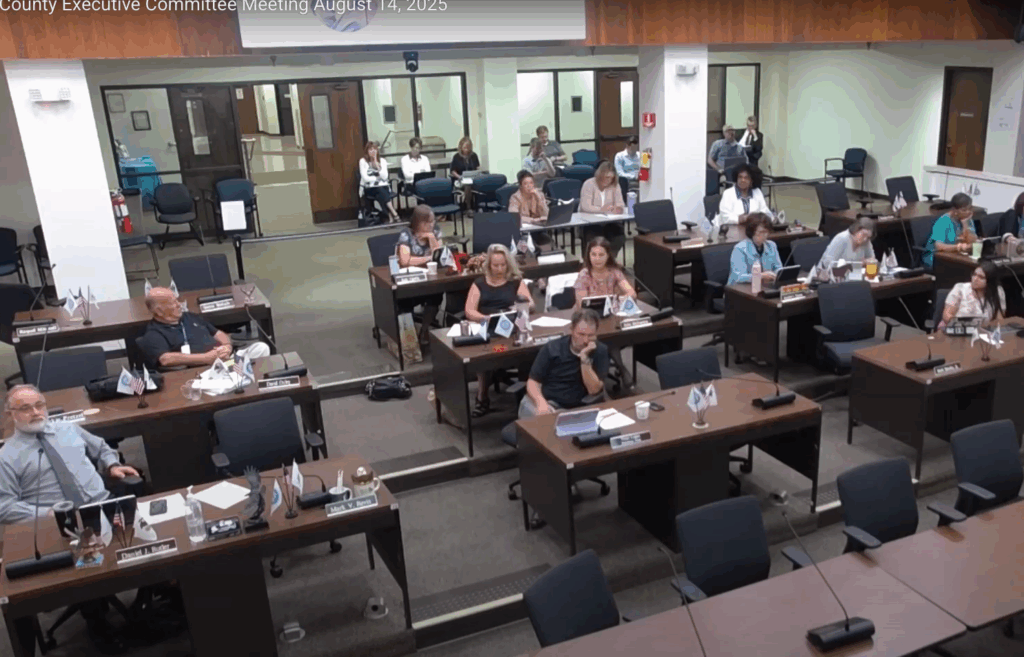
Executive Committee Considers $12,000 Strategic Planning Initiative with University of St. Francis
Executive Committee Members Decry Roadside Litter, Call for Action Against Garbage Haulers
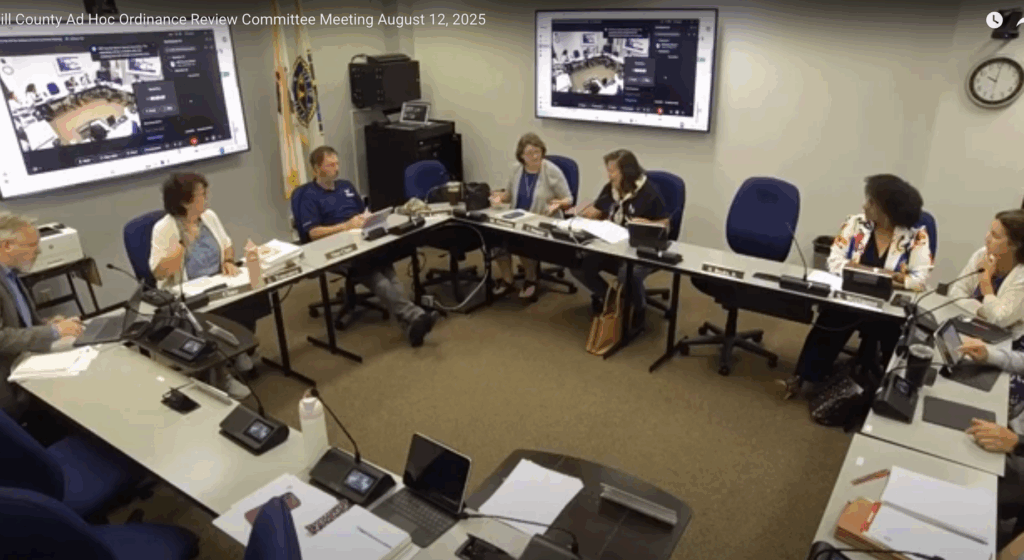
Will County Updates Solid Waste Ordinance, Increases Fines and Reporting to Landfill Committee
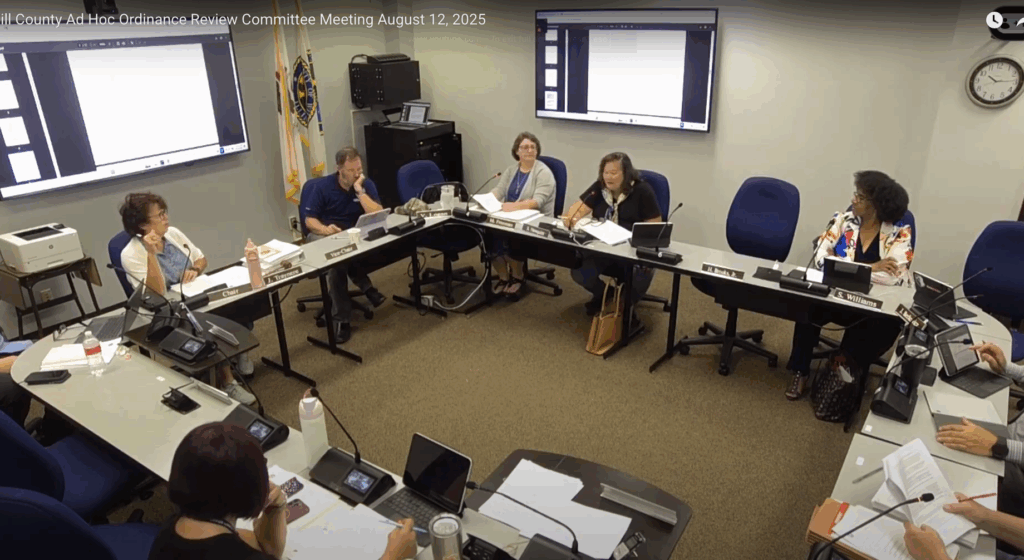
Citing Liability Concerns, Will County Committee Postpones Vote on Septic System Ordinance
Will County Moves to Repeal Obsolete 1972 Fire Hydrant Ordinance
Will County Board Gets Back to Basics with Robert’s Rules of Order Training
Executive Committee Approves Amended Houbolt Bridge Agreement to Settle Litigation

Meeting Summary and Briefs: Will County Board Committee of the Whole for August 12, 2025
Meeting Summary and Briefs: Will County Ad-Hoc Ordinance Review Committee for August 12, 2025
Will County Receives Detailed Update on Landfill Expansion Investigation
Report Finding Few Trucks Littering Sparks Debate on Cleanup Responsibility
Meeting Summary and Briefs: Will County Landfill Committee for August 7, 2025