Pritzker declares 11 county disaster over storms; state wants federal aid
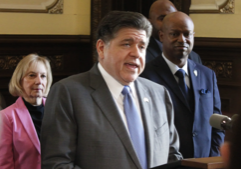
(The Center Square) – Illinois Gov. J.B. Pritzker issued a disaster declaration late Tuesday covering 11 counties across the state that received particularly destructive severe weather this spring and early summer.
A disaster declaration by the governor makes available state aid, and opens the possibility of federal aid.
The declaration covers communities in Coles, Cook, Effingham, Jefferson, Kankakee, Lasalle, McClean, Stephenson, Warren, Winnebago and Woodford counties for storms that occurred between March 10 and June 21.
Subsequent to the declaration, Pritzker visited impacted communities in Effingham and Jefferson Counties Wednesday.
“Our state department, our emergency management agency, state police and our department of transportation have been heroic, but nobody more heroic than the local law enforcement, local first responders, and local emergency management.,” Pritzker said. “We’re going to continue the recovery process with them and make sure that we’re accessing all the federal resources that we can along with the state resources that we’ve already provided.”
According to the declaration, the Illinois Department of Commerce and Economic Opportunity’s Community Development Block Grant program has funds available through Disaster Response, a program funded by the federal Housing and Urban Development department.
Local governments can apply for funding, capped at $250,000, to help with costs stemming from a disaster.
The governor’s proclamation may also allow for state workers to assist in recovery efforts, if requested by impacted communities.
While surveying damage Wednesday in Teutopolis, Pritzker said the state will pursue aid from the Federal Emergency Management Agency, which has the ability to approve federal funds to assist after disasters in U.S. states and territories.
“I hope that we can work in a bipartisan fashion to get those resources from FEMA and get a good response from them to help our counties. There are thresholds that they’ve set which are set in regulation at those departments sometimes set in law,” Pritzker said.
In February, officials announced FEMA denied the state’s last disaster declaration request and appeal. The request would’ve allowed thousands of residents to apply for federal assistance after a major storm produced widespread damage last August.
A separate source of federal relief less discussed is the Small Business Administration, which typically assists by providing low-interest loans to businesses and homeowners to help pay rebuilding costs.
Brad Cole, director of the Illinois Municipal League, recently told The Center Square that many of the costs associated with damage for local governments don’t impact taxpayers, but other costs might.
“A lot of things are covered by insurance, whether it’s private insurance or the city government’s insurance. So that will settle itself out. That gets sorted out later. But the real cost of things is in the overtime, the extra labor, whether that’s public works, or first responders like fire and police,” Cole said.
The IML itself insures around 60 to 65% of all municipalities in Illinois, Cole said.



Showers And Thunderstorms Likely
Latest News Stories

Trump says Iranian ceasefire on ‘life support’
Meeting Summary and Briefs: Will County Board Finance Committee for May 5, 2026
Trump proposes rule expanding IVF access

Committee Advances Nearly $212,000 in Road and Facility Contracts for Jackson Township and Monee
Will County Committee Hits Brakes on License Plate Reader Agreements Awaiting Privacy Policy Review
Meeting Summary and Briefs: Will County Board Capital Improvements & IT Committee for May 5, 2026
Pittsburgh nurses lead charge for paid leave, for everyone
Existing-home sales edge up in April as affordability improves
Accused correspondents’ dinner shooter pleads not guilty to all charges
Illinois Quick Hits: Diesel passes $6; unleaded price drops
U.S. Senate panel to examine fertilizer costs, food prices
Green Garden Solar Project Cleared to Implement Higher “Agrivoltaic” Standards

Everyday Economics: Stable but weak under the surface