Report: Wisconsin’s $2.7B projected surplus the result of inflation
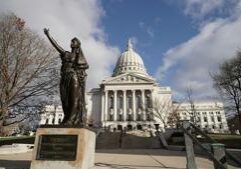
Inflation led to roughly $2.7 billion more in Wisconsin sales tax collections over the past five years than was projected, the same amount that the state is now projected to have in surplus at the end of its current two-year budget cycle, according to a new report from the University of Wisconsin-Madison’s Center for Research on the Wisconsin Economy.
The cost of a week’s worth of goods in the state has risen 28.1% since 2021, the report said.
“That money belongs to the taxpayers who bore the brunt of inflation, not the state,” the report, written by Professor of Economics Ananth Seshadri, said. “Because the windfall is one-time money, the relief should be one-time, too. On the economic question, no governor can move the national price level, but the prices a family actually pays are set partly at home, through zoning, utility rate design, and occupational licensing.
“Behind each lies the same force: regulation that throttles supply. Loosen it and the state grows cheaper to live in; leave it and the state grows more expensive.”
Seshadri wrote that it is clear that prices will not return to 2021 levels, so the only question is whether Wisconsin returns the surplus or uses its ability to lower the state’s cost of living.
“After a historic transfer of purchasing power away from Wisconsin households, the loss is no longer in question; it already happened,” Seshadri wrote. “Wisconsin cannot undo the inflation. It can still decide who keeps the change.”
The report comes after state lawmakers failed to pass a $1.8 billion surplus bill that included income tax refund checks, $600 million for schools and an end to taxes on tips and overtime.
The bill was an agreement between Gov. Tony Evers, Assembly Speaker Robin Vos and Senate Majority Leader Devin LeMahieu that passed the Wisconsin Assembly and had the support of Gov. Tony Evers but fell 18-15 in the Senate as all Senate Democrats and three Republican Senators voted against it.
Eighty percent of the 454 Wisconsin adults polled on the topic in May in a Marquette Law School Poll believed the bill should have passed, with that support crossing party lines and spanning statewide.






Sunny
Latest News Stories
Renovations at Veterans Assistance Commission and Court Annex on Track for Winter Completion
Will County Considers First Update to Wastewater Ordinance Since 2016
IDOT Plans to Invest Over $1.3 Billion in Will County Roads Through 2031
Committee Advances 50% Increase in Mental Health Levy on 4-3 Vote
Will County Poised to Launch Major Mental Health Initiative Based on Joliet Program’s Success
Looming State Energy Bill Threatens to Further Limit County Control Over Solar and Wind Projects
Controversial Immigrant Rights Resolution Postponed by Will County Board After Heated Debate
Will County’s Gas-to-Energy Plant Reports Nearly $460,000 Net Loss Amid Operational Setbacks
Will County to Draft First-Ever Policy on Artificial Intelligence Use
Will County Sees 50% Drop in Opioid Deaths, But Alarming Rise in Suicides
Will County Board Backs Effort to Rename ‘Stigmatizing’ Chicago Sanitary and Ship Canal
Access Will County Dial-a-Ride on Track for Full County-Wide Service in 2026