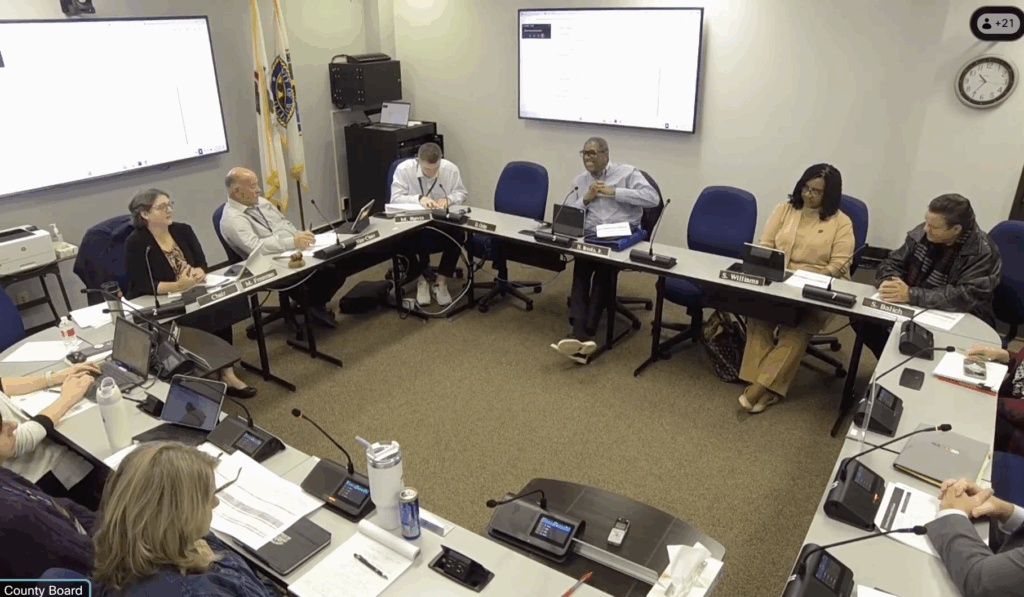
New statewide tenant law signed; Chicago seeks to push further
(The Center Square) – Illinois Gov. J.B. Pritzker signed a law into effect that lawmakers say intends to increase renter protections statewide.
Meanwhile, Chicago Mayor Brandon Johnson has his eyes set on a sweeping ordinance worrying many landlords.
The state law specifically targets undisclosed and “junk” fees that some tenants may not see on their lease.
House Bill 3564 requires new transparencies, specifically that all fees must be listed on the first page of a lease. It also prohibits application fees larger than $50 in most cases, any fee for a change or renewal of a lease, after-hours maintenance and multiple others.
State Rep. Nabeela Syed, D-Palatine, explained the process of working the bill into its now-signed form while on the House floor earlier this year.
“I’ve actually heard from several landlords in the negotiation process of this bill where they have talked about certain bad actors in the industry that are charging these absurd fees that don’t make sense,” Syed said. “This is simply trying to remove the ability to put additional fees that we have heavily negotiated, that are just causing undue burdens on individuals that are looking for housing.”
The law is set to take effect Jan. 1.
Chicago Mayor Brandon Johnson announced a new ordinance Monday also intended to protect tenants in the city.
“This sweeping overhaul of our existing laws will create new transformational protections for renters, protecting Chicagoans from predatory landlords, expensive and unexplained junk fees, displacement and no fault evictions,” Johnson said of the ordinance.
He was critical of past leadership in the city for not making an effort to protect renters, which he noted such statutes have not been updated in the 40 years since being introduced.
The ordinance was introduced to the Chicago City Council in a way that is out of the ordinary, according to Michael Mini, the executive vice president of the Chicagoland Apartment Association.
“I think one of the challenges or the concerns with this is it seems to be moving very quickly – or at least the mayor’s office seems to want it to move very quickly,” Mini said. “The ordinance was a little bit unusual in that it was done as a direct introduction in a committee meeting yesterday, as opposed to the normal route where you would introduce an ordinance at a city council meeting.”
The Chicagoland Apartment Association, a trade association with more than 250 property companies in the area, is highly opposed to the ordinance, according to Mini.
“There had not been any major changes to the ordinance because there was kind of this unwritten rule that those changes, any changes, should be negotiated between both sides, but that’s not what we’re seeing here in this process,” Mini said.
Mini told The Center Square the ordinance will do more harm than good in the affordability of housing, and the city has other options to better support residents.
“We recognize that there is an affordability, a housing affordability challenge here in Chicago and throughout the state,” Mini said. “We think that the only way that we’re going to be able to solve the affordability challenge is by increasing supply and building more housing.”






Sunny
Latest News Stories

With a word, RFK Jr. triggered $40B takeover of Tylenol
Illinois quick hits: Midway Blitz nabs nine drunk drivers; Madigan prosecutor to depart

Here’s how to get the $20 credit offered by YouTube TV in Disney dispute
Democrats want call program for immigrant detainees

Flight troubles not likely to end when shutdown does

Trump admin signals support for Paramount bid as Warner Bros. considers sale

WATCH: Trump says Veterans Day is ‘Victory Day’
Lawmakers divided after federal complaint targets student mental health screening law

Cruz, Cornyn file bill to make federal benefit fraud a deportable offense

DHS, USCIS report record job applications under Trump administration

Virginia Beach, Chesapeake rank among best cities for veterans

Normal, IL fire and EMS challenges highlight need for statewide task force

Analysis: Chicago among worst cities to drive in