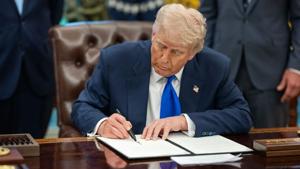
Appeals court hears arguments in religous contraception case
The U.S. Court of Appeals for the Third Circuit weighed arguments on Tuesday over mandating religious organizations who object to provide access to contraceptives through healthcare coverage.
Judges on the third circuit heard challenges from New Jersey and Pennsylvania asserting that organizations, including Catholic ministry Little Sisters of the Poor, needed to provide access to contraceptives including abortion pills in Affordable Care Act employer healthcare plans.
In 2016, the U.S. Supreme Court ruled that the federal government could not require certain religious ministries, like Little Sisters of the Poor, to provide healthcare coverage of contraception under the ACA. In 2017, the federal government created a rule exempting ministries, like Little Sisters, from retaining contraception coverage.
However, the high court did not prevent states like New Jersey and Pennsylvania from pursuing challenges to the rule.
Mark Rienzi, lead attorney for Little Sisters of the Poor, said the religious exemption put into federal law must be respected by Pennsylvania and New Jersey. He said religious exemptions are meant to allow choice among options of healthcare coverage.
“Religious accommodations are the best of our traditions and the reason they are is because they allow live and let live exemptions,” Rienzi said.
Rienzi also called on the judges to expand the categories of employers who could seek contraception exemptions in healthcare plans. Lawyers for Little Sisters said the exemptions would almost exclusively be used by nonprofit organizations that align with certain religious beliefs, to keep the exception narrowly tailored.
Amy Thompson, a lawyer representing Pennsylvania and New Jersey, argued that the exception caused harm to women seeking coverage of contraceptives through employer-based healthcare plans. She said 120,000 women would lose coverage if the court adopted exemptions for entities who sought to claim a moral conviction or other concern with providing contraceptives through its healthcare plan.
Judge Cheryl Ann Krause appeared to agree with concerns about certain women lacking access to contraceptive health care. She questioned whether the court would be going too far in regulating access by extending its exemption beyond ministries like Little Sisters.
Thompson said the expansion of exemptions would make it harder to determine which companies could refuse to qualify for contraceptive coverage.
“How would [they] be able to possibly determine what an exercise of religion would be,” Thompson said. “It isn’t clear who in the corporate leadership would determine whether something like that existed.”
She said other corporations would seek an exemption to avoid paying out health care plans for their employees.
“[There is] no ability to determine whether that employer has a moral conviction consistent with the test to set that standard,” Thompson said.
Rienzi said the court should consider dropping the case and allowing Little Sisters to maintain an exemption against contraceptive coverage. He said the expanded exemption would be a natural extension of the existing federal laws protecting religious ministries.
“We’re confident that the court will deliver yet another victory protecting the Little Sisters’ ministry to the most vulnerable,” Rienzi said.





Patchy Fog then Sunny
Latest News Stories
U.S. Supreme Court to hear asylum, voting, pipeline cases next term

Illinois second in local fines and forfeitures

Report: Taxpayer dollars help nonprofit hospitals pad executive salaries, pay for lawsuits

Over 7 million student loan borrowers have 90 days to switch repayment plans
Pritzker signs 62 new laws, many not in effect until 2027
Federal workforce shrank by 256,000 in 2025. Deficit barely moved.

Illinois Quick Hits: Ruling supports Illinois mail-in ballot laws

Election 2026: Singular goal to win elections, different ideas to get there

Democratic group calls for U.S. social media ban for kids under 16
Colorado Dems seek to flip longtime GOP congressional seat

EXCLUSIVE: 14 state AGs confront insurance giant for prioritizing climate activism
U.S. Supreme Court agrees to hear Washington parental rights case