Feds buy two immigration detention centers for $1.5 billion
Private prison operator CoreCivic has sold two Southern California immigration detention centers to the federal government for $1.5 billion.
Under the deal, the U.S. Department of Homeland Security takes ownership of the Otay Mesa Detention Center in San Diego County for $739.2 million and the California City Detention Facility in Kern County for $732.6 million. CoreCivic owned and operated the centers, which were used to detain illegal immigrants under contracts with U.S. Immigration and Customs Enforcement.
Now DHS will own the properties. But CoreCivic will continue to run day-to-day operations under its existing contracts with ICE. CoreCivic’s contracts for California City run through 2027. The Otay Mesa contracts are through 2029.
Ryan Gustin, senior director of public affairs at CoreCivic, said both facilities were purpose-built and specifically designed to care for individuals in a secure environment. Gustin added that asset transactions of this nature are not uncommon for government.
“The process was marked with rigor and integrity,” Gustin told The Center Square Wednesday, answering questions by email. “The facility valuations were established through the federal government’s required appraisal process, which is designed to determine objective fair market value.”
For these specialized properties, Gustin said independent appraisers used a transparent cost-based methodology grounded in current replacement cost, depreciation, land value and other market-based factors, with the appraisals then reviewed by the government for compliance with federal standards.
The centers are in two vastly different locations. The Otay Mesa facility is in a San Diego foothills area next to the U.S.-Mexico border. California City is a community of about 15,000 people in the northern Antelope Valley, located 100 miles north of Los Angeles. The community is known for its vast open spaces stretching into the surrounding desert.
Lauren Bis, acting assistant secretary for public affairs and deputy assistant secretary for media relations at DHS, said this purchase was made possible by the One Big Beautiful Bill Act, which allowed ICE to expand detention space to fulfill President Donald Trump’s promise of mass deportations. Unlike in states like Florida and Oklahoma, Bis said ICE cannot rely on local state and county partners for detention space in California.
“The state’s sanctuary politicians continue to push legislation to outlaw or make private prisons financially infeasible,” Bis told The Center Square Wednesday, answering questions by email. “Now, with federal ownership of these detention centers, which are crucial to ICE’s detention network on the West Coast, ICE retains the detention capacity needed to arrest, detain and remove illegal aliens.”
California has passed laws to phase out privately owned detention centers and allow for local or state oversight of private facilities.
One such law is Assembly Bill 32.
Signed in 2019 by Democratic Gov. Gavin Newsom, the legislation prohibited California’s Department of Corrections and Rehabilitation from entering into or renewing contracts with private, for-profit prison operators. The timetable to end such contracts is Jan. 1, 2028.
California has also enacted laws requiring private facilities to be held to specific standards of care. That includes private facilities that operate as federal contractors.
DHS’ decision to purchase the detention centers follows California’s enactment of these laws.
Many individuals and organizations oppose immigrant detention centers for various reasons. National Immigrant Justice Center has raised concerns about inadequate healthcare, while the American Civil Liberties Union has mentioned substandard facilities. Migration Policy Institute has stated that private prison corporations are “profiting from enforcement.”
In a press release regarding the California City facility, the organization known as Freedom for Immigrants called it an “abuse-ridden ICE detention center.” Freedom for Immigrants also warned that the detention center’s operations “pose serious practical challenges for local residents, threatening to impact local water, sewer and road systems.”
Tammy Glenn, director of the communications office at San Diego County, said the county is committed to people’s health and safety, including inmates at the Otay Mesa Detention Center and other local detention facilities.
“We appreciate a recent ruling by a federal judge recognizing San Diego County Public Health’s authority to conduct a health and safety inspection,” Glenn told The Center Square in an email. “The health and environmental inspection was conducted on June 12, 2026, and a report about the inspection is expected to be released to the public soon.”
People on the other side of the argument said these types of detention facilities are necessary.
Ira Mehlman, media director at the Federation for American Immigration Reform, said ICE needs the detention facilities to be able to hold people.
“You can’t detain people if you can’t hold them pending their removal,” Mehlman told the Center Square during a phone interview. “We’ve seen how this plays out in the past where they would make arrests, there would not be sufficient detention facilities. They’d release them and have to go find them again.”
Pointing to the deal between CoreCivic and the federal government, Mehlman said this ensures that they will be able to hold people. It also becomes a “deterrent” for people to come to the United States illegally.
“The best, most humane, most effective form of law enforcement is convincing people not to break the laws in the first place,” said Mehlman.





Isolated Showers And Thunderstorms
Latest News Stories

National security group report questions Environmental Law Institute’s China ties

National security group report questions Environmental Law Institute’s China ties
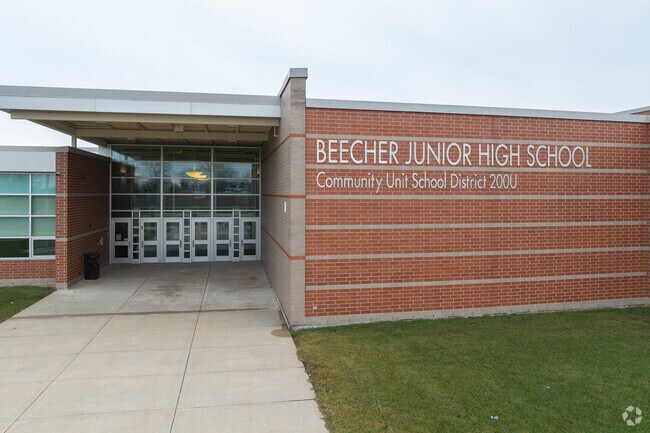
Meeting Summary and Briefs: Beecher 200-U Board of Education for June 10, 2026

UPDATED: Fireworks and fairs planned in nation’s capital for America’s 250th

Millions under extreme heat warning for July 4th weekend
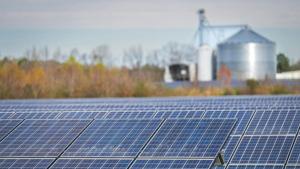
Trump to cut solar, wind subsidies on July 4th

Arizona congressman seeks to boost military hazard pay

Arizona congressman seeks to boost military hazard pay

Report: Wisconsin’s $2.7B projected surplus the result of inflation

AAA: Record July 4th travel expected as gas prices ease

AAA: Record July 4th travel expected as gas prices ease
A year after deadly floods: Foundation launches national parent pledge campaign