Taxpayers bear burden for federal student loans
An almost $1.8 trillion student loan portfolio continues to keep taxpayers on the hook.
That’s the picture as the federal government scales back broad student loan forgiveness and implements new repayment programs.
The policy changes have renewed debate over whether Washington, D.C should continue serving as one of the nation’s largest banks for student lenders and whether taxpayers should shoulder the costs of student loan forgiveness.
The changes come as the Trump administration implements new student loan policies while continuing efforts to reduce the role of the U.S. Department of Education.
Federal student loans differ significantly from private loans. Federal undergraduate loans issued for the current academic year carry a fixed interest rate of 6.52%, while other federal loans range from 6.52% to 9.07%.
Private lenders generally offer fixed or variable rates ranging from about 2.49% to 17.99%, depending on a borrower’s credit score, according to a federal website, studentaid.gov, and rates offered by private lenders such as Sallie Mae and College Ave. Unlike private loans, federal loans offer income-driven repayment plans, deferment while in school and, depending on eligibility, loan forgiveness.
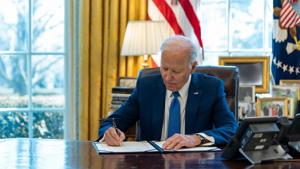
In 2024, the Committee for a Responsible Federal Budget, a Washington, D.C.-based nonprofit, projected that President Joe Biden’s student loan cancellation plans could cost taxpayers a combined $870 billion to $1.4 trillion.
Under the recently enacted Working Families Tax Cuts Act, from President Donald Trump’s One Big Beautiful Bill Act, borrowers will transition into new repayment options, including the Repayment Assistance Plan and a Tiered Standard Repayment Plan.
Since July 1, borrowers enrolled in automatic payments have become eligible for a 1% interest rate reduction. Those enrolled by Sept. 30, 2026, will receive the reduction through June 30, 2028.
That day also marked the beginning of a 90-day transition period for approximately 7.5 million borrowers previously enrolled in the Biden administration’s now-defunct SAVE repayment plan.
Before the change, if a borrower was enrolled in auto-pay, they would get a 0.25% reduction rate. Now it is 1%. The Trump administration said this change will streamline an easier process for borrowers to pay back their loans.
The Committee for a Responsible Federal Budget criticized the Education Department’s new policy.
According to the nonpartisan nonprofit, the change could cost taxpayers at least $5 billion and effectively amounts to a form of student debt cancellation because it reduces the total amount borrowers repay over the life of their loans rather than lowering monthly payments.
“Make no mistake: Quadrupling the auto-pay incentive is debt cancellation by another name. And worse, it’s targeted at people already making repayments,” CRFB President Maya MacGuineas said. “The auto-pay interest deductions don’t even reduce monthly payments or improve affordability — they just wipe out debt balances, especially for high-earning professionals that are already doing quite well.”
Andrew Gillen, a research fellow at the Washington, D.C.-based think tank Cato Institute, told The Center Square the labor market no longer justifies the rapid expansion of college enrollment over the past several decades.
Gillen said America has more people with college degrees than jobs that require them. While only about 38% of Americans have graduated with a college degree or higher, 25% to 28% of jobs require a degree, he noted.
He also said borrowers facing the greatest repayment challenges tend to fall into two groups: students who leave college without completing a degree and graduate students who accumulate substantial debt.
From a taxpayer perspective, Gillen said recent reforms significantly reduce the federal government’s projected losses on student lending.
During the Biden administration, he said, the federal government was projected to lose roughly 20 cents for every dollar lent through student loan programs. After Congress approved new repayment changes, Congressional Budget Office estimates indicate projected losses could fall to about 3 cents per dollar.
“This is basically moving us to a budget-neutral student loan system, which is exactly where the student loan system should be. We shouldn’t be using student loans to either subsidize or tax college education,” Gillen told The Center Square.
Wayne Winegarden, a senior fellow in business and economics at the Pasadena, Calif.-based Pacific Research Institute, said taxpayers remain financially on the hook because many federally backed loans financed degrees whose economic returns did not justify their costs.
Winegarden also said Congress should avoid broadly delegating student loan authority to the executive branch, arguing that clearer legislative direction would create greater long-term stability.
“You see, universities are struggling. Some of them are shutting down,” Winegarden told The Center Square. “It’s no place for the federal government to come in and start, kind of getting involved in those decisions.”
Litigation against the Department of Education was filed on July 1 after the Project on Predatory Student Lending, a borrower advocacy organization, sought records detailing the status of group student loan discharges, which cancel remaining balances on borrowers’ accounts, following the department’s announcement of new student loan policies.
The lawsuit claims the department committed to canceling over $23 billion in federal student debt for approximately 1.5 million borrowers but has provided limited information about how much of that relief has actually been completed. The organization also says some borrowers who were approved for loan cancellation continue to see outstanding balances on their accounts.
Student loan debt remains significant across the country as the student loan debt portfolio reached $1.8 trillion.
According to the U.S. Census Bureau and Education Data Initiative, in California, nearly 3.9 million borrowers collectively owe over $150 billion in student loans, with an average balance of about $38,300 per borrower. Delinquency and default rates are approaching 10% in major metropolitan areas and exceed 16% in parts of the Central Valley.
Texas has almost 4 million student loan borrowers carrying approximately $137.4 billion in outstanding debt. The average borrower owes about $34,608, while student loan delinquency stands at roughly 8.5%, below the state’s overall debt delinquency rate of about 10.5%.
In Illinois, approximately 1.62 million borrowers owe a combined $63.4 billion in student loans, averaging $39,042 per borrower. About 39.2% of adults have earned at least a bachelor’s degree, while the state’s student loan delinquency rate is approximately 13.7%, among the highest of the four states.
Critics in Illinois of President Donald Trump’s One Big Beautiful Bill Act, also known as H.R. 1, say this legislation eliminated multiple Income Driven Repayment plans and replaced them with ones that require all borrowers, even those without a job or steady income, to make monthly payments. They argue the changes could drive more students to rely on private loans because of stricter federal borrowing limits.
The Illinois Department of Financial and Professional Regulation “expects H.R. 1 to impact Illinois borrowers and anticipates an increase in the use of private student loans due to more stringent loan caps and the elimination of the Graduate PLUS loan program,” Steven Johnson, the department’s public information officer, told The Center Square.
New York has more than 2 million student loan borrowers with approximately $90 billion in student loan debt, with average balances ranging from $35,000 to $40,000. Student loan delinquency in the state sits around 10%.
This means that a little over 10% of those with student loans are in serious delinquency in 2025, meaning they are over 90 days or more past due.
Nationally, this continues to cost taxpayers as interest rates increase on student loan balances that borrowers delay repaying.
For a federal borrower, depending on the repayment plan they are on, it could take 10 to 25 years to repay their student loans, according to the Consumer Financial Protection Bureau.
Winegarden said many borrowers struggle because tuition and borrowing levels have outpaced the earnings graduates can reasonably expect. While some professional degrees, such as medicine, often generate enough income to support large loan balances, he said that has not proven true across much of higher education.
“The cost of the education was way too high relative to the returns that you could get from attending,” Winegarden told The Center Square. ”And that’s why, in part, the payment is somewhat onerous compared to the salary that you can get.”
The U.S. Department of Education did not directly answer questions from The Center Square about the financial impact of the policy changes or taxpayer costs, instead providing previously issued news releases and the administration’s announcements on student debt and loan repayment obligations.





Partly Sunny
Latest News Stories

U.S. lawmakers discuss Social Security, have no plan to prevent insolvency
Congressman calls out Chicago schools’ academic woes

Trump: 100M barrels of oil passed through Strait of Hormuz
Over 500 hospitals warned of fines if they continue hiding prices from patients
Free speech issues raised as calls come for Pritzker to veto social media safety bill
Illinois Quick Hits: Small business optimism index falls
Budget allows Arizona to fully implement Trump’s tax cuts
Gates sought donations from Epstein despite knowledge of crimes
Michigan court overturns man’s conviction in Whitmer kidnapping case

Watchdog urges feds to rescind Biden’s Title IX rule
Becerra, Hilton to square off for California governor
Biden-era lizard threat to Permian Basin nixed under Trump