Advocates call for Kagan investigation on climate change bias
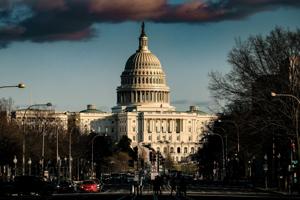
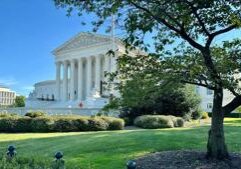
Advocates are calling on the U.S. Senate Monday to investigate conflicts of interest from U.S. Supreme Court Justice Elena Kagan. The advocates argued Kagan was biased in favor of climate science and should not participate in a consequential case that could determine the future of climate change policies.
Leaders from the Judicial Crisis Network, the Heritage Foundation, the National Republican Lawyers Foundation and others wrote a letter to lawmakers on the Senate Judiciary Committee about concern over Kagan’s support for climate change.
Justices on the high court are expected to hear Suncor v. Boulder County Commissioners, a case examining whether state and local governments can prevent fossil fuel companies from engaging in global emissions activities that contribute to climate change.
In Boulder County, officials attempted to institute nuisance laws to prevent energy companies like Suncor from emitting pollutants. Nuisance laws are typically used to deal with discrepancies between neighbors where an individual may be conducting business that harms another’s property interest.
In the letter, analysts point to Kagan’s authorship of a foreword in the Fourth Edition of the “Reference Manual on Scientific Evidence” published by the National Academies of Science, Engineering and Medicine in December 2025.
The manual included a chapter on Climate Science, where it referenced the “attribution theory.” The theory is used to posit that scientific modeling is used to attribute the effects of climate change from greenhouse gas emissions.
“This section was designed to persuade ‘skeptical’ judges in state and local climate lawfare,” the advocates wrote.
The advocates said content in the chapter was inserted from individuals who advocate for legislation to restrict greenhouse gas emissions.
“The chapter was so biased that the Federal Judicial Center, which produced the Reference Manual with the National Academies, withdrew it from the version it publishes in response to complaints from multiple state attorneys general and Congress,” the advocates wrote.
The advocates argued that Kagan’s authorship as part of the manual is evidence she is unable to make an unbiased decision in Suncor v. Boulder County Commissioners. The Constitution requires justices on the Supreme Court to recuse themselves from consideration of cases in which “impartiality might reasonably be questioned.”
Kagan did not recuse herself from consideration of the court’s petition when it was granted in February 2026.
“Justice Kagan’s participation in the Suncor case is indefensible given her public endorsement of climate-lawfare plaintiff theories,” the letter read.
Carrie Severino, president of the Judicial Crisis Network, said Kagan cannot act as a “neutral arbiter” in climate change cases. She said Kagan’s writing in the manual was an endorsement of its ideals.
“Kagan’s implicit judicial endorsement of the manual and her support of climate-lawfare theories are evidence she cannot remain impartial on climate litigation, including the Court’s upcoming Suncor case,” Severino said. “She must recuse herself immediately.”
The advocates called on the Senate Judiciary Committee to examine Kagan’s conflicts and hold hearings to determine whether she should remain a deciding voice in the case. Justices on the high court will likely hear arguments in the Colorado case in the fall.



Sunny
Latest News Stories
Persistent Leaks at New Beecher Public Safety Facility Prompt Calls for Third-Party Inspection

Illinois’ gun ban set for oral arguments in appeals court Monday

Law professor explains why Trump could win tariff case

WATCH: Los Angeles schools superintendent renews contract

Southern California Edison works on paying Eaton Fire victims
U.S. Sen. Mark Kelly presents ‘AI for America’ roadmap
WATCH: Education department launches America 250 effort

Trump: Chicago needs ‘big, strong soldiers’
WATCH: Gov. Gavin Newsom signs climate and energy bills

Large Wisconsin data center tax breaks make benefits unclear
Panelists debate costs of energy legislation as Illinoisans struggle to pay bills

Hearing held after report on tax money funding woke ideology in nonprofit hospitals