Senate panel sits on AI jobs-data bill 8 months on
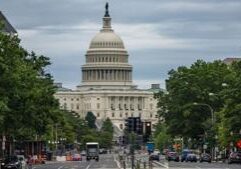
A bipartisan U.S. Senate push to make the federal government track AI’s effect on jobs has gone unanswered for four months, and the bill meant to force companies to report AI-related layoffs has sat without a vote in committee since November.
“I have not received a response to the letter,” Sen. Mark Warner, D-Va., told The Center Square on Monday, referring to a March 6 letter he and Sen. Josh Hawley, R-Mo., sent pressing the Bureau of Labor Statistics and Census Bureau to add AI-specific questions to major labor surveys.
The letter cited language in the fiscal 2026 appropriations act directing BLS to study AI’s effect on job loss and creation.
The senators’ bill, the AI-Related Job Impacts Clarity Act, would require companies to report AI-related layoffs. It has sat in the Senate HELP Committee without action since it was introduced Nov. 5, 2025. Asked about the holdup, Warner said, “The chairman determines the committee schedule.”
Hawley’s office did not respond to a request for comment by press time.
The senators’ letter and bill predate Monday’s “We Must Act Now” statement, in which more than 200 economists and AI researchers – including 16 Nobel laureates – warned that AI could disrupt the economy fast. Organized by Stanford University’s Digital Economy Lab, the statement calls on leaders to build “incentives, guardrails, and institutions” to prepare for AI-driven job losses – but the four-sentence letter names no dollar figure, no legislation and no agency responsible for acting.
Federal budget forecasters are only beginning to grapple with the same question. CBO’s February outlook built in a modest AI productivity boost – 0.1 percentage point a year – while cautioning that “considerable uncertainty” surrounds both the pace of adoption and the resulting productivity gains, meaning the effects “could ultimately prove larger or smaller” than the baseline assumes.
A new working paper by former CBO Director Douglas Elmendorf and economists Karen Dynan and Louise Sheiner complicates the outlook: even in their most severe scenario – permanent job displacement, unemployment up 2 points, income flowing almost entirely to capital owners – faster growth shrinks federal debt rather than expanding it.
The paper’s other scenarios range from AI simply boosting growth broadly with no job losses, to growth that lifts incomes only for the top quintile, to a middle scenario where AI displaces about 3 million workers at any given time – roughly double the scale of the “China shock” of the 2000s – but new jobs also emerge. The harder question, they argue, is political: whether Congress lets existing programs erode relative to the economy, or steps in to support displaced workers.
Treasury did not respond to a request for comment by press time.
The companies building the technology previously warned of widespread layoffs. Anthropic CEO Dario Amodei warned in May 2025 that AI could eliminate half of entry-level white-collar jobs and push unemployment to 10-20%.
This month, he described something different: “If you automate 90% of the job, then everyone does the 10% of the job,” he said, adding that the remaining work “expands to be 100% of what people do” at 10 times the productivity.
OpenAI CEO Sam Altman, who once said entire job categories would be “totally, totally gone,” told an audience in Sydney in May that he was “pretty wrong” about AI’s near-term economic impact and “delighted to be wrong.”
Both companies have confirmed confidential IPO filings this year; Anthropic’s most recent funding round valued it at $965 billion. Anthropic and OpenAI did not respond to requests for comment by press time.
“We cannot afford to wait until AI has fundamentally transformed our economy before we begin preparing for its impact on American workers,” Warner told The Center Square.
He’s introduced three bills this year aimed at closing the data gap – the AI-Related Job Impacts Clarity Act, the Workforce Transparency Act and the Economy of the Future Commission Act. None has moved out of committee.





Sunny
Latest News Stories

Entrepreneur’s supporters say case law may result in release
GOP lawmakers silent on Trump’s EO punishing state AI guardrails

Gabbard: 2,000 Afghan refugees in U.S. have ties to terrorism

Op-Ed: No more CDL mills: Trump’s DOT puts safety back in the driver’s seat
Illinois Gov. Pritzker signs assisted suicide bill
Hochul weighs AI regulations as Trump sets federal rules
EXCLUSIVE: First Nation police chiefs want to participate in border security efforts
Justice Department sues Fulton County over election records

USPS electric fleet push sparks cost, security and job concerns

WATCH: Use of Guard debated; Trump singles out Pritzker on AI; Property tax ruling

Illinois quick hits: Chicago Fed president explains vote; Treasurer encourages Bright Start gifts

EXCLUSIVE: Canadian groups, First Nation police support stronger border security