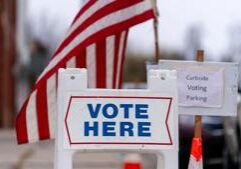
U.S. House passes election campaign financing bill
The U.S. House passed a bill Monday that would restrict funding of state and local political races and ballot proposals to American citizens only.
The Stop Foreign Funds in Elections Act, sponsored by U.S. Rep. Brian Fitzpatrick, R-Pa., aims to prevent foreign money from influencing how U.S. elections are conducted and what proposals make it to the ballot.
“Foreign funds should not be influencing or financing ballot measures, referenda, or recall elections,” Rep. Brian Steil, R-Wis., who spoke in support of the bill, told lawmakers ahead of the Monday vote.
“Current law already prohibits foreign money in federal elections, and this bill broadens that nonpartisan, commonsense prohibition to similar state and local elections,” he said. “Elections should be decided by Americans, and they should not be influenced or funded by foreign nationals.”
As recently as 2024, foreign billionaires moved money through nonprofit “dark money” groups like the Sixteen Thirty Fund to support progressive ballot initiatives related to abortion access and automatic voter registration in multiple states, including Ohio, Arizona and Nevada.
With the midterm elections quickly approaching, the Republican-controlled Congress has amped up attempts to reform or restructure campaign financing and election laws, arguing that both federal and state-level election rules are inadequate to protect election security and prevent fraud.
A vocal handful of Republicans have even blocked the advance of critical bills over the past couple of weeks over demands that leadership use any means necessary to pass the SAVE America Act. The legislation would require people to show proof of U.S. citizenship when registering to vote in federal elections, require voters to show photo ID when casting a ballot in a federal election, and mandate states to remove noncitizens from voter rolls.
Democrats have called the legislation an act of voter suppression, arguing that instances of illegal voting are rare and that stronger proof of citizenship requirements can disenfranchise rural and low-income Americans.
Republicans deny the accusations, calling legislation like the SAVE America Act a “common sense” step toward increasing election security.
The SAVE America Act, which has already passed the House, has little chance of becoming law unless Republicans get rid of or significantly modify the Senate filibuster, which imposes a 60-vote threshold for passage of most bills.
Senate Majority Leader John Thune, R-S.D., has already ruled out that possibility, which he says does not have enough caucus support.


Patchy Fog then Sunny
Latest News Stories

Beecher Board Grants Nonconforming Status to Keep Dixie Highway Home Residential
Republican incumbents win Colorado congressional primaries
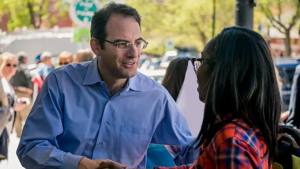
Weiser wins Dems’ primary for governor; GOP race is close
Hickenlooper survives primary, DeGette too close to call in Colorado races

Tennessee congressman introduces bill to ban ‘birthright tourism’

WATCH: Advocacy groups react to transgender athletes ruling
Dems praise Supreme Court’s birthright citizenship ruling

NASA signs $590M in moon deals; total program cost unknown
Analysts: Civil rights defined Supreme Court term
Officials: Trans athlete bans won’t change Illinois school sports

From Nebraska to Connecticut: more TdA ATM jackpotting arrests, sentencings

Advocates worry new law will raise drug prices, harm self-insured businesses