U.S. House passes election campaign financing bill
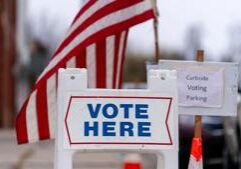
The U.S. House passed a bill Monday that would restrict funding of state and local political races and ballot proposals to American citizens only.
The Stop Foreign Funds in Elections Act, sponsored by U.S. Rep. Brian Fitzpatrick, R-Pa., aims to prevent foreign money from influencing how U.S. elections are conducted and what proposals make it to the ballot.
“Foreign funds should not be influencing or financing ballot measures, referenda, or recall elections,” Rep. Brian Steil, R-Wis., who spoke in support of the bill, told lawmakers ahead of the Monday vote.
“Current law already prohibits foreign money in federal elections, and this bill broadens that nonpartisan, commonsense prohibition to similar state and local elections,” he said. “Elections should be decided by Americans, and they should not be influenced or funded by foreign nationals.”
As recently as 2024, foreign billionaires moved money through nonprofit “dark money” groups like the Sixteen Thirty Fund to support progressive ballot initiatives related to abortion access and automatic voter registration in multiple states, including Ohio, Arizona and Nevada.
With the midterm elections quickly approaching, the Republican-controlled Congress has amped up attempts to reform or restructure campaign financing and election laws, arguing that both federal and state-level election rules are inadequate to protect election security and prevent fraud.
A vocal handful of Republicans have even blocked the advance of critical bills over the past couple of weeks over demands that leadership use any means necessary to pass the SAVE America Act. The legislation would require people to show proof of U.S. citizenship when registering to vote in federal elections, require voters to show photo ID when casting a ballot in a federal election, and mandate states to remove noncitizens from voter rolls.
Democrats have called the legislation an act of voter suppression, arguing that instances of illegal voting are rare and that stronger proof of citizenship requirements can disenfranchise rural and low-income Americans.
Republicans deny the accusations, calling legislation like the SAVE America Act a “common sense” step toward increasing election security.
The SAVE America Act, which has already passed the House, has little chance of becoming law unless Republicans get rid of or significantly modify the Senate filibuster, which imposes a 60-vote threshold for passage of most bills.
Senate Majority Leader John Thune, R-S.D., has already ruled out that possibility, which he says does not have enough caucus support.





Mostly Sunny
Latest News Stories
Vought testifies before lawmakers on Trump’s $2.1T budget request

SNAP eligibility changes spark debate on gap for impacted recipients

Trump puts spotlight on China, Iran’s top oil consumer
Lawmakers, auditors offer fraud prevention solutions

Illinois unions seek to kill Waymo-friendly bill in Springfield

Will County Animal Protection Services Advises Against Multi-Campus Shelter Model
Executive Committee Advances $15,000 Strategic Plan Initiative
Rich States Poor States: Tax policy largely determines states’ economic competitiveness

P&Z Commission Overrides Staff Denials, Rescuing Special Use Permits for Joliet Wedding Venue and Romeoville Barge Terminal
Will County P&Z Commission Grants Extensions for Joliet Township Solar Farm Ground Cover

P&Z Approves Lockport Bounce House Business Expansion
78 pro-life orgs ask DOJ to stop undermining state laws by favoring aborting drug industry