
Democrats tank advance of national defense bill in U.S. Senate
U.S. Senate Democrats blocked a critical Pentagon funding authorization bill from advancing Tuesday, a show of rebellion against the Trump administration resuming military hostilities in Iran despite Congress ordering a halt.
The vote to move forward the Senate edition of the fiscal year 2027 National Defense Authorization Act failed by 10 votes, only a week after the House’s version failed to advance due to Republican infighting.
The legislation would authorize a historic $1.1 trillion for programs and operations under the Department of Defense and $41 billion for the Department of Energy’s nuclear weapons program.
The House and Senate must ultimately meld their respective NDAA versions, which currently have the same $1.14 trillion funding topline, into a final product that will pass both chambers. At present, that appears unlikely to happen anytime soon.
“One, it’s a bloated budget to a Pentagon that continues to fail to pass an audit,” Sen. Chris Van Hollen, D-Md., said on social media. “Number two, [it has] no restraints on Trump’s illegal war against Iran, essentially giving a green light to that illegal war that’s been disastrous for the American people.”
Congress never authorized the initial U.S.-Israeli strikes on Iran in February, nor any of the administration’s military actions that followed.
President Donald Trump initially invoked the War Powers Act of 1973, which gives the president 60 days to conduct military operations without congressional approval. When that date passed, Trump declared a temporary ceasefire – which he argued reset the clock – despite continued military hostilities.
By the time the U.S. and Iran signed the 60-day peace framework in mid-June, enough Republicans in both chambers of Congress voted to pass a War Powers Resolution, a measure meant to prevent the president from further unauthorized military action.
With the ceasefire having collapsed, the Trump administration is restarting military assaults and again using the argument that it is legally able to do so under the War Powers Act, despite a legal order from Congress not to continue.




Patchy Smoke
Latest News Stories

DOJ targets healthcare fraud in California, Arizona, Nevada

Beecher Holds Off Iroquois West in High-Scoring 12-10 Thriller

Illinois Quick Hits: University of Chicago to offer free tuition

Human capabilities focused in student, teacher artificial intelligence guide

U.S. House to vote on bills targeting fraudulent, foreign election donations

Responses due in Virginia redistricting appeal
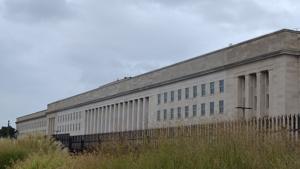
Pentagon seeks record budget despite failing every audit

GOP oversight report: Democrats created ‘culture of fraud’

Illinois Republicans blame taxes, lawsuits after Morton Salt exits Chicago

Data center regulations weighed; some worry over jobs, energy, taxes

Supreme Court affirms court authority in discrimination suit

Illinois ranks 46th out of 50 states for financial transparency