
Legislator seeks to exempt cap for Hollywood tax credits
Legislators fear California will become noncompetitive again in attracting major film and TV productions if changes aren’t made to the state budget.
The $350 billion budget presents a $5 million cap in tax credits per project, or in Hollywood’s case, per TV show or movie, as outlined in Senate Bill 122. That would mean a reduction in current tax credits for productions with bigger budgets. The budget was passed June 29 by the Legislature and immediately signed into law by Gov. Gavin Newsom.
If the tax credit cap remains in effect, California will take steps backward to being noncompetitive against states with larger tax credits, said Assemblymember Rick Chavez Zbur, D-Hollywood.
Bringing movie and TV productions back to California has been a priority for Zbur, other legislators and Newsom. Last year, the Democratic governor more than doubled the California Film and TV Tax Credit program from $330 million to $750 million, The Center Square previously reported.
In light of the state’s priorities, Zbur, D-Hollywood, authored a letter to Newsom, who signed the budget into law; Senate President Pro Tempore Monique Limón, D-Santa Barbara, and Assembly Speaker Robert Rivas, D-Hollister, in which Zbur called for an exemption for the Hollywood tax credits.
Zbur asked Newsom and the legislative leadership to make discussions and amendments of the tax credit cap a priority before the legislative session ends in late August.
“For 100 years California was the home of film and television production. That is the past. What the Legislature does to address the problem created in SB 122 determines if that remains true into the future,” Zbur wrote in the letter, which was sent to The Center Square.
The letter has been signed by 39 legislators, and discussions have taken place in both houses of the Legislature.
“I am hopeful that we can just exempt this program because it is very different from the other things that it applies to,” Zbur told The Center Square during an interview Tuesday.
“All of us who have looked at this, believe that the cap, as it applies to this tax credit program, makes it noncompetitive with other states, and that means we will lose jobs and productions if we don’t fix it,” Zbur said.
Zbur cited lucrative tax credit programs in other states as one reason that productions are leaving California.
“We can’t let this stand out there where people that are making decisions on where to locate their productions look at California’s program and make a decision to go to Georgia or to go to New Jersey because our tax credit program is a fraction of the value of the programs in other states,” Zbur said.
Zbur suggested that smaller productions, anything less than a $15 million production, will not be affected by the tax credit cap, but larger productions, which were the focus of the program and make the state more competitive, will experience significant decreases in tax credits.
TV series that relocate to California are eligible for a 40% tax credit for their first season filmed in California, and films are eligible for a 35% tax credit, according to the California Film Commission.
A movie with $100 million in qualified expenses currently earns a $35 million tax credit, Zbur said. But under the state budget’s tax credits cap, the maximum credit would be $5 million.
That means producers would have to take more time and other routes to get the remaining $30 million, Zbur said. “So effectively for the larger productions, it makes the program noncompetitive with the other states.”
The current tax credit program has been effective, Zbur said. “It’s taken the first steps to start to turn the depression that the industry was facing around, and we need to not inject uncertainty to this program and go back to a program that’s not competitive again.”
Zbur said that while the Film and Television Tax Program is named a credit program, it’s really a jobs program.
Productions apply for the program and on a competitive basis are awarded the credits in return for creating jobs and bringing expenditures into the state, according to Zbur.
“They actually have to have detailed applications indicating how much spending is going to occur in the state of California, how much of it is qualified, the kind of expenditures that we know are going to benefit our small businesses, and how many jobs are going to be created,” Zbur said.
Zbur said he believes the addition of the cap on tax credits for film companies in the state budget was unintended since it was lumped together as part of a larger group with other kinds of businesses.
“The cap was put in place on a short-term basis in order to address other kinds of business tax write-offs, and because this is technically a tax program, it does apply to this, as it turns out,” Zbur said. “I don’t think that the Governor’s Office really understood the impact that this provision, which was buried in the bills, was going to have on the program.”
“This was not specifically aimed at the film and television tax credit,” Zbur further added.
Newsom reported $6.6 billion in estimated economic boosts as a result of the film tax credits, The Center Square previously reported.
Wayne Winegarden, a senior fellow in business and economics at Pasadena-based Pacific Research Institute, previously told The Center Square that the tax credits were a “bribe” to compensate for high taxes.
“Tax credits are just a means for the state to buy down its bad environment,” the economist said. “We overtax, we overregulate, which imposes costs, so to make the state competitive, we have to kind of give back some of that money.”
The Center Square reached out to Newsom’s office for an interview but instead was given the following statement.
“The Governor remains committed to making California the best place in the world to create film and television,” Marissa Saldivar, Newsom’s assistant deputy director of communications, told The Center Square via email. “The tax credit limitation is part of a broader fiscal proposal to ensure the state can continue making strategic investments while maintaining long-term fiscal stability. We remain confident in the strength of the recently expanded Film & Television Tax Credit Program.”






Areas Of Smoke
Latest News Stories
Executive Committee Members Decry Roadside Litter, Call for Action Against Garbage Haulers
Will County Updates Solid Waste Ordinance, Increases Fines and Reporting to Landfill Committee
Citing Liability Concerns, Will County Committee Postpones Vote on Septic System Ordinance
Will County Moves to Repeal Obsolete 1972 Fire Hydrant Ordinance
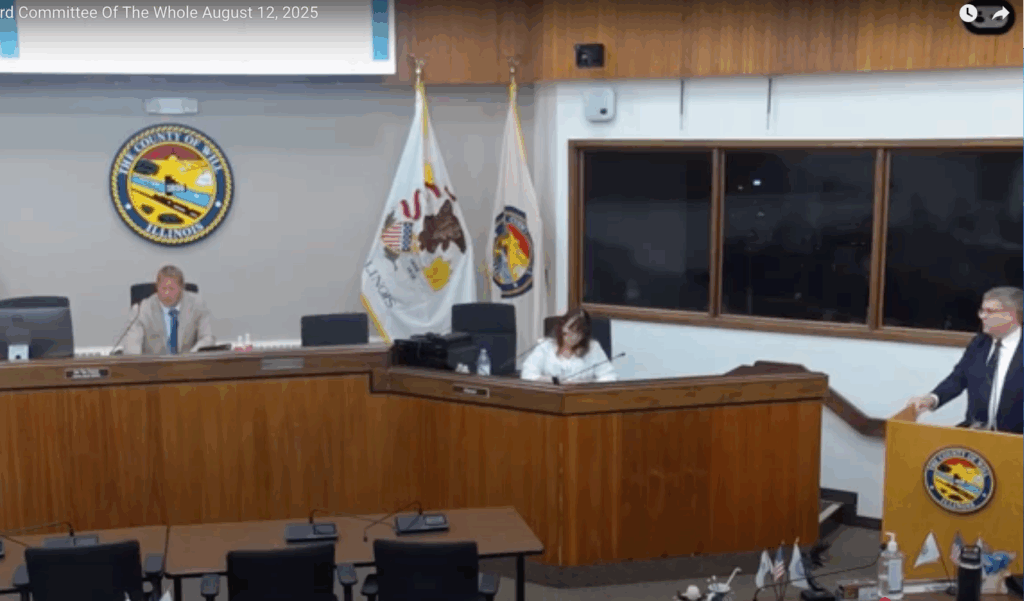
Will County Board Gets Back to Basics with Robert’s Rules of Order Training
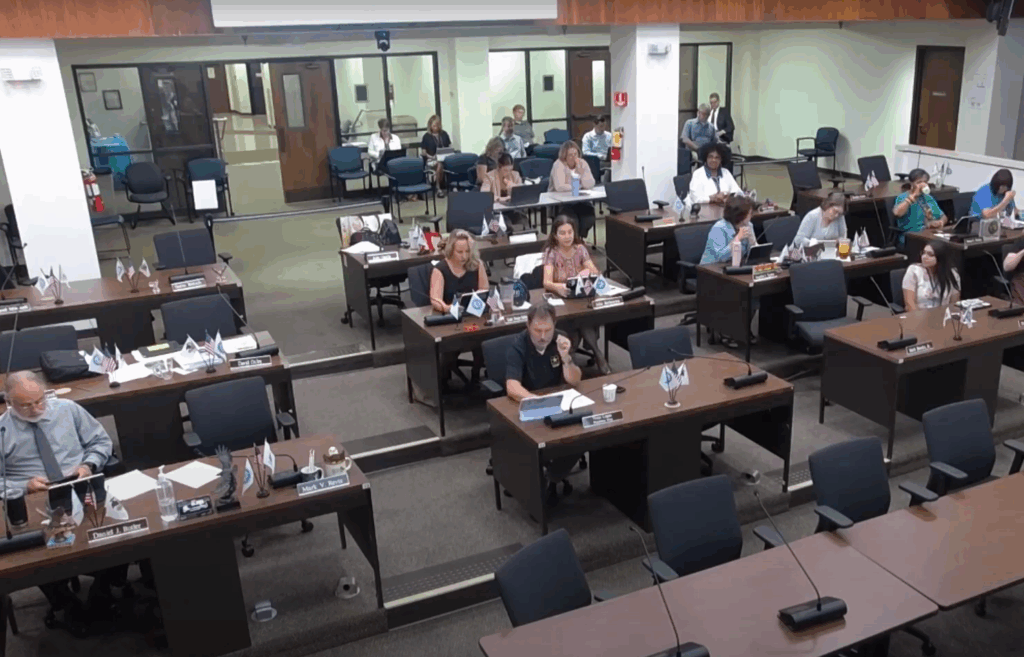
Executive Committee Approves Amended Houbolt Bridge Agreement to Settle Litigation

Meeting Summary and Briefs: Will County Board Committee of the Whole for August 12, 2025
Meeting Summary and Briefs: Will County Ad-Hoc Ordinance Review Committee for August 12, 2025
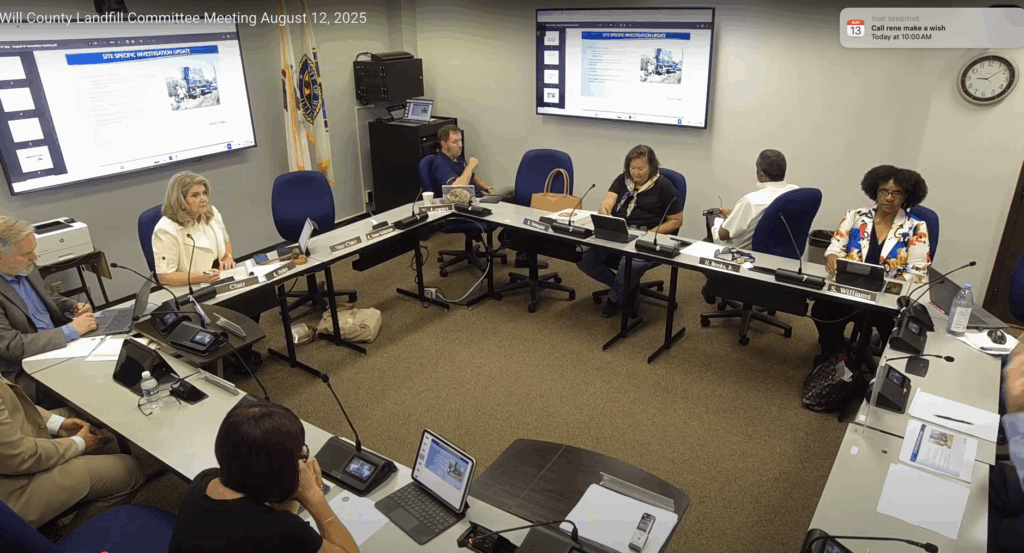
Will County Receives Detailed Update on Landfill Expansion Investigation
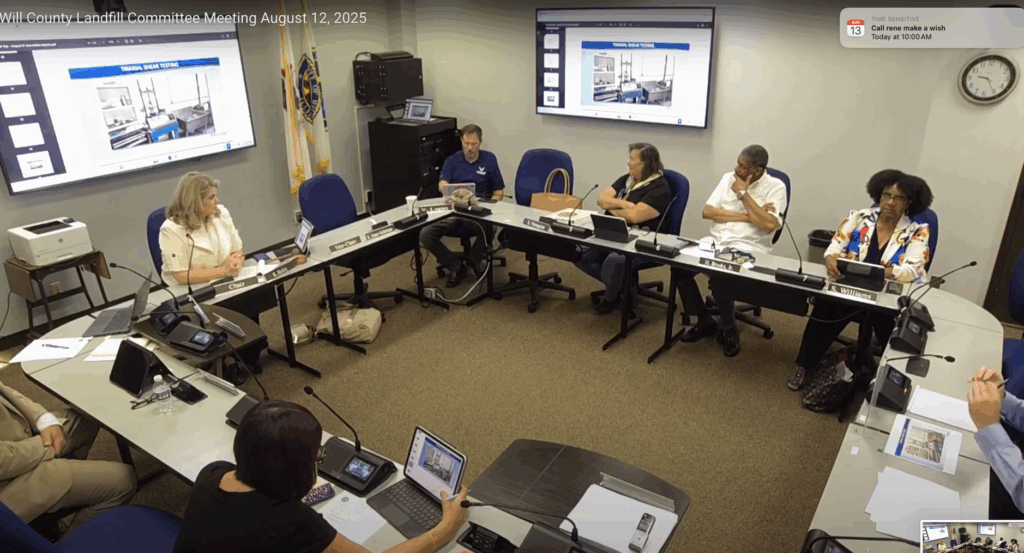
Report Finding Few Trucks Littering Sparks Debate on Cleanup Responsibility
Meeting Summary and Briefs: Will County Landfill Committee for August 7, 2025
Water Well, Waste Hauler Ordinances Updated by Will County Committee