
Retired judge urges federal court to reject key talc researcher’s testing
A special master hearing evidence behind tens of thousands of lawsuits over Johnson & Johnson’s Baby Powder has urged the court to reject a key plaintiff expert’s test for asbestos, undermining claims talcum powder causes ovarian cancer.
William Longo developed his test for litigation and it doesn’t produce reliable results, retired judge Freda Wolfson said in a lengthy report to the court overseeing consolidated talc litigation. Longo’s “methodology lacks nearly all of the traditional indicia of reliability,” Judge Wolfson wrote last week, recommending the court exclude his test from evidence.
Should U.S. District Judge Michael Shipp accept that recommendation, it will remove one of the most important supports for more than 68,000 lawsuits in the federal multidistrict litigation, by excluding Longo’s tests using polarized light microscopy, or PLM. Judge Wolfson declined to disqualify Longo’s results from transmission electron microscopy (TEM) tests, but much of the evidence supporting plaintiff claims is based on PLM tests Longo did on samples obtained from old bottles of talcum powder.
Johnson & Johnson will continue to push to exclude all of Longo’s testing, which the company said falsely claims to find asbestos contamination in talc. Other plaintiff experts rely on Longo’s base finding of asbestos in talc to conclude the product can cause cancer, what J&J called in an earlier court filing “an echo chamber for weak science that depends more on the volume of references than the quality of the data or the soundness of the methodology.”
Longo once dismissed the idea of asbestos in talc as an “urban legend” but then switched after lawyers hired him in talc cases. He has also switched methods, once bragging he’s “a TEM guy,” but later changing to PLM, a method generally used for bulk testing for asbestos. Judge Wolfson said the switch undermined the credibility of Longo’s testing, saying it was “developed and applied in connection with asbestos-talc litigation.”
Longo kept revising his methods after switching to PLM, the judge noted, suggesting he hadn’t developed a process that would produce reliable results. Longo, a material scientist by training, has made millions of dollars over his career providing expert testimony for plaintiffs in asbestos lawsuits.
Johnson & Johnson said the July 10 report, a reversal of Judge Wolfson’s initial recommendations, was “a decisive rejection of plaintiffs’ latest attempt to put litigation-driven asbestos testing before a jury.”
“After extensive briefing and a Daubert evidentiary hearing, the Special Master concluded that plaintiffs failed to establish that Dr. Longo’s PLM-chrysotile methodology is sufficiently reliable to be admitted at trial,” said Erik Haas, head of litigation at J&J.
Johnson & Johnson had offered more than $9 billion in Texas bankruptcy court to settle ovarian cancer claims, even as it maintains talcum powder doesn’t contain asbestos and can’t migrate up the human reproductive tract to the ovaries anyway. That plan was rejected by a judge after the firm Beasley Allen fought it in the hopes of getting its client higher paydays in other courts.
That led J&J to go on the offensive against plaintiff experts and lawyers, suing Dr. Jacqueline Moline, a frequent plaintiff expert who wrote a study claiming 33 cancer patients had “no known alternative exposure” to asbestos other than talc. It turns out at least 11 of the subjects had claimed other exposures in litigation, three of whom used Dr. Moline as an expert.
Beasley Allen also has been disqualified from the MDL and state court talc litigation in New Jersey, Philadelphia, Illinois and Florida for working with a former J&J attorney in what judges have concluded was a serious violation of the rules of professional conduct.






Areas Of Smoke
Latest News Stories

Will County Corporate Revenues Surpass Expectations, Igniting Debate Over Delinquent Tax Sales

Meeting Summary and Briefs: Will County Public Works and Transportation Committee for March 3, 2026

Will County Grants Extensions for Seven Solar and Commercial Projects Amid Permitting Delays

Will County Committee Postpones Liquor, Ad-Hoc Committee: Gaming, and Tobacco Ordinance Updates Amid Extensive Revisions

Beecher Village Board Approves Street Sweeping Contract and State Right-of-Way Resolution
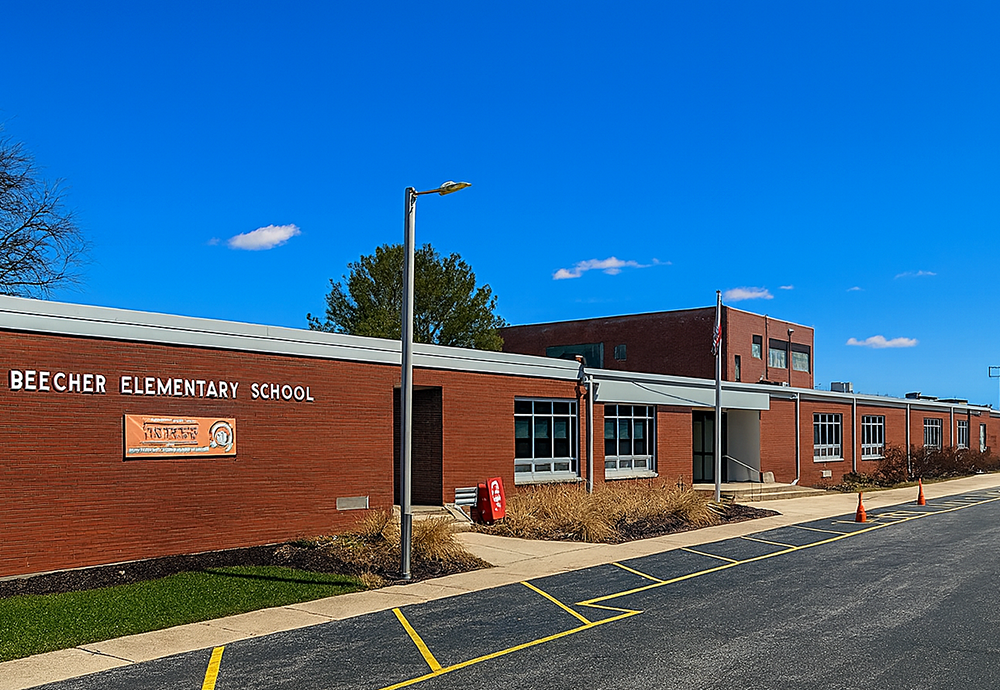
Beecher Elementary Principal Resigns Amid Slew of Personnel and Contract Approvals
Land Use Committee Approves 4.98-Megawatt Solar Facility on Eagle Lake Road Near Peotone

Will County Advances Nearly $1.5 Million in Right-of-Way and Improvement Agreements for Weber, Gougar, and Laraway Roads
Public Works Committee: Approves $1.59 Million Contract for Scheer Road Bridge Replacement in Green Garden Township

Will County Board Backs $10 Million State Public Health Grant Increase Amid Funding Cuts

Barn Fire on Whispering Hills Lane Claims Livestock, Draws Extensive Mutual Aid Response

Will County Public Works Committee Shelves License Plate Reader Agreement Amid Bipartisan Privacy Concerns

Will County Planning and Zoning Commission Overrides Staff to Approve New Lenox Accessory Building Variance