U.S. House passes 10 bills to strengthen homeland security, address terrorism
The U.S. House has passed 10 bipartisan bills advanced by the U.S. House Committee on Homeland Security, which the committee says will strengthen homeland security and combat terrorism.
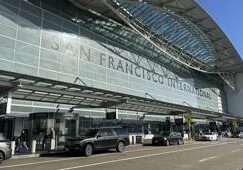
The bills are part of a package of 19 passed by the committee with a stated goal of modernizing the Transportation Security Administration (TSA), refocusing the U.S. Department of Homeland Security’s Office of Intelligence and Analysis and enhancing DHS’s ability to identify and respond to emerging terror threats.
The bills were advanced ahead of the 25th anniversary of 9/11.
“In the 25 years since the September 11th terrorist attacks, both the threats facing our nation and the demands placed on our aviation system have evolved drastically. We have a responsibility to ensure America’s aviation security can keep pace,” Chairman Andrew Garbarino, R-NY, said. “The best security measures are those that protect Americans while minimizing unnecessary burdens on the traveling public.”
Among the bills that passed is one filed by Garbarino, H.R. 9391, the Reimbursable Screening Service Program Extension Act. It expands TSA’s Reimbursable Screening Services Program and extends the pilot program “to increase airport screening capabilities, ease congestion at main security checkpoints, and enhance the passenger experience without compromising safety.”
The House also passed another TSA-related bill, H.R. 9388, the One-Stop Pilot Program Extension Act, filed by U.S. Rep. Carlos Gimenez, R-FL. It eliminates TSA rescreening requirements, with conditions, through the TSA’s One-Stop Security Program. Gimenez said the bill “will reduce delays, ease congestion at our airports, improve the travel experience for international passengers without compromising safety,” strengthen “our aviation system, supports our economy, and reinforces America’s leadership in secure and efficient international travel.”
The House also passed H.R. 3106, the Weatherizing Infrastructure in the North and Terrorism Emergency Readiness Act, filed by U.S. Rep. Tim Kennedy, D-NY. Its goal is to “enhance domestic preparedness for terrorism, promote the dissemination of homeland security information, and test the homeland security posture of the United States.” It directs DHS agencies to develop and conduct a collective response to terrorism exercises that include “management of cascading effects on critical infrastructure.”
Another is H.R. 8770, the Spending Aviation Fees for Equipment, Guaranteeing Upgraded and Advanced Risk Detection and Safety Act (SAFEGUARDS Act), filed by U.S. Dale Strong, R-AL. It prepares for the “responsible end to the diversion” of the 9/11 Passenger Security Fee and reinvests the revenue into aviation security technology. The funds are supposed to strengthen national aviation security infrastructure and modernization efforts at airports. “Protecting the traveling public requires more than maintaining the status quo – it requires investing in the tools and technologies needed to stay ahead of emerging threats,” Strong said.
Similarly, H.R. 7574, the ELO Realignment and Strategic Engagement Reform Act of 2026, filed by U.S. Rep. Gabe Evans, R-CO, is designed to strengthen coordination among federal, state and local agencies. Its stated goal is to strengthen information sharing among frontline law enforcement and federal intelligence officials and improve efficiency.
The House also passed H.R. 8168, the Major Non-NATO Ally Terror Threat Assessment Act, filed by U.S. Rep. Matt Van Epps, R-TN. When the United States designates a nation as a major non-NATO ally, the designation “comes with practical benefits but also risks,” Epps said. It is supposed to strengthen coordination between DHS and Congress “to better assess and support MNNA partners as they confront terrorist threats within their own borders” and give Congress “the information it needs to provide effective oversight.”
Another is H.R. 8535, the Measuring Illicit Fentanyl Trafficking Act, filed by U.S. Rep. James Walkinshaw, D-VA. It directs DHS to develop performance metrics relating to the detection, deterrence, and seizure of fentanyl.
Another is H.R. 8874, the Homeland Security Capabilities Preservation Reporting Act of 2026, filed by U.S. Rep. Troy Carter, D-LA. It amends the National Defense Authorization Act of FY2023 to require “recurring reports on the transition of jurisdictions no longer eligible for Urban Area Security Initiative funding.”
The House also passed two bills, which appear to have nothing to do with homeland security, to create pilot programs to make it easier for families and the military to travel.
One is H.R. 8897, the Improving Travel for American Families Act, filed by U.S. Rep. Ryan Mackenzie, R-PA, which authorizes a pilot program to implement dedicated screening lanes for families traveling with children under age 12. Mackenzie said the goal is to improve the experience of families traveling with strollers, bags and young children “trying to move through security lines that were not designed with families in mind.”
Another is H.R. 9328, the Improving Travel for Military Members Act, filed by Rep. Sheri Biggs, R-SC. It authorizes a pilot program to implement priority security screening lanes and screening procedures for traveling active-duty military personnel and accompanying family members.



Patchy Fog then Areas Of Smoke
Latest News Stories

U.S. will continue blockade ‘as long as it takes,’ Hegseth says

Village Board Approves Zoning Variance for 747 Penfield Street
Will County Takes Jurisdiction of Countyline Road in $1.84 Million Agreement with Kankakee County

Green Garden Township’s Wildflower Farm Granted Third Special Use Extension

Gori seeks quick end to asbestos fraud, lawsuit ‘bounties’ case

Texas Ten Commandments law may reach Supreme Court

Feds reopen probe into LAUSD race-based program
Trump won’t be rushed on Iran as clock ticking for the regime

Multiple House Republicans defy proposed 3-year FISA Section 702 extension

Fetterman wants SNAP to cover hot rotisserie chicken

Advocates warn of looming debt crisis

Teens charged after FBI says plot targeting Houston synagogue, school foiled