U.S. House votes to make daylight savings time permanent
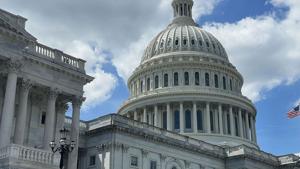
U.S. House lawmakers voted 308 – 117 to pass a bill Tuesday making daylight savings time year-round, sending the legislation to the Senate.
The Sunshine Protection Act, introduced by Rep. Vern Buchanen, R-Fla., would end the nearly nationwide biannual clock changing and make daylight savings time permanent year-round.
States that use standard time year-round – currently only Arizona and Hawaii – before the law goes into effect wouldn’t have to change.
House Energy and Commerce ranking member Rep. Frank Pallone, D-N.J., told lawmakers that “the benefits of stopping the biannual changing of the clocks are numerous and clear” and that permanent daylight savings time “will bring much needed evening sunlight to communities across the United States.”
“The increased evening sunlight will also provide a needed boost to our tourism industry. Extra sunlight means more time at the beach, more time eating outside at restaurants, and more time doing outdoor leisure activities,” Pallone added.
Besides the U.S. tourism industry, retail and golfing industries have long lobbied Congress to permanently set the clocks an hour ahead.
The U.S. Chamber of Commerce, National Retail Federation, National Association of Convenience Stores, the American Farm Bureau Federation and others have expressed support for making daylight savings time permanent.
But medical professionals, education advocates and safety professionals overwhelmingly support making standard time permanent instead.
The American Medical Association, American College of Occupational Medicine, National Sleep Foundation, American Federation of Teachers, National School Boards Association, National Safety Council, and dozens of other organizations have endorsed permanent standard time.
Congress tried to implement permanent daylight savings time in the 1970s, but the two-year trial lasted less than a year after “[causing] great inconvenience and in some cases hazard,” as former U.S. senator for Kansas Bob Dole outlined in a 1974 floor speech.
“After spending the first three weeks of winter daylight time in Kansas, I became more convinced than ever that its hardships, inconvenience, and real hazards are too great to justify its continuation,” Dole said, referencing in particular the elevated numbers of fatal morning traffic accidents involving schoolchildren.
The future of the Sunshine Protection Act is uncertain in the Senate, as it will need at least 60 votes to pass, and some senators have already raised concerns over the bill.
“By moving the clock back an hour in winter, permanent Daylight Savings Time would push winter sunrises to an absurdly late hour, depriving Americans of morning sunshine that’s essential for our safety and well-being,” Sen. Tom Cotton, R-Ark., told lawmakers when the bill was introduced in 2025.
“It’s said that those who don’t learn from history are doomed to repeat it. And that’s what would happen if Congress passes the so-called ‘Sunshine Protection Act.’”





Smoke
Latest News Stories

Allstate homeowners rate hike sparks debate over Illinois insurance oversight

Trump tells Iranian protesters help is on the way, encourages uprising

Sen. Kelly sues Hegseth over effort to reduce retirement pay

Illinois interstate shootings decline

WATCH: State sues Trump admin over enforcement tactics; No tax on tips proposal filed

Will the Clintons testify on Epstein relationship this week?

Dems move to almost entirely block fed immigration enforcement in IL

Capital Imp Committee: Facilities Director Reports on VAC Progress and Critical Health Department Elevator Repairs

‘Good Food For All’ Initiative Proposes Local Agricultural Asset Mapping for Will County

Public Works Committee Advances $3.2 Million Engineering Contract for Mills Road Reconstruction

Theis abruptly retires from IL Supreme Court; Tailor to replace

Colorado expands lawsuit over alleged Trump retaliation