Appeals court: Chicago’s ‘climate disinformation’ case belongs in Cook County
(Legal Newsline) – A federal appeals court says a lawsuit brought by the city of Chicago, seeking to extract a potentially massive payout from some of the largest oil and gas companies over alleged climate “disinformation,” belongs in Cook County’s Democrat-stacked and famously plaintiff-friendly courts.
On July 15, a three-judge panel of the U.S. Seventh Circuit Court of Appeals upheld the ruling from U.S. District Judge Franklin U. Valderrama, who ruled against the group of oil and companies, including Chevron and BP, and granted Chicago’s request to send their case back to Cook County Circuit Court.
The Seventh Circuit’s ruling was authored by Judge Rebecca Taibleson. She was joined in the ruling by judges Nancy Maldonaldo and David Hamilton.
Taibleson is an appointee of President Donald Trump. Maldonaldo was appointed by former President Joe Biden and Hamilton, by former President Barack Obama.
In the ruling, Taibleson and her colleagues said Valderrama was correct to reject the energy companies’ assertions that the case actually belonged in federal court, not state court.
And the judges said a recent U.S. Supreme Court ruling did not change the answer that question, despite assertions by the energy companies that the ruling dictated a different result, or at least, made the question a closer call.
The dispute centered on the energy companies’ assertion that a legal exception under the so-called “federal officer” theory. In effect, the oil and gas companies argued that because some of their past work in extracting oil and refining it into fuels was performed at the direction of the federal government for national security and other purposes, then any lawsuit against them for producing and selling fuel must be heard in federal court.
In the ruling, however, Taibleson and her colleagues said they believed any energy production the companies may have performed for the federal government is “too attenuated from Chicago’s claims” in its lawsuit to allow the companies to use the federal officer theory to escape Cook County’s court system.
The city had initially filed the case in Cook County court in February 2024.
In that lawsuit, the city, joined by a collection of prominent trial lawyers, seeks to make Chevron, BP and other petroleum producers and distributors pay for allegedly misleading consumers and the public for decades about the alleged climate altering affects of using oil and gas products in transportation and many other economic sectors.
The lawsuit claims so-called “climate change” has in turn led to more frequent bad weather events, such as floods, droughts and severe storms, among other alleged harms, costing the city large amounts of money to address.
The Chicago lawsuit asserts this makes oil and gas use a “public nuisance” by allegedly also contributing to racial and social “inequities” for the city’s low income and minority communities.
The lawsuit particularly takes aim at what it calls “disinformation” from the oil companies, which the city claims has misled consumers into continuing to use the products for decades after the energy companies allegedly knew of the supposed harms caused by the use of their fuels.
The city’s lawsuit largely copies a path blazed by other local government lawsuits against the same energy companies, as well as by earlier litigation against tobacco companies, pharmaceutical companies and others who have supplied many of the products common to American life.
To date, those claims have met with mixed results in court, at best, with most courts snuffing out the lawsuits as improper attempts to use lawsuits in state courts to punish an industry for emissions and conduct that are regulated by the federal government.
Some lawsuits, however, have been allowed to proceed. Notably, these have included cases originating out of Hawaii and Boulder, Colorado.
And in the coming months, the U.S. Supreme Court will decide if such climate suits are permitted under federal law and the U.S. Constitution. The high court is scheduled to hear arguments in the Boulder case in October.
In the meantime, however, the Seventh Circuit panel said federal courts have consistently rejected attempts by energy companies to use the “federal officer” theory to escape lawsuits in state courts.
And in state courts, like Cook County, particularly, the incentive is high for the companies to have the case heard in federal court, rather than state court.
Cook County courts have consistently been named among the top destinations of choice for trial lawyers suing businesses. The American Tort Reform Association, for instance, has consistently awarded Cook County’s courts the distinction of standing as one of America’s worst “judicial hellholes.” Court systems are selected for such criticism by business advocates and court reformers because they assert business defendants struggle to receive a fair opportunity to defend themselves against lawsuits.
Cook County’s courts are also heavily dominated by Democrats. In 2024, for instance, a Republican candidate made news as the first non-Democrat to even seek election to a countywide judgeship in Cook County in 14 years.
The Democratic Party in recent years has become increasingly hostile to the use of oil and gas and to the companies who extract and refine the fuels, as they seek to use the cause of combatting so-called “climate change” to enact laws and regulations that increasingly force Americans to abandon the use of internal combustion powered cars, landscaping tools and other implements, while also shutting down reliable traditional power plants in favor of so-called “renewable” energy sources, such as solar and wind.
And across the country, city governments run by Democrats have partnered with trial lawyers to sue the companies, in a move the companies have asserted amounts to improper attempts to use the courts to financially punish the companies and use lawsuits to advance their anti-oil policy goals.
In Chicago’s case, for instance, the city is joined in the action by trial lawyers from the firms of DiCello Levitt LLP, of Chicago, and Sher Edling LLP, of San Francisco.
The Sher Edling firm has also served as counsel on dozens of virtually identical climate-related lawsuits against the oil and gas industry throughout the country. Published reports indicate Sher Edling has received millions of dollars in funding from a dark money group backed by billionaires, known as the Collective Action Fund for Accountability, Resilience and Adaptation.” That funding has drawn scrutiny from members of Congress, who have noted it pays for the firm’s lawsuits on behalf of local governments aimed at bankrupting the nation’s oil and gas companies.
Earlier this year, Chevron secured what they hoped would be a big win at the Supreme Court, when the high court agreed courts in Louisiana had improperly refused to allow the energy company to remove a climate-related lawsuit in that state to federal court under the “federal officer” theory.
At the Seventh Circuit, the energy companies asserted that ruling, known as Chevron v Plaquemines Parish, should also undo Valderrama’s ruling sending Chicago’s “climate disinformation” case back to Cook County court.
However, Taibleson and her colleagues said the Plaquemines ruling changed nothing in the Chicago case. While the Supreme Court agreed with Chevron that its work in Louisiana was connected with the coastal erosion and other climate-related claims in the Plaquemines case, in this instance, Chicago’s claims aren’t actually connected to the city’s claims.
They noted the city’s lawsuit expressly claims the city is not seeking to force the energy companies to pay the city for any alleged harm allegedly caused by the companies’ work on federal land or to support federal directives or orders.
Rather, the city is demanding the oil and gas companies pay for allegedly using “disinformation” and “misrepresentations” to allegedly dupe American consumers into using more oil and gas to power their lives and businesses and the national economy, increasing emissions and alleged climate harm in the process.
“There is no allegation — by the City or by the defendants — that these alleged misrepresentations were directed at the federal government or involved the defendants’ federal work, or that the federal government increased its own fuel purchases due to the alleged misrepresentations,” Taibleson wrote.
“The sum the City hopes to recover is thus independent of the defendants’ federal work.”
Taibleson noted both the city and energy companies have cited the Plaquemines decision in their new filings, with each arguing the case backs up their own claims over how closely the companies’ energy production for the federal government “must relate” to the city’s claims.
And “those dueling citations are possible because neither the Supreme Court nor our court has answered that question directly,” Taibleson wrote.
“And we see no reason to here. Even under the broader formulation favored by the defendants, Chicago’s suit is insufficiently related to the defendants’ federal duties to support removal.”
Meanwhile, in Cook County court, the judge assigned to the case has refused to put the case completely on hold, despite the potential for the Supreme Court to pull the plug on such climate cases in coming months.
In April, after the Supreme Court agreed to hear the Boulder case, Cook County Circuit Judge Allen Walker indicated he believed Chicago’s lawsuit could still survive, no matter how the Supreme Court rules in the Boulder case.
In refusing to put the city’s case on hold, the judge’s ruling appeared to back the city’s assertions that much of its lawsuit rests on “pure consumer protection claims that do not seek relief for emissions injuries.”
The oil and gas companies have been represented in the action by attorney Patricia Brown Holmes and others with the firms of Riley Safer Holmes & Cancila, of Chicago; Gibson Dunn & Crutcher, of Los Angeles, Washington, D.C., New York and San Francisco; Susman Godfrey LLP, of Houston; and Stern Kilcullen & Rufolo, of Fordham Park, New Jersey.
The city has been represented by attorneys with the city’s Department of Law; attorney Daniel R. Flynn, and others with the DiCello Levitt firm; and Matthew K. Edling and Victor M. Sher, and others with the Sher Edling firm.




Showers And Thunderstorms
Latest News Stories

Illinois quick hits: Pritzker signs crypto regulations

Trucking industry leader: New law may drive business out of Illinois
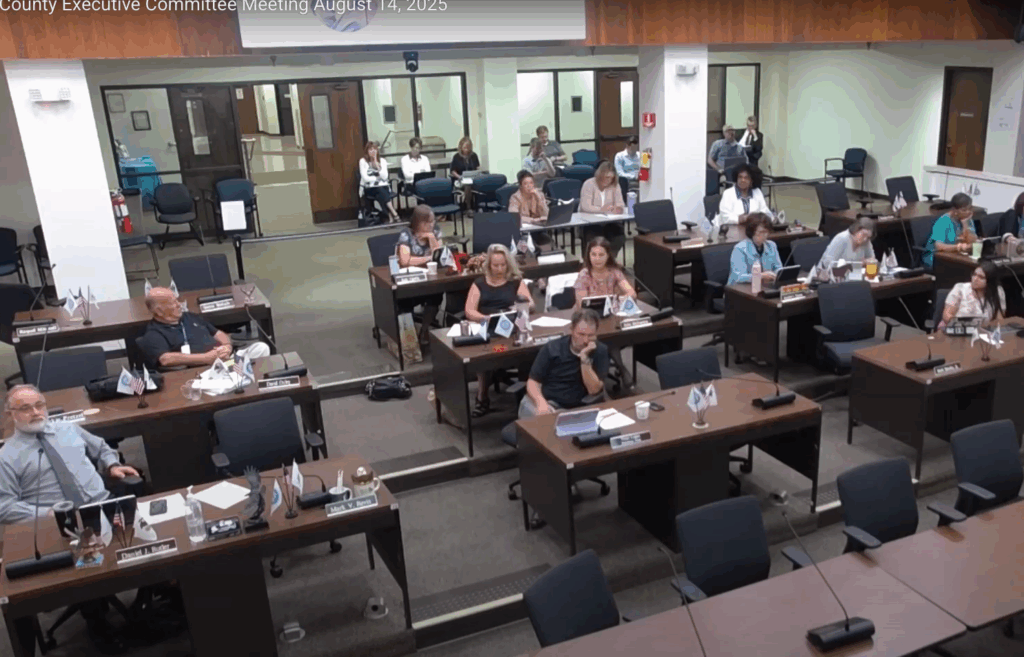
Executive Committee Considers $12,000 Strategic Planning Initiative with University of St. Francis
Executive Committee Members Decry Roadside Litter, Call for Action Against Garbage Haulers
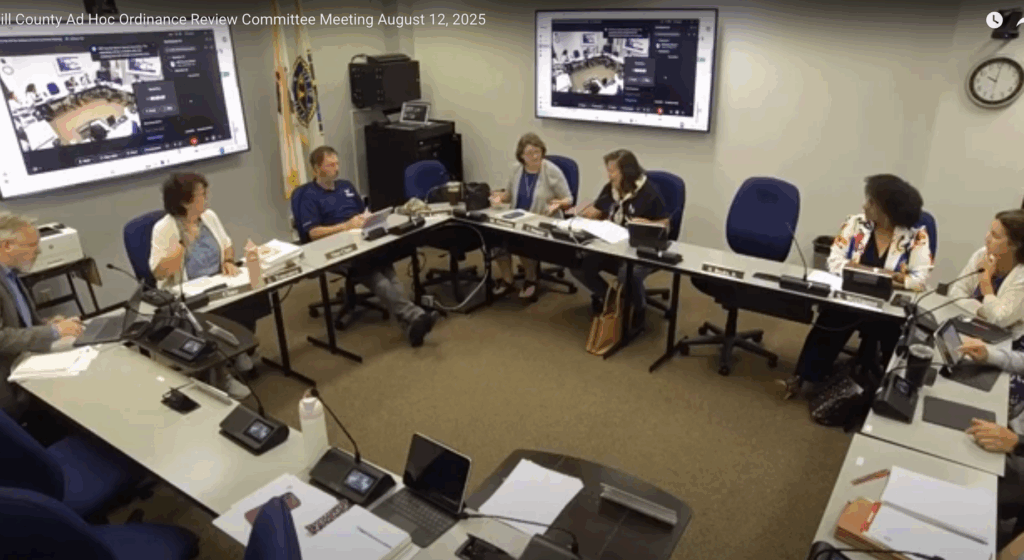
Will County Updates Solid Waste Ordinance, Increases Fines and Reporting to Landfill Committee
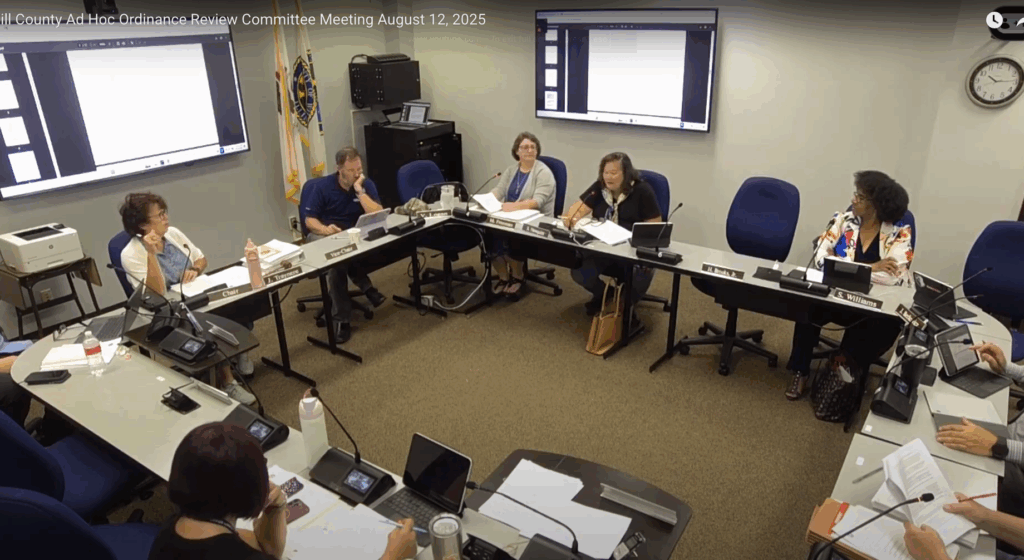
Citing Liability Concerns, Will County Committee Postpones Vote on Septic System Ordinance
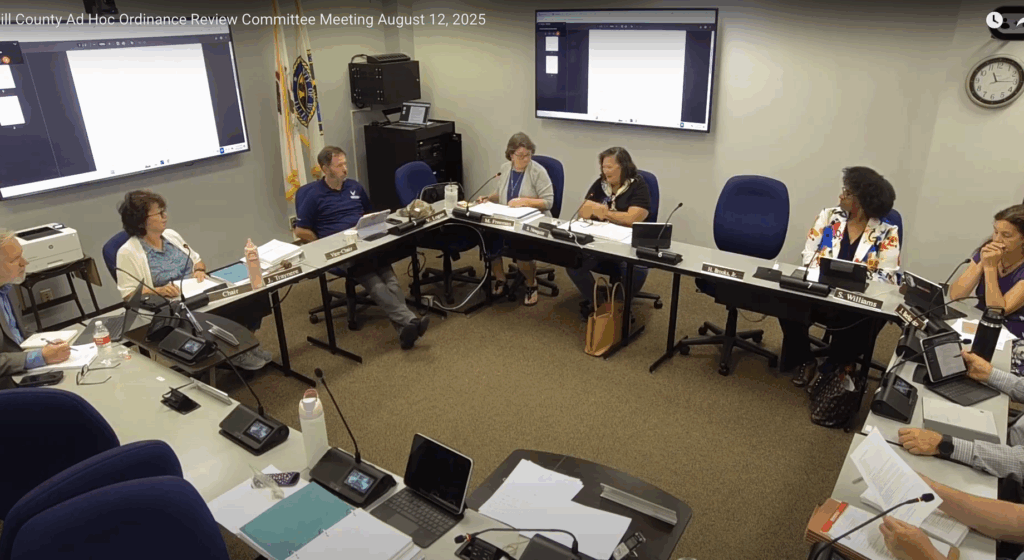
Will County Moves to Repeal Obsolete 1972 Fire Hydrant Ordinance
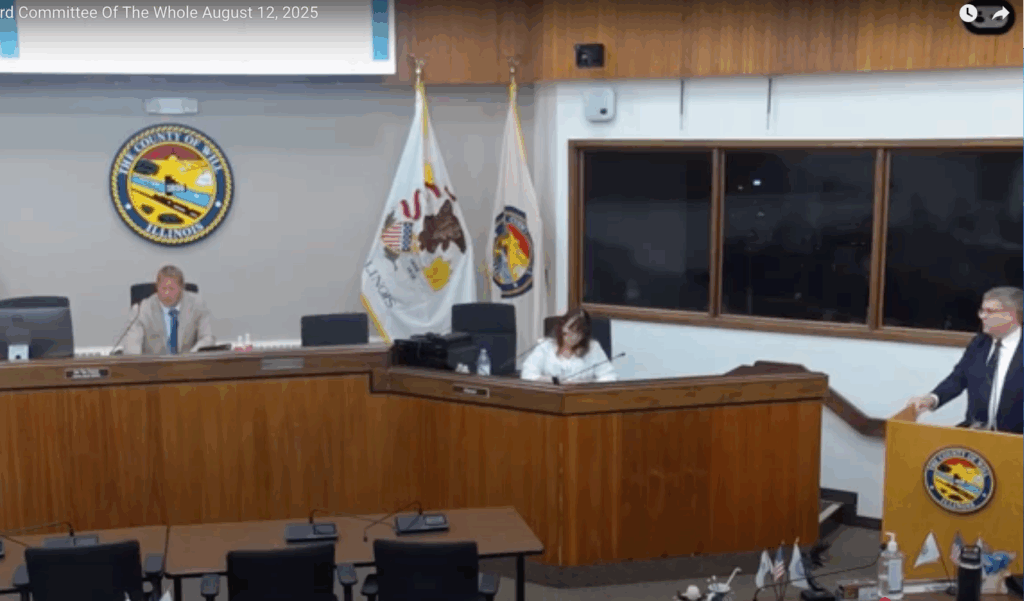
Will County Board Gets Back to Basics with Robert’s Rules of Order Training
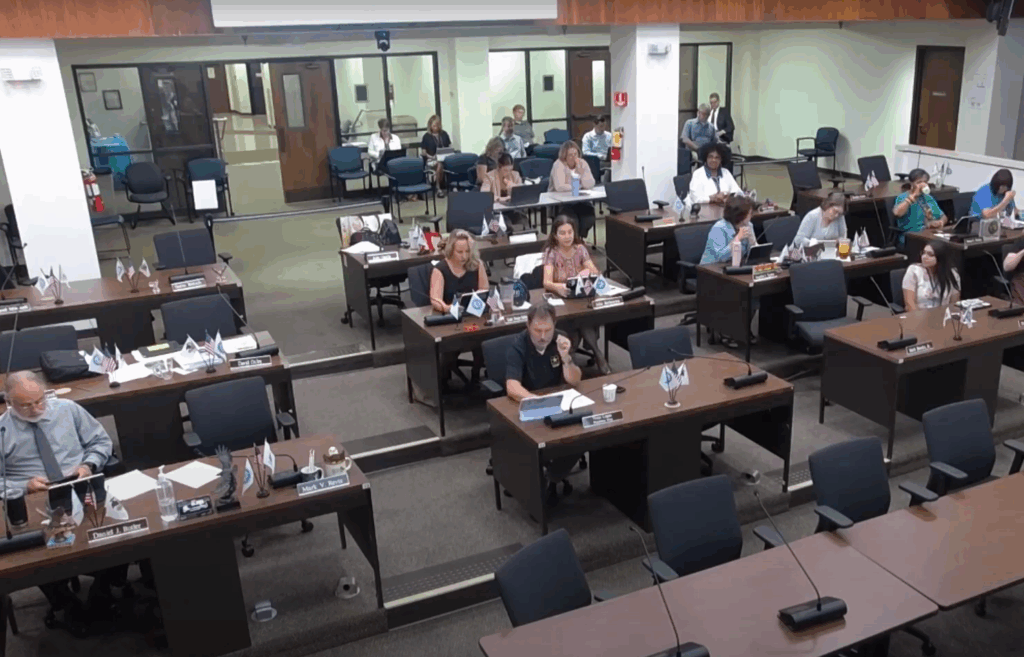
Executive Committee Approves Amended Houbolt Bridge Agreement to Settle Litigation

Meeting Summary and Briefs: Will County Board Committee of the Whole for August 12, 2025
Meeting Summary and Briefs: Will County Ad-Hoc Ordinance Review Committee for August 12, 2025
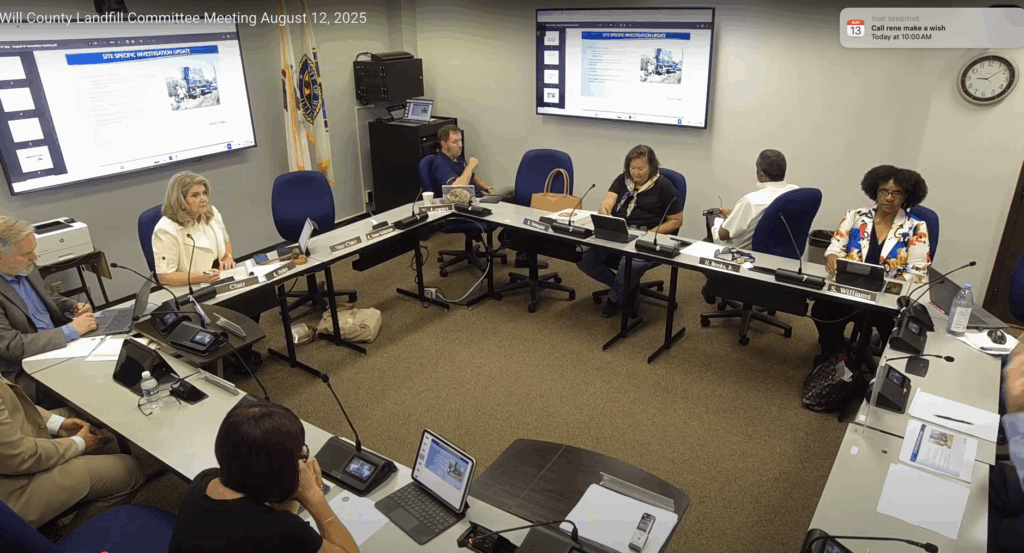
Will County Receives Detailed Update on Landfill Expansion Investigation