As a Trump tariff expires, a new one takes its place
A federal tariff struck down by a U.S. trade court is set to expire on its own terms July 24, even as the Trump administration presses ahead with new import taxes under a different legal authority.
The 10% global tariff, imposed under Section 122 of the Trade Act of 1974, took effect Feb. 24 and is set to expire at 12:01 a.m. EDT July 24, the maximum 150 days allowed under the law without an act of Congress.
The tariff has generated $31.06 billion in revenue since taking effect, according to U.S. Customs and Border Protection data. That is a fraction of the about $166 billion the government is separately refunding after the U.S. Supreme Court struck down a related tariff program in February.
The U.S. Court of International Trade ruled 2-1 on May 7 that President Donald Trump exceeded his authority under Section 122. The CIT found that the administration’s stated justification, a “large and serious balance-of-payments deficit,” did not meet the legal definition Congress intended when it passed the law in 1974.
The ruling applied only to three plaintiffs – Burlap and Barrel, a New York-based spice importer; Basic Fun, a Florida-based toy company; and the state of Washington – leaving the tariff in place for all other importers. A federal appeals court then reinstated the tariff even for those three, granting the Trump administration’s request for a stay pending appeal on June 11.
“President Trump has lawfully used the tariff authorities granted to him by Congress to address our balance of payments crisis,” White House spokesman Kush Desai told The Center Square in May. “The Trump administration is reviewing legal options and maintains confidence in ultimately prevailing.”
The stay leaves the Section 122 tariff in effect through its scheduled expiration. Even if the case is ultimately decided in the plaintiffs’ favor, the U.S. Court of Appeals for the Federal Circuit is not expected to rule on the merits before 10% tariffs under Section 122 lapses. The government’s opening brief in the appeal is due July 21, three days before the tariff expires.
Trump and his advisers have said tariffs are here to stay. Each time a court has ruled against his trade agenda, the administration has shifted to another statute to justify the import taxes. On July 15, the U.S. Trade Representative’s office imposed a 25% tariff on nearly all imports from Brazil under Section 301 of the Trade Act of 1974, a different legal authority with no built-in expiration date. That tariff, unrelated to the balance-of-payments dispute, followed a yearlong investigation into Brazilian trade practices including digital payment regulations, intellectual property enforcement and deforestation.
The administration has repeatedly shifted to new statutes after adverse rulings. After the U.S. Supreme Court struck down Trump’s tariffs imposed under the International Emergency Economic Powers Act in February, ruling 6-3 that he lacked authority to impose them, Trump invoked Section 122 within hours of the ruling. The Court of International Trade later found that substitution legally dubious, too.
Section 301 carries its own legal risk. Caleb Petitt, a research associate at the Independent Institute, said the new tariffs will likely hold up better in court than the tariffs struck down under IEEPA and Section 122, but mostly because those earlier authorities were especially weak, not because the case for Section 301 is especially strong.
“Section 301 does give a fair amount of latitude for what could be considered an unfair practice that could warrant retaliation, but the Trump administration is sure to see legal pushback,” Petitt said. He noted that using Section 301 to address “excess industrial capacity” or lax forced-labor enforcement stretches the statute’s requirement that a foreign country’s “act, policy, or practice” be unfair, and that the tariffs remain vulnerable to the same non-delegation and major-questions doctrine arguments that doomed the IEEPA tariffs.
Alfredo Carrillo Obregon, a trade-policy analyst at the Cato Institute, said in May that Section 122 was “always meant to be a bridge” to a more durable tariff authority.
Unlike Section 122, Section 301 has no built-in expiration date, giving it more staying power regardless of how the legal arguments shake out. USTR’s separate Section 301 investigation into 60 economies – including Canada, Mexico, Japan and the European Union – over failures to adequately block imports made with forced labor concluded in June, according to the Congressional Research Service. USTR has proposed tariffs of 10% for countries that lack a ban on forced-labor imports and 12.5% for those that have one but do not enforce it, and is now seeking public comment. The nonpartisan research service noted USTR “might aim to finalize those tariff actions by late July 2026,” just as Section 122 expires.
Federal outlays totaled $5.52 trillion through the first nine months of the fiscal year, with a $1.37 trillion deficit, according to the Treasury Department’s Monthly Treasury Statement. Based on those two Treasury figures, roughly 24.8% of federal spending this fiscal year has been financed by borrowing.
CBP has processed more than 24.4 million entries through its refund system since the program began April 20. The agency has collected about $166 billion under the IEEPA tariffs, Brandon Lord, CBP’s executive director of trade programs, has said. As of July 10, CBP had accepted about $121.75 billion of that in refunds – both already certified and still pending review – for processing, according to a CBP spokesperson. The rest remains tied up in entries not yet eligible for the agency’s refund system.
Petitt, the Independent Institute researcher, said the refunds are a modest piece of the broader fiscal picture. Applying that rate, Petitt said tariff refunds paid out through the fiscal year would account for a small share of the deficit’s growth. But Petitt cautioned that any unfunded refunds ultimately add to the national debt, regardless of their size relative to total federal spending.
Petitt said the administration appears to be racing to find new legal justifications for tariffs faster than courts can strike them down.
“The persistent search for new tariff justifications is a reasonable strategy if the Trump administration is hoping to create hype and draw media attention, but will not be effective at raising revenue, prompting trade deals, or restoring domestic manufacturing,” he told The Center Square.
Petitt added that the government will eventually have to repay revenue collected under tariffs found unconstitutional, and that foreign governments and domestic manufacturers have little reason to expect the tariffs to last unless they survive legal challenges.
USTR did not respond to a request for comment.
Section 122 expires July 24. The Section 301 tariffs on Brazil take effect July 22. The forced-labor tariffs on 60 economies could be finalized around the same time.



Mostly Sunny
Latest News Stories

Mental Health Board Updates Committee on 2026 Grant Cycle and Funding Priorities

Beecher Police Investigate Attempted Armed Robbery, Seek Public’s Help

PZC Approves Homer Township Landscape Business Despite Neighbor Concerns; Adds Berm Condition

Chicago council, ‘starting to legislate,’ sends $16.7 billion budget to mayor
Hegseth promises to fix barracks, but work could take time
‘Long overdue’: Praise for HHS’ action to bar taxpayer-funded sex-change procedures

Gas prices drop, but taxes make Illinois pricier than Midwest neighbors

Recruit Firefighters Jace Cook and Braeden Waterman Graduate

Liquor License Amendments Approved for Frankfort, Joliet, and Lockport Businesses
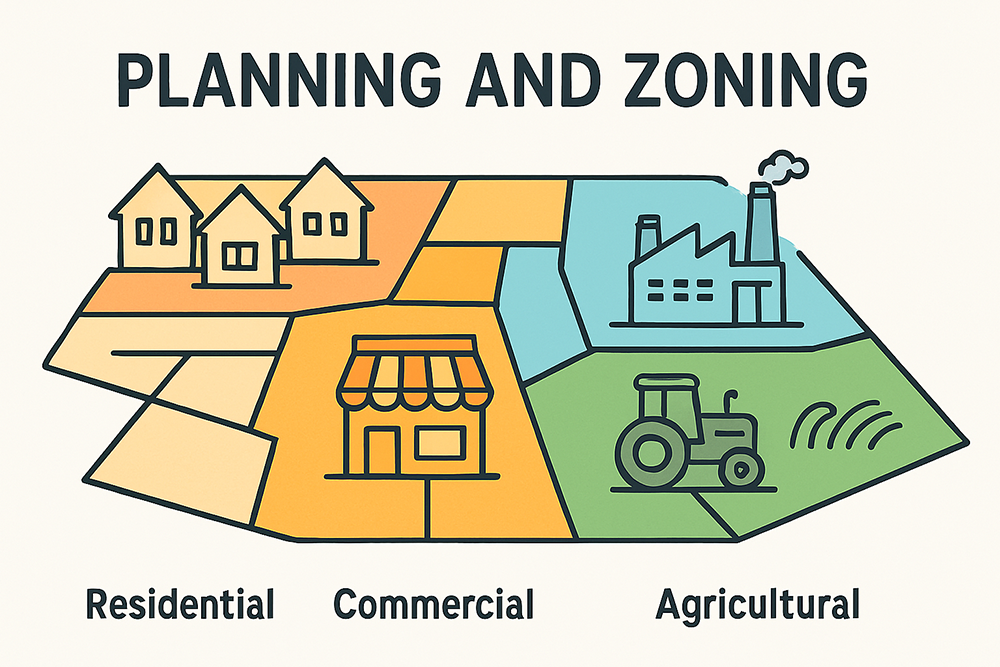
Meeting Summary and Briefs: Will County Planning and Zoning Commission for December 16, 2025

Joliet Property Owner Cleared to Convert Non-Conforming Building into Two-Unit Residence
Meeting Summary and Briefs: Washington Township Board of Trustees for Nov. 2025