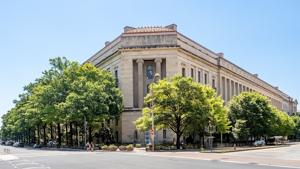
Judge calls for SCOTUS ‘benchslaps’ on Second Amendment cases
(Legal Newsline) – A conservative federal appeals court judge has teed off once again on his left-wing judicial colleagues on the U.S. Ninth Circuit Court of Appeals over what he described as their commitment to eschewing Second Amendment rights and to ensuring that any “weapons restriction that a liberal State can dream up” will somehow never contradict the Constitution.
And, in that filing, Ninth Circuit Judge Lawrence Van Dyke went further still, openly calling on the U.S. Supreme Court to step in and “benchslap” the Ninth Circuit for repeatedly sidestepping, if not outright defying, the Supreme Court’s mandates concerning Second Amendment rights in a “consistent, long-term, demonstrated refusal to follow the law.”
“By now it’s clear enough that, especially with regard to the Second Amendment, our court has fully adopted the operating principle of our former colleague Judge (Stephen) Reinhardt: the Supreme Court ‘can’t catch ’em all,'” Van Dyke wrote. “In the real world, no boss would tolerate nearly two decades of repeated defiance from a subordinate.
“… So, what to do? I have a suggestion. The Supreme Court should consider summarily reversing some of our wayward Second Amendment decisions. To put it more colloquially, it’s time for some benchslaps,” Van Dyke said.
Van Dyke’s filing landed as a solo dissent to a decision from the full Ninth Circuit to refuse to review an earlier appellate ruling from a three-judge panel upholding as constitutional yet another California law prohibiting either the possession or carry of certain kinds of weapons. This time, the challenged law banned switchblade knives.
This particular court challenge dated back to 2023, when a coalition of plaintiffs, including weapons owners and advocacy organizations, including Knife Rights, sued the state of California over the ban.
In the lawsuit, the plaintiffs asserted the law unconstitutionally violated the Second Amendment.
In federal district court, U.S. District Judge James E. Simmons sided with the state, agreeing the state was free to ban the knives because the state considered them “dangerous and unusual,” and thus not protected by the Second Amendment.
The Second Amendment rights advocates appealed. But their appeal also failed, when a three-judge panel — which included two appointees of former President Bill Clinton and another appointed by former President Joe Biden — agreed with California that the state was free to ban the knives.
They cited to 19th Century laws that banned the carry of Bowie knives in certain situations to justify their position that the current state restrictions fit within America’s “historical traditions” of limits on the Second Amendment.
Those Bowie knife laws have been used by left-wing states, lawyers and judges throughout the country to uphold a raft of constitutionally questionable laws restricting access to weapons, including laws outright banning the ownership of AR-15s and other semiautomatic firearms.
In the coming months, the Supreme Court could decide if those Bowie knife laws are valid historical analogs for such bans on weapons ownership and carry, as it considers cases challenging so-called “assault weapons” bans.
However, in the meantime, the Ninth Circuit has joined its colleagues in relying heavily on such laws to support bans by California and other Democrat-dominated states.
Following the switchblade appellate ruling, Knife Rights asked the full Ninth Circuit to reverse the three-judge panel’s ruling under a so-called en banc proceeding, in which the case is head anew by a larger, 11-judge panel.
However, in a new order, that en banc petition was denied by the full court.
In the majority opinion, Wardlaw blamed the plaintiffs themselves for the negative outcome. She and her colleagues asserted the plaintiffs overreached, as they “swung for the fences” by asking the courts to strike down California’s knife-carry regulations “in full” — and missed.
Wardlaw and the majority said, under the 1987 Supreme Court ruling in U.S. v Salerno, the plaintiffs needed to show that California’s knife law failed completely under the Second Amendment and that “no set of circumstances exists under which the regulation would be valid.”
In this case, Wardlaw said, it was enough that the state said the nation’s “historical tradition” included the ban on the concealed carry of Bowie knives, thus meaning the state could also ban the concealed carry of switchblade knives. And that, Wardlaw said, means the state’s switchblade ban survives the so-called “facial challenge” mounted by the plaintiffs.
Eight judges in all dissented from the order denying en banc review.
In the primary dissent, Judge Lawrence Tung said the majority’s take is wrong.
“In sustaining California’s total ban on public carry, the panel invoked a historical tradition of laws banning the carrying of concealed weapons (including firearms and knives) while ignoring that those same laws also allowed for the open carrying of those weapons,” Tung wrote.
He said this conclusion “runs directly counter” to the Supreme Court’s rulings concerning the carry and ownership of weapons in its landmark decisions in Heller v District of Columbia and New York Rifle and Pistol Association v Bruen.
“Here, California bans both concealed and open carry of switchblades, and hence it is not proper for the panel to invoke laws that ban only concealed carry as historical support for a ban on public carry altogether,” Tung wrote.
Tung further noted the Ninth Circuit’s findings also ignore the ruling of at least one state Supreme Court, as the Massachusetts Supreme Court in 2024 struck down as unconstitutional that state’s law prohibiting people from carrying switchblades.
“The panel’s reasoning is not just wrong. It should set off alarm bells,” Tung wrote. “If accepted, it would upend Bruen and essentially shield from constitutional scrutiny any law that categorically and totally bans the carrying of arms.
“Never would our court have tolerated, with respect to any other constitutional right, the sort of analytical move that the panel made here.”
While endorsing Tung’s dissent in full, Van Dyke went further, blasting his colleagues for continuing the Ninth Circuit’s well-established pattern of rejecting nearly every challenge to gun controls or other weapons restrictions imposed in California or any other state in the circuit.
He noted that, under Supreme Court precedents affirming the right to keep and bear arms, any restrictions on weapons ownership and carry should be considered “presumptively unconstitutional” by the courts.
Instead, Van Dyke said, the Ninth Circuit reverses that presumption when it comes to Second Amendment cases.
“Consequently, in our circuit, the line between hard and easy cases doesn’t exist,” Van Dyke said. “Every Second Amendment case turns into a hard one.
“… It’s always complicated. There’s always so much arduous analysis. And the final result is always the same: the arms restriction must win,” Van Dyke added.
He said the Ninth Circuit’s liberal judges have become “a crucial part of a broad and energetic campaign to deliberately overcomplicate Bruen,” despite the Supreme Court’s repeated findings that the constitutional questions are not actually difficult.
Van Dyke pointed particularly to the most recent gun control case at the Supreme Court, when the high court slapped down the Ninth Circuit’s decision to uphold a Hawaii state law that banned virtually concealed carry throughout that state, by declaring gun owners would violate the law by carrying their weapons onto any property, private or public, unless the property owner explicitly gave them permission to do so.
The Supreme Court’s majority said the case was not a close call, and the Hawaii law was blatantly unconstitutional under the Second Amendment.
“As with any constitutional right, no doubt there are going to be some hard Second Amendment questions,” Van Dyke wrote. “But there is an obvious disconnect when Justices of the Supreme Court emphasize that Second Amendment questions it just reviewed ‘are not hard,’ —indeed, are so easy that the government’s arguments ‘cannot be taken seriously’ —while our court, considering the same issues, murdered a small forest of trees with myriad pages of dense and opaque analysis before ‘taking a step back’ from its final ‘analysis’ and acknowledging its conclusion …’ is hard to explain in ordinary terms,’” Van Dyke wrote.
In the dissent, Van Dyke said the Ninth Circuit’s overall, “glaring track record” of antipathy to the Second Amendment shows the court will not change unless the Supreme Court itself takes firm and consistent corrective action.
For his part, Van Dyke recommended the Supreme Court begin issuing “summary reversals” of Ninth Circuit rulings related to the Second Amendment, perhaps including the switchblade case. The judge said this will mean swift correction of what Van Dyke described as the Ninth Circuit’s “Second Amendment recalcitrance” without the need for long formal appeals, petitions and hearings.
“My point … is that when it comes to the Second Amendment (at the Ninth Circuit), the ‘exceptions’ always win, which can only be explained by an underlying bias against the Second Amendment,” Van Dyke said. “And because of that, we’ll continue discovering and creating as many new ‘exceptions’ as we need to ensure that doesn’t change.
“… At some point our court’s cover-up will stop working. I’m asking the Supreme Court to help in that regard.”





Mostly Sunny
Latest News Stories

Exxon, global agencies warn of oil price spike within weeks

Bondi defends Epstein files release, denies Trump involvement
Federal jury convicts Spokane ICE protesters as questions remain about local charges

Cost uncertainty follows prescription price cap bill in Senate
Trump making final determination on Iranian ceasefire deal

Nevada candidates call for fraud enforcement, healthcare aid

Sherill calls on ICE to close New Jersey detention center

Illinois Quick Hits: Chicago mayor, delegation meet pope

USDA plan rallies around American cotton farmers

Beecher Approves Crete Church Centennial, Adds Police Cost Requirement

WATCH: Experts say increased spending doesn’t mean better students

‘Taxpayers deserve to know’: Experts applaud Trump’s drug price transparency expansion

Tourism spending, Springfield investment bill considered as budget deadline nears