$1.15T Pentagon funding authorization bill passes U.S. House
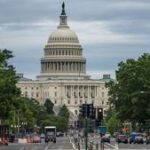
A $1.15 trillion annual defense funding bill finally passed the U.S. House Wednesday after weeks of delay.
Six Democrats joined all but seven Republicans in voting to support the National Defense Authorization Act, which outlines defense spending and authorizes Pentagon programs for fiscal year 2027.
“This legislation provides our brave servicemembers with an overdue pay raise, strengthens our nuclear deterrence and missile defense – including construction of the Golden Dome – cuts $30 billion in wasteful spending, and revitalizes America’s defense industrial base to secure our safety, security, and prosperity,” House Speaker Mike Johnson, R-La., stated after the vote.
“Safeguarding our liberties by providing for our common defense is one of our most basic responsibilities as elected representatives, and this year’s NDAA meets the moment.”
The lack of greater Democratic support for the Pentagon bill is due to a procedural rule change passed on Tuesday, which directed the House-passed NDAA to be merged with Republicans’ SAVE America Act.
Johnson had allowed the controversial rule vote to appease a group of House Republican hardliners, who in June blocked the NDAA from even reaching the floor over demands that he attach the voter ID bill.
The Senate’s 60-vote threshold for passage and near-universal Democratic opposition to the voter ID bill, however, means the House’s NDAA-SAVE package has virtually no chance of passing the upper chamber.
Senate Majority Leader John Thune, R-S.D., is expected to strip the voter ID provisions out when House and Senate leaders ultimately meld their respective NDAA versions into a final product capable of passing both chambers.
The Senate has also recently encountered obstacles to passing its own draft of the NDAA, with Democrats blocking the legislation from advancing over opposition to the Trump administration continuing to attack Iran.
Still, Senate Majority Whip John Barrasso, R-Wyo., told reporters that he hopes the chamber will hold another vote to advance the bill before Congress recesses for the month of August.
Currently, both NDAA versions have the same roughly $1.15 trillion funding topline.
Besides the usual investments in munitions restocking, shipbuilding, military construction, nuclear infrastructure, and technology innovation research, both NDAA drafts enhance cybersecurity coordination with Israel in light of the ongoing conflict in Iran.
The legislation also provides funding for securing supply chains, as well as supports new workforce initiatives aimed at boosting mining of critical minerals and raises all servicemember salaries by 3.6%, among other measures.





Sunny
Latest News Stories

U.S. House passes 10 bills to strengthen homeland security, address terrorism
Gulf lawmakers aim to extend state borders to 9 miles offshore

Ongoing border security prosecution efforts: 23 extraditions in one month

Graham: Man of great faith, fierce fighter for South Carolina, America

$424.9M considered for projects at Fire stadium questioned

Multi-state lawsuit challenges $1B in federal education grant cuts

Supreme Court justices defend $225 million budget request

Election 2026: Cooper steps away from responsibility of historic prison release
Illinois congressman pushes to repeal federal tax cuts

Illinois state diversity leader resigns amid criticism

Illinois Quick Hits: Chicago committee approves infrastructure funding around soccer stadium

Retired judge urges federal court to reject key talc researcher’s testing