Trump ‘final dealmaker’ on Saudi nuclear deal, Leavitt says
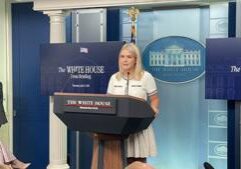
President Donald Trump is working on possible nuclear deal with Saudi Arabia that would stand for three decades and involve U.S. companies, White House Press Secretary Karoline Leavitt said Thursday.
The president announced a deal that would allow Saudi Arabia to develop a civilian nuclear program if it agreed to the Abraham Accords, a cooperation between Israel and majority-Muslim nations in the Middle East.
The deal is expected to last 30 years and could include U.S. companies helping develop the program through exports. The administration has not publicly released the a framework for a deal. Trump has stressed no nuclear material would be enriched as part of a potential deal.
Leavitt said the nuclear deal would only pertain to non-military use in Saudi Arabia and that Trump has pushed for the countries across the Middle East to normalize relations with Israel.
“He wants to see these countries sign the Abraham Accords,” Leavitt said. “It was one of the most historic accomplishments of his first term and it continues to be a long-term goal of his to expand those accords and ultimately come to a place where the Middle East can be a peaceful and stable region.”
Leavitt said Trump is the “final dealmaker” when negotiating nuclear programs with the other nations. She said the president has spoken numerous times with Saudi Arabian leaders on the deal and made them aware of the need to agree with the Abraham Accords.
“The deal that has been discussed thus far and will continue to be discussed absolutely puts America first and that’s obviously very important to this president,” Leavitt said.
She said Trump has spoken to Mohammed bin Salman, the leader of Saudi Arabia, about the deal several times in previous meetings. Saudi Arabia has previously said it would not enter into the Abraham Accords unless there is recognition of a Palestinian state.
Leavitt also denied that Israel Prime Minister Benjamin Netanyahu asked for a provision to be included in the deal that would require Saudi Arabia to sign on the Abraham Accords.
“It was the president and his team in the first term that began and signed the Abraham Accords with several countries in the region,” Leavitt said. “The president obviously wants to expand on that historic accomplishment from his first term.”
The nuclear deal would need approval from Congress before it is implemented.






Chance Rain Showers
Latest News Stories
Biggs: H.R. 1 tax cuts to boost Arizona’s economy
WATCH/EXCLUSIVE: America 250 celebrates civics education
OMB says fraud losses ‘in the hundreds of billions’ annually

National security group report questions Environmental Law Institute’s China ties

National security group report questions Environmental Law Institute’s China ties
Meeting Summary and Briefs: Beecher 200-U Board of Education for June 10, 2026

UPDATED: Fireworks and fairs planned in nation’s capital for America’s 250th

Millions under extreme heat warning for July 4th weekend
Trump to cut solar, wind subsidies on July 4th
Arizona congressman seeks to boost military hazard pay
Arizona congressman seeks to boost military hazard pay
Report: Wisconsin’s $2.7B projected surplus the result of inflation