Trump ‘final dealmaker’ on Saudi nuclear deal, Leavitt says
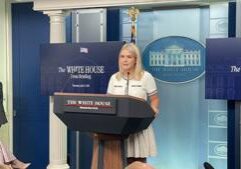
President Donald Trump is working on possible nuclear deal with Saudi Arabia that would stand for three decades and involve U.S. companies, White House Press Secretary Karoline Leavitt said Thursday.
The president announced a deal that would allow Saudi Arabia to develop a civilian nuclear program if it agreed to the Abraham Accords, a cooperation between Israel and majority-Muslim nations in the Middle East.
The deal is expected to last 30 years and could include U.S. companies helping develop the program through exports. The administration has not publicly released the a framework for a deal. Trump has stressed no nuclear material would be enriched as part of a potential deal.
Leavitt said the nuclear deal would only pertain to non-military use in Saudi Arabia and that Trump has pushed for the countries across the Middle East to normalize relations with Israel.
“He wants to see these countries sign the Abraham Accords,” Leavitt said. “It was one of the most historic accomplishments of his first term and it continues to be a long-term goal of his to expand those accords and ultimately come to a place where the Middle East can be a peaceful and stable region.”
Leavitt said Trump is the “final dealmaker” when negotiating nuclear programs with the other nations. She said the president has spoken numerous times with Saudi Arabian leaders on the deal and made them aware of the need to agree with the Abraham Accords.
“The deal that has been discussed thus far and will continue to be discussed absolutely puts America first and that’s obviously very important to this president,” Leavitt said.
She said Trump has spoken to Mohammed bin Salman, the leader of Saudi Arabia, about the deal several times in previous meetings. Saudi Arabia has previously said it would not enter into the Abraham Accords unless there is recognition of a Palestinian state.
Leavitt also denied that Israel Prime Minister Benjamin Netanyahu asked for a provision to be included in the deal that would require Saudi Arabia to sign on the Abraham Accords.
“It was the president and his team in the first term that began and signed the Abraham Accords with several countries in the region,” Leavitt said. “The president obviously wants to expand on that historic accomplishment from his first term.”
The nuclear deal would need approval from Congress before it is implemented.



Areas Of Drizzle
Latest News Stories

New Jersey sued over ICE mask ban

Illinois Quick Hits: Gas prices rise again

Massive drug busts in California, Texas, enough to kill more than 32.7 million people

Union Pacific, Norfolk Southern submit new merger application
Mills drops out of Maine U.S. Senate race
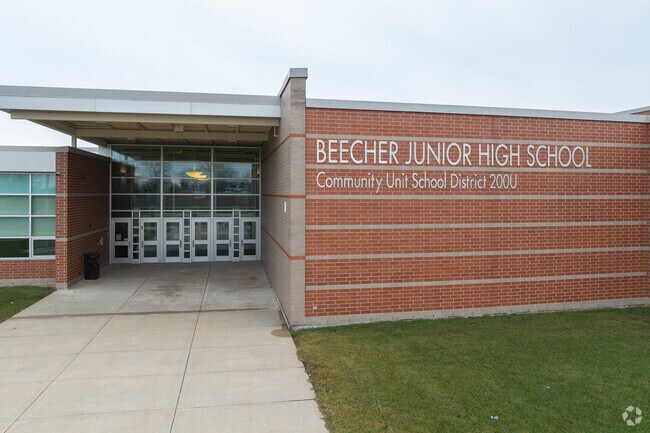
Beecher Board Tables $16,000 Junior High Digital Sign; Approves Sealcoating and New Elementary Desks

Board Establishes New Regulations and Fees for Wireless Telecommunication Facilities
House passes funding for ICE, CBP, tees up DHS reopening
Florida poised to flip 4 U.S. House seats with new map
Energy industry insiders advise lawmakers on supporting AI growth, protecting ratepayers

WATCH: Students see tuition as a good investment despite loan debt, survey says
California congressman slams nation’s ‘gerrymandering war’