Healthcare fraud in California has made Medi-Cal “fiscally unsustainable”
Following the Trump Administration’s pause on Medicaid funds in the state of California bover fraud concerns, government watchdogs are saying that Medicaid in the state has become “fiscally unsustainable.”
“What was once a targeted safety-net program increasingly functions as a vast public entitlement system with growing fiscal and administrative challenges,” Sally C. Pipes, president, CEO, and Thomas W. Smith Fellow in Health Care Policy at the Pacific Research Institute wrote in an issue brief.
On Tuesday, the Trump administration froze $867 million in Medicaid funds from California, as part of a federal crackdown on Medicaid fraud, The Center Square reported.
“Medicaid fraud and abuse is one of the you know worst things facing the states, and in particular California and Minnesota,” Pipes told The Center Square in an interview on Thursday. “So I’m delighted that now attention is being paid to this issue, and we might be able to get a grip on eliminating it.”
Pipes cited an estimate from Paragon Health Institute and the Economic Policy Innovation Center that suggests there were over $1 trillion in cumulative federal Medicaid improper payments across the nation, between 2015 and 2024.
“So we have to strengthen eligibility requirements and we need to increase oversight of the managed care organizations because they’re the people that run the Medi-Cal program here in California,” Pipes said. “We need to improve transparency surrounding Medi-Cal financing and we need to refocus limited taxpayer resources on the vulnerable residents of this state who are here legally.”
Nearly 15 million people are covered by Medi-Cal, California’s name for Medicaid, and annual healthcare spending has grown to be more than $200 billion by that state, according to the issue brief. California’s total budget for the 2026-2027 fiscal year is $351.7 billion.
“Taxpayers are hurt because they’re paying higher and higher taxes and they’re supporting a program that is full of fraud and abuse, and not taking care of the vulnerable people who it was set up to take care of,” Pipes said.
In April, a California man pleaded guilty to orchestrating a $270 million medication fraud scheme, according to the U.S. Department of Justice.
Over the past two years, California officials have revoked more than 280 hospice licenses due to fraud, according to the issue brief.
Fraud from Affordable Care Act
Pipes said she believes that the healthcare fraud in California started in March of 2010 when Medicaid eligibility expanded under the ACA. In 2015, the program further expanded when Gov. Jerry Brown allowed undocumented immigrant children to receive healthcare.
During the COVID-19 pandemic, continuous coverage expanded the program and gave states incentives to expand enrollment. The Federal government covered 90% of the costs, leaving the states to shoulder just 10% of the cost. This was supposed to end when the pandemic ended, but it did not, according to Pipes.
On Jan. 1, 2024, Gov. Gavin Newsom allowed all undocumented immigrants, regardless of age, to become eligible for Medi-Cal. This expansion allowed roughly 1.7 million undocumented immigrants to enroll in Medi-Cal and is set to cost the state $8.5 billion annually, Pipes, who immigrated from Canada and became an American, said in the issue brief.
“When you’re covering undocumented people, California is a state where there’s a lot of fraud and abuse because there’s no oversight,” Pipes said. “It’s just the perfect thing for people who are fraudulent, to take advantage of and abuse the program.”
Pipes also argued that because of the proposed wealth tax, billionaires are moving to places like Texas and Florida, which leaves California with less tax revenue. The Center Square previously reported this.
“So finally, Gov. Newsom had to make a few changes, which includes freezing new medical enrollment for undocumented immigrants starting this year and establishing monthly premiums for certain enrollees starting in 2027,” Pipes said. “He’s had to finally realize that this program is out of control and it’s costing too much money.
“These reversals amounted to an admission that California’s expansion strategy had become fiscally unsustainable,” Pipes said in the issue brief.
Pipes also argued that Medi-Cal’s expanding coverage has not seen a similar shift in the available care, which is leaving the vulnerable population without necessary treatment opportunities.
“There are a lot of people on Medi-Cal who should be in the workforce and not receiving this free care,” Pipes said. “And because of the pressure of the number of people on Medi-Cal, the supply of doctors is far lower than the demand for care, and so a lot of the vulnerable population can’t even find a doctor to get treatment when they need it.”
Reform possible next year
Pipes said that there could be reforms to the program within the next year.
“I would hope within the next year there’s going to be a lot of control put in place,” Pipes said.
Assemblywoman Alexandra M. Macedo (R-Tulare) said Newsom has to take action to stop criminals from defrauding the system
“Gov. Newsom now faces a choice,” she wrote in an email. “He can continue treating Medi-Cal fraud as yesterday’s headline and hope the problem fades from public view. Or he can acknowledge what federal regulators, state auditors, investigative journalists, frontline providers and concerned legislators have been saying for years: California’s system has failed and will continue to do so without swift and extreme action.
“Medi-Cal is not a black hole for taxpayers’ hard-earned money,” Macedo added. “Every single dollar stolen by a criminal is a dollar taken away from terminally ill patients, low-income families, and legitimate healthcare providers who deliver essential care in our communities.”
In a press release, California Attorney General Rob Bonta challenged the Trump Administration’s decision to cut funding for California Medicaid.
“Medical emergencies don’t stop when Medicaid payments stop — they just become more expensive and less accessible. As Americans face a crisis of affordability, we should be expanding access to affordable healthcare, not making the cuts Congress enacted even worse,” Bonta said. “This proposed rule will have real consequences for hardworking Americans and their families. My fellow attorneys general and I insist that it be withdrawn.”
Bonta sent a letter sent to U.S. Health and Human Services Secretary Robert F. Kennedy Jr., and Dr. Mehmet Oz, administrator of the Centers for Medicare and Medicaid Services, arguing against the suspension of funding. The letter was signed by 13 other attorneys general.
In 2025, the U.S. Department of Justice announced the creation of a West Coast Health Care Fraud Strike Force. The task force targets fraudulent activity in California and surrounding areas, according to Pipes.
The Center Square reached out to Bonta’s office, who did not acknowledge interview requests. The Center Square also reached out to Democratic lawmakers, who either declined interview requests or did not respond by the time of publication.



Mostly Cloudy
Latest News Stories
Will County Public Works Committee Unveils 25-Year Transportation Plan, Projects $258 Million Gap
Will County Animal Protection Services Seeks New Facility Amid “Gaping Wound” of Space Crisis
Board Confronts Animal Services Crowding, Explores Future Facility Options
Will County Board Members Demand Transparency in Cannabis Tax Fund Allocation
Homer Glenn Residents Push Back on 143rd Street Widening as Officials Signal “Tentative Agreement”
Will County Forges 2026 Federal Agenda Amid D.C. Policy Shifts, ‘Big Beautiful Bill’ Impacts
Health Department Seeks $1 Million Levy Increase to Prevent “Weakened System”
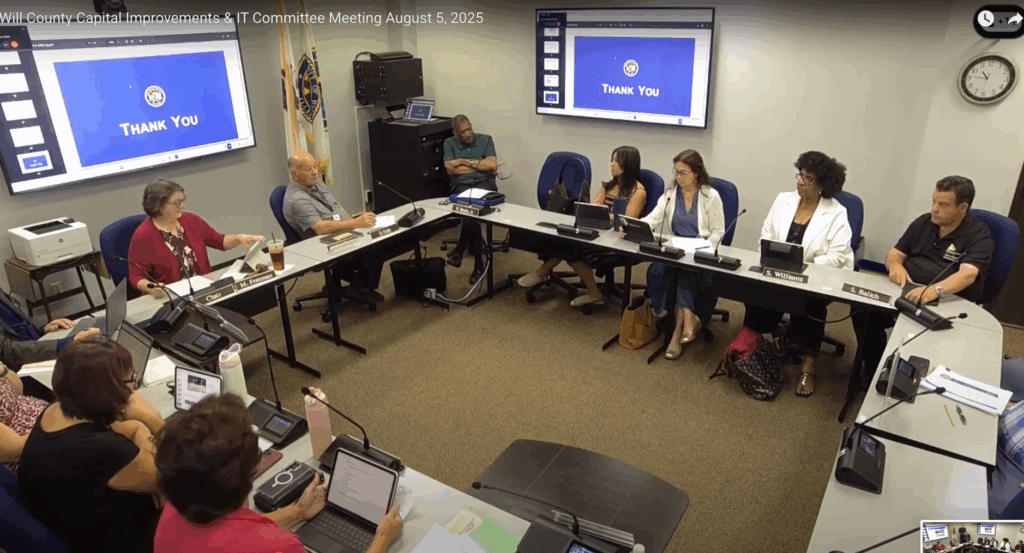
County Rolls Out New “OneMeeting” Software to Improve Public Access

Meeting Summary and Briefs: Will County Board Finance Committee for August 5, 2025
Will County PZC Approves Rezoning for Truck Repair Facility on Manhattan Road Amid Resident Concerns
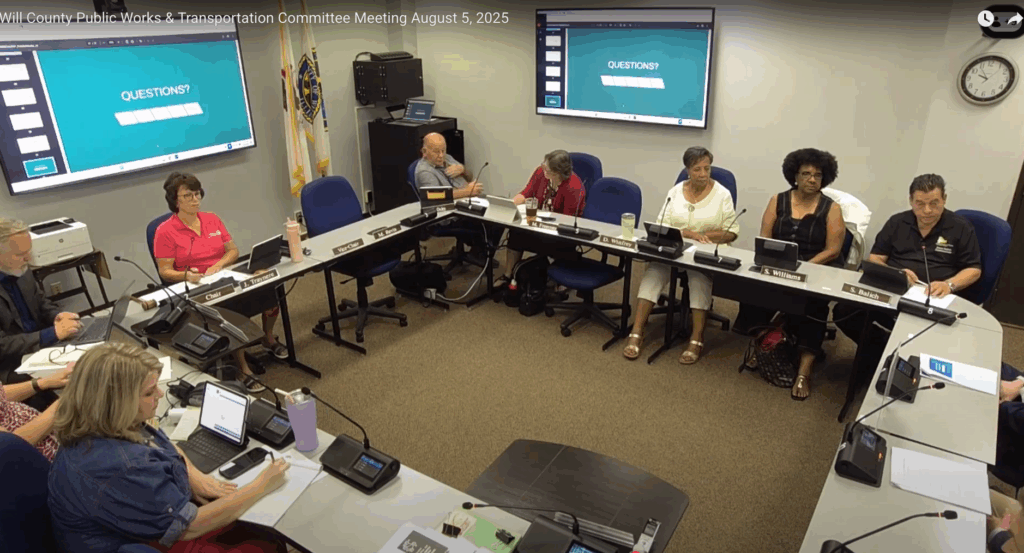
Key Stretch of Bell Road on Track for Thanksgiving Reopening, Committee Approves Additional Funds
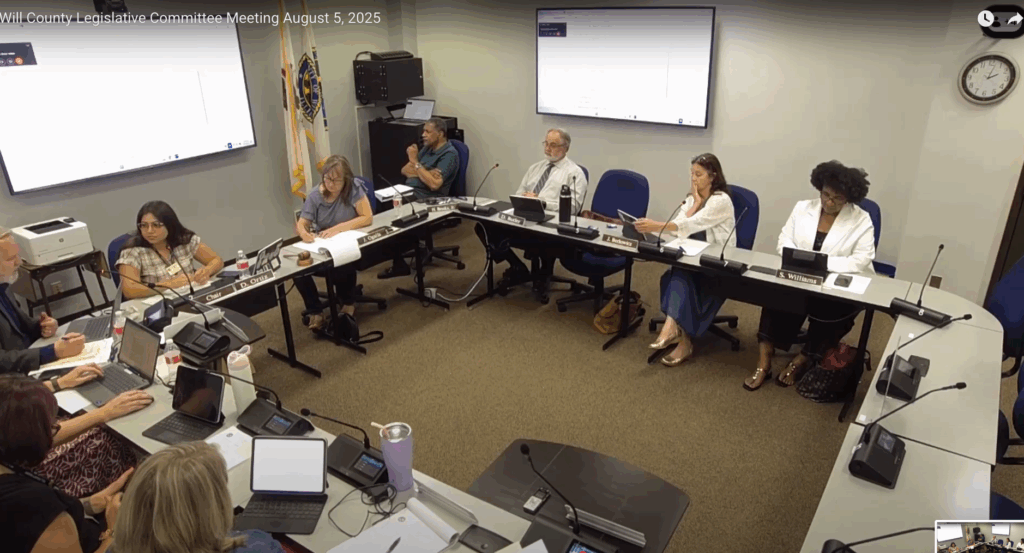
Will County Leglislative Committee Opposes Federal Push for Heavier, Longer Trucks
Will County Reports Progress in Opioid Fight, Highlights New FDA Labeling Rules