New tariffs face lawsuit, fall short on revenue, analysis finds
Two American small businesses sued the Trump administration over its new forced-labor tariffs, arguing the government is preserving a global tariff regime the U.S. Supreme Court already struck down by moving it to a different legal authority.
The lawsuit landed the same day the tariffs took effect. An outside budget analysis found the new duties replace less than 60% of the revenue the government lost when the Supreme Court invalidated President Donald Trump’s tariffs under the International Emergency Economic Powers Act of 1977.
Burlap & Barrel, a New York spice importer, and Collective Horology, a California watch retailer, filed the complaint in the U.S. Court of International Trade, the same court that has twice found the administration’s tariffs unlawful. They are represented by the Liberty Justice Center, the firm that won the Supreme Court case against the earlier IEEPA tariffs and challenged the Section 122 round that followed.
The lawsuit argues the tariffs exceed the administration’s authority under Section 301 of the Trade Act of 1974, a law that lets the U.S. trade representative act against specific unfair practices of individual countries. The plaintiffs say the administration instead imposed near-uniform duties of 10% or 12.5% across about 60 economies “in accordance with the specific direction of the President,” without showing how each country’s conduct burdens U.S. commerce or how the tariffs would change it.
“Changing the statute doesn’t change the law,” Liberty Justice Center Chairman and CEO Sara Albrecht said in a statement. “Every tariff authority has limits, and every administration must respect them.”
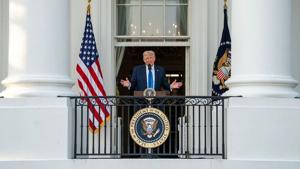
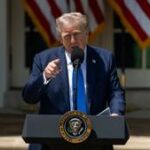
Trump defended the tariffs Friday, calling them “very standard” and saying they had been approved. He described the new duties as a fallback after the Supreme Court’s IEEPA ruling, saying the administration went “to B,” an authority he said “has been used many, many times for years.”
The White House and the Office of the U.S. Trade Representative did not respond to requests for comment Friday afternoon.
The Committee for a Responsible Federal Budget, a nonpartisan fiscal watchdog, estimated the forced-labor tariffs will raise about $900 billion through 2036. Combined with new tariffs on Brazil and Canada, the group found the administration’s post-IEEPA tariffs still fall short of replacing the lost revenue, leaving federal debt on track to reach 122% of gross domestic product by 2036, rather than 120%, according to CRFB.
Treasury Secretary Scott Bessent has said the shift to new tariff authorities would leave revenue “virtually unchanged,” with rates going “back to exactly where they were” and only “a de minimis decline” in 2026. Plaintiffs cite both statements as evidence the tariffs were designed to preserve the struck-down regime’s revenue rather than to target specific foreign practices.
The administration has not published an estimate of what the tariffs will cost U.S. households or importers, or what share of imports they cover.
The scale of the earlier IEEPA tariffs round is clearer. U.S. Customs and Border Protection collected about $166 billion under the IEEPA tariffs, Brandon Lord, the agency’s executive director of trade programs, said. Since the Supreme Court struck those tariffs down, the Court of International Trade has been overseeing the refund process. As of July 10, CBP had accepted about $121.75 billion of that in refunds, both certified and pending for processing, according to a CBP spokesperson.
The new lawsuit puts a price on the new tariffs for the two plaintiffs. Burlap & Barrel expects to pay about $13,888 on five shipments worth about $124,407 arriving in the coming weeks, according to the complaint. Collective Horology expects about $8,280 on three shipments worth about $69,000. Both say no domestic supplier can replace what they import – Burlap & Barrel’s single-origin spices, Collective’s handmade watches – so they cannot avoid the duties by buying American.
The forced-labor tariffs are the administration’s third attempt to impose broad import taxes after courts rejected the first two.
Phillip Magness, a senior fellow at the Independent Institute, said the fallback authorities differ mainly in how well they hold up in court.
“The ‘Plan B’ alternatives to IEEPA all have similar effects on importers in that they still apply a tariff with substantial economic burdens,” he told The Center Square. “Any tariff under these clauses that stretches or exceeds the statutory language will probably face legal challenges.”
Magness said the churn carries its own cost. Businesses are holding onto their IEEPA refunds rather than reinvesting them, he said, bracing for the next round of tariffs.
“For the past two years, Trump’s tariff agenda has changed on a whim – even day-to-day reversals and alterations of rates,” he said. “Instead of passing on the refunds to their consumers, many businesses are likely worried about getting hit with additional tariff burdens in the future.”
The Office of the U.S. Trade Representative describes the tariffs as covering 60 economies, but that figure counts the European Union as one. Because the EU has 27 member states, the tariffs reach at least 84 sovereign countries, plus Taiwan and Hong Kong, according to the complaint. Together they account for about 99.4% of all U.S. imports by value.
The forced-labor tariffs followed a familiar sequence. The Supreme Court struck down Trump’s IEEPA tariffs in a 6-3 ruling Feb. 20. Trump imposed the 10% Section 122 tariff hours later. In May, the Court of International Trade found the Section 122 tariff unlawful, although an appeals court left it in place through its July 24 expiration. USTR then finalized the Section 301 forced-labor tariffs, which took effect the same day.
The lawsuit asks the court to strike down the tariffs, block their collection and order refunds with interest for the plaintiffs and other importers. The Liberty Justice Center is seeking to represent a nationwide class of every business that has paid or will pay the duties, potentially thousands of importers, according to the complaint.
Economists and researchers, including the Federal Reserve Bank of New York, the Kiel Institute for the World Economy and Yale Budget Lab, have concluded that American consumers and businesses – not foreign governments – bear most of the cost of tariffs, a finding the White House has repeatedly disputed.



Cloudy
Latest News Stories
Justice Department drops Federal Reserve probe, kicks to watchdog

Pritzker: ‘Need for speed’ for megaprojects bill with tax breaks

NYC schools probed over claims of antisemitism

Illinois Quick Hits: AFP says tax breaks would be more at Soldier Field
Soldier’s insider trading case puts prediction markets to the test
U.S. will continue blockade ‘as long as it takes,’ Hegseth says

Village Board Approves Zoning Variance for 747 Penfield Street

Will County Takes Jurisdiction of Countyline Road in $1.84 Million Agreement with Kankakee County

Green Garden Township’s Wildflower Farm Granted Third Special Use Extension

Gori seeks quick end to asbestos fraud, lawsuit ‘bounties’ case

Texas Ten Commandments law may reach Supreme Court

Feds reopen probe into LAUSD race-based program