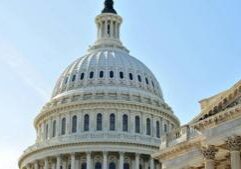
GAO says fraud risk high in $1.1T of state-run federal programs
Twenty federal programs that route nearly $1.1 trillion through state governments – including Medicaid, SNAP and disaster relief – are vulnerable to fraud because of how the money is distributed, the Government Accountability Office reports.
The money rarely goes straight from Washington to a recipient. It passes through states, then often to subrecipients, contractors and subcontractors. Every layer, GAO found, adds another entry point for fraud while making oversight harder to enforce.
The report is the first in a planned GAO series examining fraud in state-administered programs. It reaffirms the agency’s estimate that the government loses between $233 billion and $521 billion a year to fraud, or about 3% to 7% of average federal obligations. GAO warns the range reflects government-wide risk and shouldn’t be pinned to any single program.
Federal audits from 2020 to 2024 turned up “severe and persistent findings” in 18 of the 20 programs, an indication, GAO said, that many lack the controls to prevent and detect fraud.
In SNAP, more than $360 million in benefits were stolen from recipients between 2022 and 2024, affecting more than 753,000 households. The GAO said that was likely an undercount because many victims of benefit theft never filed claims.
Retailer trafficking, or swapping benefits for cash, may run higher. The most recent federal estimate, from 2015 to 2017 data, put it at $1.3 billion a year, or about 2% of benefits, and possibly as high as $4.3 billion.
GAO has made about 50 recommendations to strengthen fraud controls in these programs. Agencies have adopted 28; 22 remain open – at EPA, the Energy Department, Health and Human Services and Housing and Urban Development – and agencies have declined to fully accept nine, a GAO spokesperson told The Center Square. They include recommendations that HUD assess fraud risks in its disaster-recovery block grants and collect contractor data to help identify fraud.
House Oversight Committee Chairman James Comer, R-Ky., requested the GAO report in March. Comer said this week the findings affirm the committee’s work and back the fraud-prevention bills the House has passed and sent to the Senate.
“Today’s GAO report confirms that the House Oversight Committee’s fraud prevention bills will provide critical new tools to combat rampant waste, fraud, and abuse in federally funded, state-administered programs,” Comer said in a statement. “The Senate must pass these bills immediately so we can equip federal agencies with additional tools to safeguard federal programs.”
The GAO report does not endorse those bills, but describes several pending measures as addressing specific recommendations. Comer’s office said the chairman was speaking broadly to the report’s findings, which include expanding Treasury’s Do Not Pay system.
Senate Republicans are pursuing their own measure, the Protecting American Taxpayers Act, from Sen. Joni Ernst, R-Iowa. Ernst projects it would save taxpayers $240 billion.
One federal program reports nothing at all. Health and Human Services does not estimate improper payments for Temporary Assistance for Needy Families, which spent about $16.5 billion last year, citing a lack of authority to require the data from states.
GAO urged Congress in 2022 to give HHS that authority. Bills have been introduced, but none has passed, and GAO still lists the matter as open.
The threat is outpacing the government’s defenses, GAO warned. Fraud rings now use AI to file thousands of claims at once, “often reusing information and documentation across multiple applications,” the report said, leaving officials “one step” behind. GAO urged Congress to fund a permanent fraud-analytics center.
Rep. Robert Garcia, D-Calif., ranking member of the House Oversight Committee, and Sen. Gary Peters, D-Mich., ranking member of the Senate Homeland Security and Governmental Affairs Committee, did not respond to requests for comment by deadline.
The Treasury Department and the Office of Management and Budget also did not respond.






Patchy Fog then Partly Sunny
Latest News Stories
County Sales Tax Revenues Strong, Cannabis Funds Dispersed to Community Programs

Beecher School District to Create New Special Ed Classroom, Aiming to Bring Students Home

Illinois sports wagers decline after implementation of new tax

Competing crypto plans create ‘narrow path’ for adoption

Congress used government funding bill to ‘erase’ $3.4 trillion in deficits

Illinois patient relies on ACA tax credits, experts warn they drive higher premiums
Will County Committee Grants Extensions for Crete, Washington Township Solar Projects

Trump rolls back tariffs on over 200 foods in sharp reversal
Washington Township Expands Office Hours to Five Days a Week

Trump says $2,000 tariff rebate checks won’t come before Christmas

Chicago mayor threatens layoffs, property tax hikes if council rejects head tax
Goldwater Institute sues Arizona attorney general for records