Everyday Economics: The Fed takes center stage this week
The Federal Reserve’s job is straightforward to state and difficult to deliver: maximum employment, low and stable inflation, and a financial system capable of supporting both. Congress formally describes the first two as the Fed’s dual mandate. Financial stability is the foundation underneath it.
For much of the past year, the labor market looked like the greater risk. Hiring had slowed sharply, raising fears that a low-hire, low-fire economy could tip into outright job losses.
That has not happened.
Employers added only 57,000 jobs in June, but unemployment held at 4.2%. The hiring rate remained weak at 3.3% in May, yet layoffs were also low. The Fed’s June meeting minutes described the labor market as broadly balanced, while initial unemployment claims have since fallen to their lowest level in decades.That stability shifts the Fed’s attention to the other side of its mandate: inflation.June’s consumer-price report was encouraging. Headline prices fell 0.4% from May, while core prices were unchanged and slowed to 2.6% over the year. But the relief may not last. Brent crude fell below $70 a barrel on July 1, then climbed back above $100 as conflict in the Middle East intensified before easing Friday.Energy is not the only channel.Torsten Slok of Apollo estimates that avoiding Bab el-Mandeb, a strait and global chokepoint between Yemen on the Arabian Peninsula and Djibouti and Eritrea in the Horn of Africa, adds nine days to one major Asia-to-Europe ocean route. Shippers then pay premium trucking rates to recover some of the lost time. The IMF estimates that when global shipping costs double, consumer inflation rises about 0.7 percentage points, with the largest effect arriving roughly a year later. Core inflation also rises, though by about one-third as much.Tariffs add another layer. The administration’s latest action applies tariffs of 10% or 12.5% to imports from 60 trading partners. Tariffs are paid by U.S. importers, who must absorb the tax, negotiate lower supplier prices, or pass the cost forward onto consumers.New York Fed researchers estimate that nearly 90% of the economic burden of the 2025 tariffs fell on U.S. firms and consumers. And 47% of tariff-paying service firms and 44% of manufacturers say additional tariff-related price increases are still coming. Research on the 2018 tariffs found that they left U.S. producer and consumer prices about 0.3% higher.Demand is pushing in the same direction. Companies have announced more than $1.5 trillion in data-center projects, only a small share of which have been completed. Fed Governor Lisa Cook says that investment has already raised prices for chips, other high-tech equipment and software, while increasing wages in specialty construction trades. The Fed’s July report also linked rapid price increases for computers and electronics to the AI buildout.Washington is adding demand too. The federal deficit reached $1.4 trillion during the first nine months of fiscal 2026, and the Treasury expects to borrow another $671 billion this quarter. The Pentagon says the war with Iran has cost $37.5 billion, including projected costs through Sept. 30. The White House has requested $87.6 billion in supplemental funding, although CSIS estimates roughly one-third of the package is directly attributable to the war.Debt does not mechanically cause inflation. The key is whether new borrowing is credibly matched by future taxes or spending cuts. In a Quarterly Journal of Economics model, Francesco Bianchi, Renato Faccini and Leonardo Melosi show that an unfunded fiscal expansion – one not supported by future fiscal adjustments – produces a persistent increase in inflation. Without a credible plan to stabilize the debt, monetary policy must work harder to contain prices.Now inflation expectations are rising. The New York Fed’s June survey put one-year expectations at 3.7% and three-year expectations at 3.3%, both multiyear highs.The Fed cannot allow households and businesses to conclude that above-target inflation is permanent. Once expectations enter wage demands, contracts and pricing decisions, a temporary oil, shipping or tariff shock can become persistent inflation – and restoring credibility becomes much more painful.Markets now assign roughly a 38% probability to a rate hike next Wednesday, up from about 13% a week earlier. We began 2026 debating when the Fed would cut.So who is to blame for the reversal?War, tariffs, ever-growing deficit-financed spending and the AI investment boom have all pushed inflation risks and borrowing costs higher. The Fed did not create those pressures, but it now owns the response.





Patchy Fog then Chance Showers And Thunderstorms
Latest News Stories
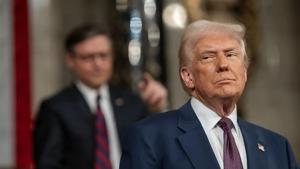
Poll: Trump’s approval rating falls 16% in Arizona

SCOTUS to consider second election law case

Medical device manufacturer invests $110M to expand Nebraska plant, boost drug supply
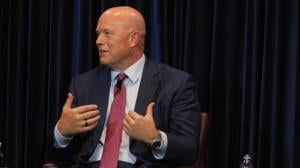
WATCH: U.S.ambassadors stress Greenland’s importance

Chicago council considers ‘not a tax’ surcharge on hotels
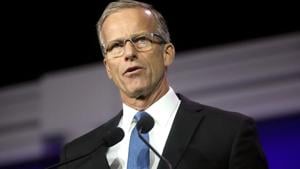
Govt. funding process advances as three more bills to become law; six remain
Bankers push back on Trump’s plan to reduce swipe fees, cap interest rates
State lawmaker calls for hearings on banning Sharia law in Texas

U.S. to build nuclear reactor on Moon by 2030, cost unknown
WATCH: Gov. Polis calls out Republicans in State of the State
Republican senators introduce bill to address childcare, immigration fraud

More than $1 billion spent on noncitizen hospital costs in fiscal 2025