Trump: Iran eager to meet, won’t rule out future strikes
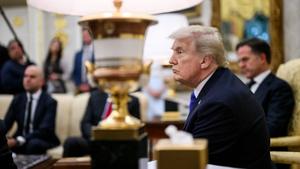
The U.S. hasn’t struck Iranian targets since Thursday, with President Donald Trump confirming the Islamic Republic is possibly interested in returning to the negotiating table.
The president is set to welcome Israeli Prime Minister Benjamin Netanyahu to the White House on Tuesday as the two leaders are expected to discuss the current situation on Iran, as Israel has kept a low profile in recent weeks, following the U.S.-led strikes against the Islamic Republic.
Trump told a rally in Michigan that “friendly talks are underway” with the Islamic Republic but warned the U.S. could still “cripple Iran with full force.”
The president indicated to reporters Monday that the latest rounds of strikes, spanning 13 consecutive days, may have persuaded Iran to return to the negotiating table.
“We’ve pretty much destroyed their military. They want to meet, and we’re meeting. We’ll see what happens. There’s a chance we could make a deal. Without what we did, they wouldn’t even be talking to us,” Trump told reporters.
Iran publicly refuted claims it is seeking a deal on Monday.
“That does not accord with our principles. Claims that Iran has requested negotiations are merely reports,” Foreign Ministry spokesman Esmaeil Baqaei said during a press briefing carried by the semi-official Mehr news agency.
President Trump appears cautious after months of back-and-forth with the Iranian regime, which eventually led to the signing of a memorandum of understanding on June 17.
However, not long after the signing, Iran violated the agreement by refusing to open the Strait of Hormuz, including the targeting of commercial cargo ships.
The U.S. reinstated the full naval blockade on Iranian ports, putting the squeeze on the Islamic Republic’s economy, which the Trump administration estimates is costing the country between $400 and $500 million a day in losses.
Since the blockade was reinstated two weeks ago, U.S. Central Command says 17 commercial vessels have been redirected, two disabled, and an additional two boarded to “ensure compliance.”
The president quashed rumors that the reason for the pause was due to a dwindling amount of American ammunition, which the president denied, but did acknowledge that the Biden administration had given a lot of ammunition to Ukraine.
Last week, the U.S. House of Representatives narrowly passed a $1.15 trillion defense spending bill. The Pentagon claims the conflict with Iran has cost taxpayers $37.5 billion thus far.
However, multiple independent analyses suggest the true cost of the conflict has surpassed $100 billion. Moody’s Analytics estimated that the war has cost American consumers and taxpayers over $100 billion when factoring in surging energy prices and military outlays.
Separate assessments by independent groups, such as Brown University’s Costs of War project, also put total deployment, munitions, and operational expenses in the $100 billion to $113 billion range.






Mostly Sunny
Latest News Stories

Chicago mayor says head tax would have prevented deficit

Former judge Dugan avoids prison, fined $5K for obstruction

Food-borne illness cases spike as Michigan declares outbreak

Op-Ed: Women deserve protection from the harm of mail-order abortion pills

Minnesota woman pleads guilty to threatening state House speaker

Illinois lawmaker, husband indicted over alleged kickback scheme

Border Patrol warns of rideshare human smuggling risks in El Paso

Illinois Quick Hits: Gas prices show slight uptick as US military action resumes

Maine Democrats lining up to replace Platner in Senate race
Trump: U.S. to ‘probably’ strike Iran tonight; oil prices rise

Class action vs Apple over Face ID scans seeks to unlock big payout

Another fatal ICE shooting, this time in Houston