
Executive order creates website for retirement accounts, matching federal contributions
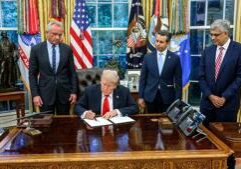
President Donald Trump signed an executive order Thursday aiming to expand access to “high-quality” retirement accounts to all Americans.
The administration will launch a website called TrumpIRA.gov where qualifying Americans who don’t have access to retirement plans through their employer can shop for private retirement accounts and access the Saver’s Match, a federal program that provides up to $1,000 in annual matching government contributions.
Trump called the plan “revolutionary.”
“Great thing for millions of Americans who lack employer-sponsored plans,” Trump said at the signing.
Most Americans with earned income can set up an individual retirement account on their own, regardless of whether their employer offers a retirement plan.The Saver’s Match was created by the SECURE Act 2.0 of 2022, which built on the SECURE Act – or the Setting Every Community Up for Retirement Enhancement Act – of 2019. Both laws seek to encourage more Americans to save for retirement by expanding access and simplifying administrative rules.
The match was set to become broadly available to qualifying low-income Americans in 2027, but Americans can only receive matching contributions if they have a retirement savings account and are contributing themselves.
Trump’s executive order gives individuals wanting to set up a retirement account one place to shop and compare plans online and easily access the match that may have already been available to them but they may never have learned about.
Under SECURE 2.0 and starting in 2027, single taxpayers making $20,500 or less per year and contributing to a retirement account will qualify for a full match on up to $2,000 in federal dollars. Single filers making between $20,500 and $35,500 in 2027 can qualify for smaller federal contributions.
But Trump also expressed a desire to expand the program with Congress. The director of the National Economic Council, Kevin Hassett, said.
“We think that there are a lot of people, even who make more than [$35,500], that don’t have any assets for retirement. And so we’re working with Congress to significantly expand this program,” Hassett said.






Partly Sunny then Chance Showers And Thunderstorms
Latest News Stories

Smith & Wesson wins appeal chance in Highland Park lawsuits

Illinois Republicans say federal student data probe may reach Illinois State after Tufts review

Washington Township Trustees Move to Create Official Emails to Comply with FOIA

Meeting Summary and Briefs: Public Works & Transportation Committee for February 3, 2026

Beecher Board Discusses Plans for Police Station Sale Proceeds

Chicago aldermen call out transportation dept. over Complete Streets, bike lanes

Exclusive: Teachers forced to un-teach social media claims

Illinois quick hits: Moody’s predicts static job growth in Illinois

Trump’s proposed firing rule could save taxpayers $6.1 million yearly

‘Very selfish’: EU sanctions on Russia fertilizer will weaken U.S., food security

Seattle’s FIFA World Cup 2026 windfall: Opportunities and risks

WATCH: ‘Waters Edge’ tax breaks would end if California bill passes


