
$1.1T Pentagon funding bill leaves room for White House spending spree
U.S. House lawmakers have unveiled the draft text of their $1.14 trillion annual defense bill, a must-pass bipartisan bill that fits into President Donald Trump’s plan to increase the Pentagon’s budget to historic levels.
The House Armed Services Committee will mark up the proposed fiscal year 2027 National Defense Authorization Act on June 4.
Besides the usual investments in munitions restocking, shipbuilding, military construction, nuclear infrastructure, and technology innovation research, the bill enhances cybersecurity coordination with Israel in light of the ongoing conflict in Iran.
It also provides funding for securing supply chains, as well as supports new workforce initiatives aimed at boosting mining of critical minerals and raises all servicemember salaries by 3.6%, among other measures.
The mammoth package aligns with the White House’s proposal to boost the Department of War funding by roughly 43%.
The White House requested a $1.5 trillion Pentagon budget for fiscal year 2027, with roughly $1.1 trillion coming from the NDAA and an extra $350 billion from a separate party-line budget reconciliation bill.
Though Republican lawmakers have not yet confirmed whether they intend to follow that plan, party leaders want to pass another budget reconciliation bill – which could include the $350 billion defense earmark – to push through more of the Trump administration’s agenda before the 2026 midterm elections.
The House’s NDAA draft must be reconciled at some point with the yet-to-be-released Senate version. Last year’s NDAA cost taxpayers $900 billion, and the DOD also received an $173 billion boost that same year from Republicans’ “One Big Beautiful Bill.”
Federal budget watchdog organizations like the Committee for a Responsible Federal Budget are urging lawmakers to rein in military spending, particularly since the DoW is the only federal agency to never pass an audit.
“There is little doubt that the United States has immense defense and national security needs. But having allocated $4.6 trillion over the past five years to defense, there should also be little doubt that there is substantial waste, fraud, abuse, and errors within the defense budget,” CRFB stated Wednesday.
“Before Congress considers an enormous expansion of the defense budget, they should work to understand what previously-appropriated dollars are still available and make sure existing dollars are being spent wisely and cost-effectively.”






Mostly Sunny
Latest News Stories

Democratic attorneys general oppose latest round of tariffs
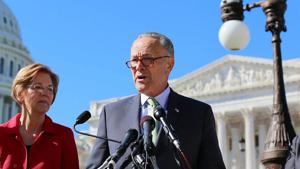
Top Democrats pressure Platner to drop Senate bid

Parents applaud denial of child app purchases case

Taxpayer abortion funding resumes with legislation expiring on July 4

Illinois Quick Hits: Indiana governor touts True Value move from Illinois

Dem leaders want transparency, unsure if ethics report will be released

Social Security Admin to fast-track Trump Account enrollment for eligible kids

Flash index shows rising tax receipts in Illinois

Report: $12B spent on assisted living Medicare, Medicaid

Illinois Quick Hits: Aqua seeks water rate hike

Pritzker signs AI regulation critics say harms innovation, ‘picks winners’

Microsoft cuts over 600 Washington jobs, 4,800 globally amid corporate restructuring